Spring Migration Almost Here: Fort De Soto Trip Report, 14 Mar 2026
It’s mid-March and in central Florida that means it’s almost spring migration. Each year is different from the last, and one thing I have already noticed this year is an abundance of Northern Parula. I have a convertible and I have been hearing them quite a bit on my drives and also seeing them in local parks. Fort De Soto is always a spring migration hotspot so yesterday (Saturday, 14 March 2026), I headed down to De Soto to see what was happening.
I started along the trail that starts at the main park office (the main flagpole). The fig tree which was heavily damaged by a hurricane in 2024 is sprouting leaves but I didn’t see any fruit yet. No birds either. It’s usually popular with Rose Breasted Grosbeaks, Orioles, and Tanagers. No sign of them on the tree yet, nor along the trail.
Next I walked around the old Ranger’s house and fountain area. This was a popular area with the birds last year, particularly Cape May Warblers. However on this day there were only Palm Warblers and a surprisingly large number of Ground Doves. Not much else. No sign of the Ani’s either.
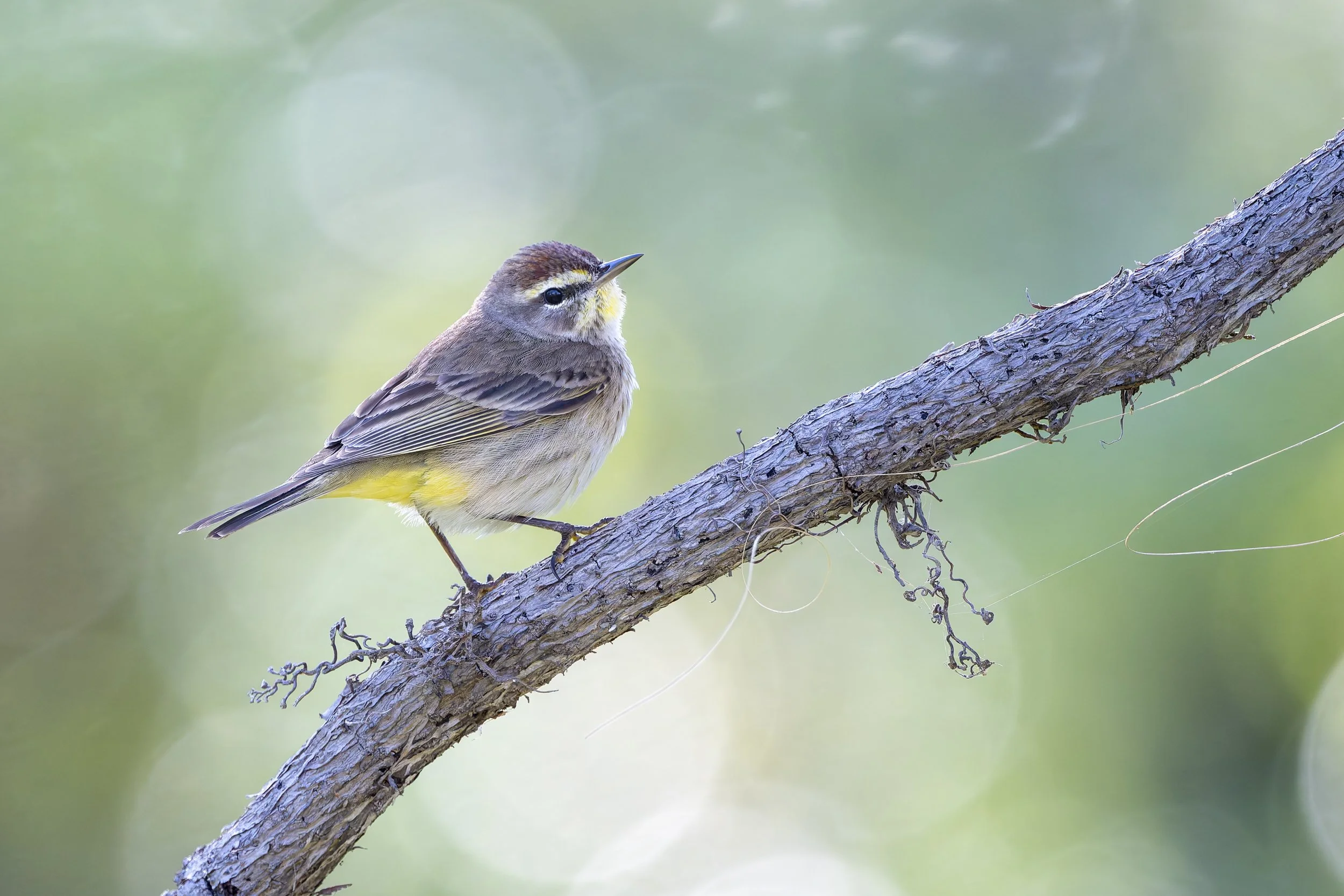
Palm Warbler. Photographed in the backyard of the Old Ranger’s House. Nikon Z8 with Nikkor Z 800mm f/6.3 VR S lens at f/6.3, 1/1000 sec, ISO 2000.
Leaving the Ranger’s House, I drove over to the East Beach Picnic area. Last year this was another hotspot, mostly in the sea grapes along the beach. Last year I also saw an abundance of Red-eye and White-eyed Vireos in the oaks. On this trip, there were lots of Palm Warblers searching for bugs on the ground, and Northern Parula up in the trees. I spotted a few White-and-Black Warblers, but they are there year-round. No other spring migrants yet.
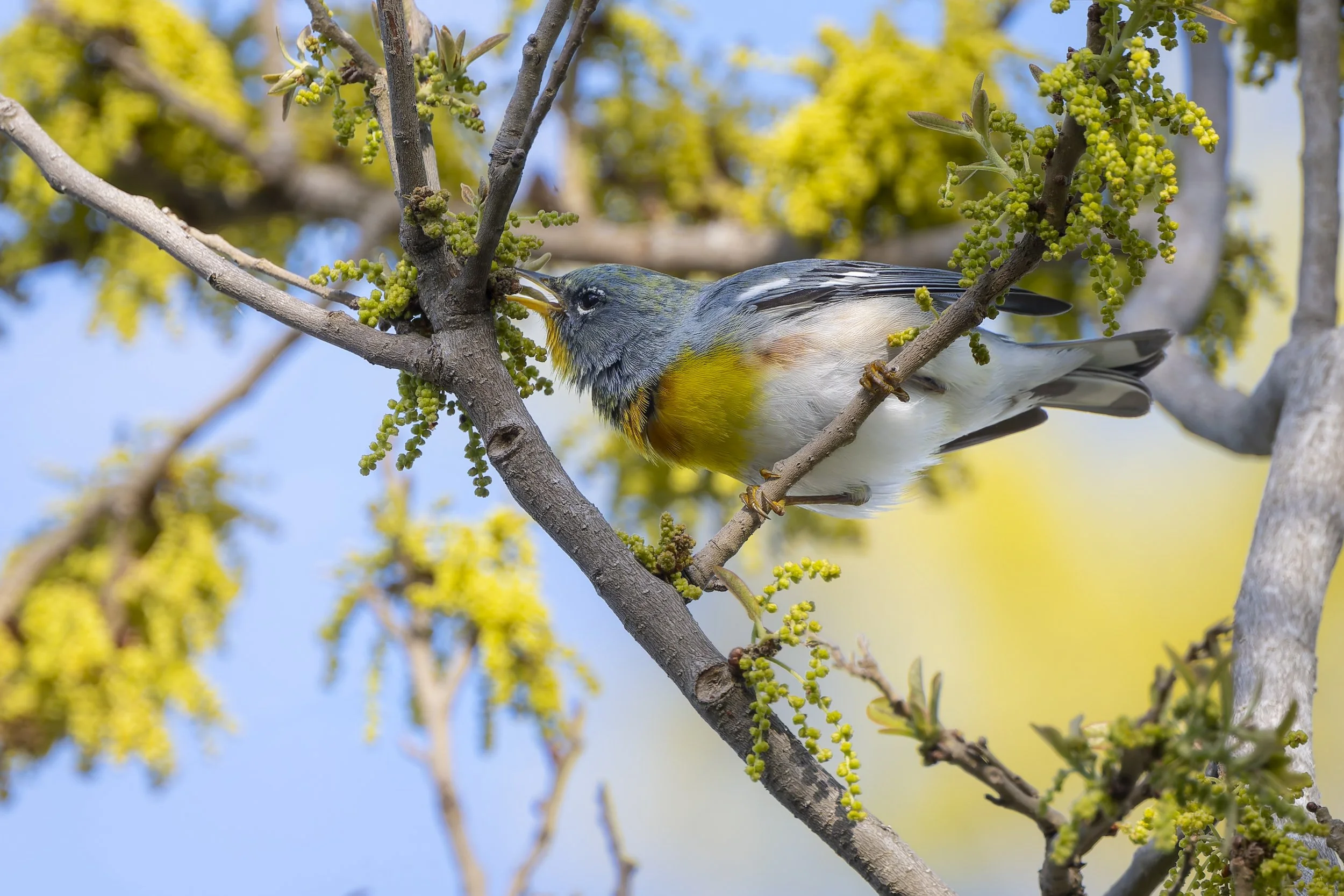
Northern Parula. Photographed in the oaks at the East Beach Picnic area. Nikon Z8 with Nikkor Z 800mm f/6.3 VR S lens at f/6.3, 1/1000 sec, ISO 450.
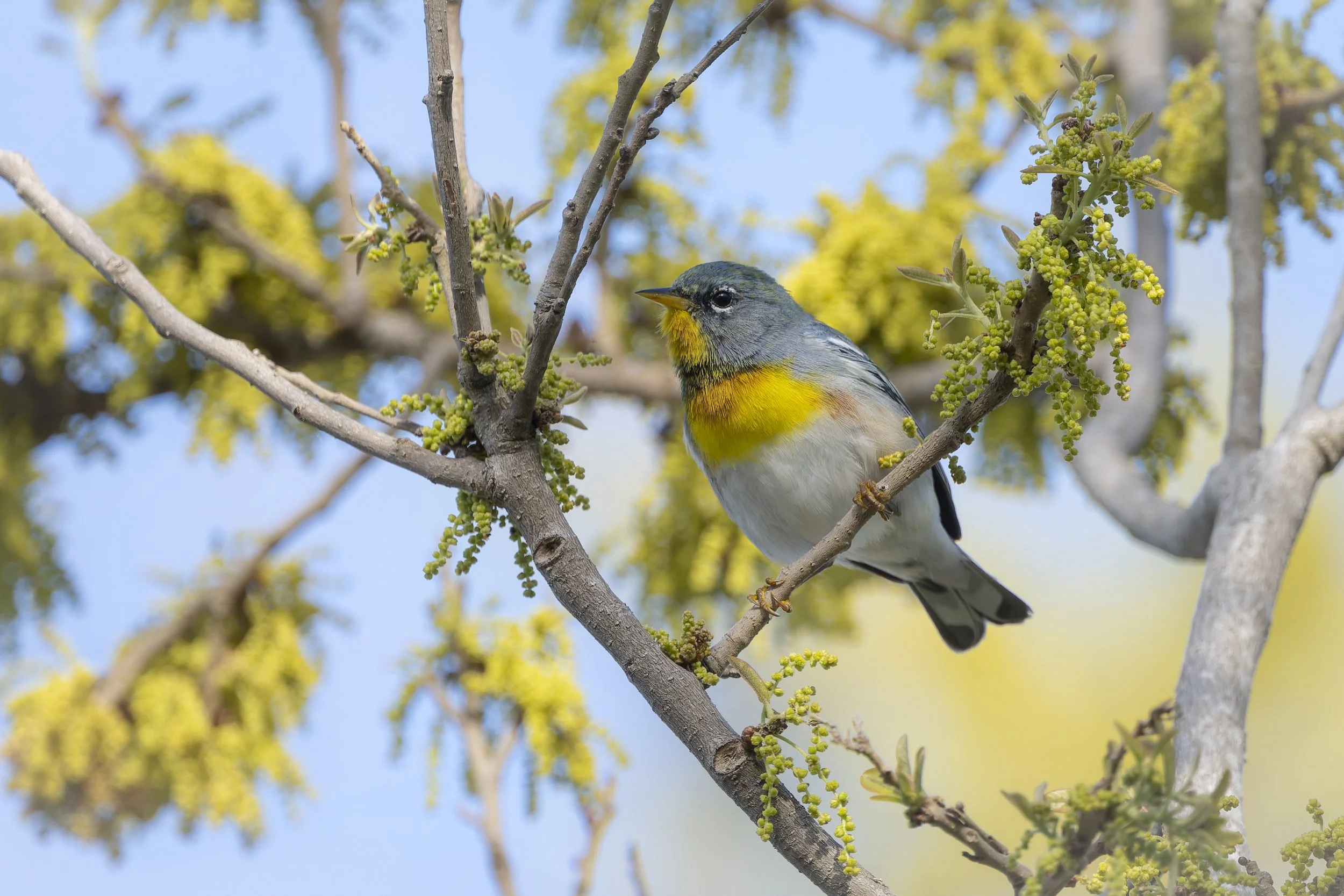
Northern Parula. Photographed in the oaks at the East Beach Picnic area. Nikon Z8 with Nikkor Z 800mm f/6.3 VR S lens at f/6.3, 1/1000 sec, ISO 500.
I walked out to the beach where a few Nanday Parakeets were making a racket. I walked along the beach trail hoping to see something, but all I got was a glance of a single Northern Parula in the sea grapes and a European Starling nesting in a tree cavity. On the way back, I also spotted an Eastern Phoebe in a tree near the parking lot.
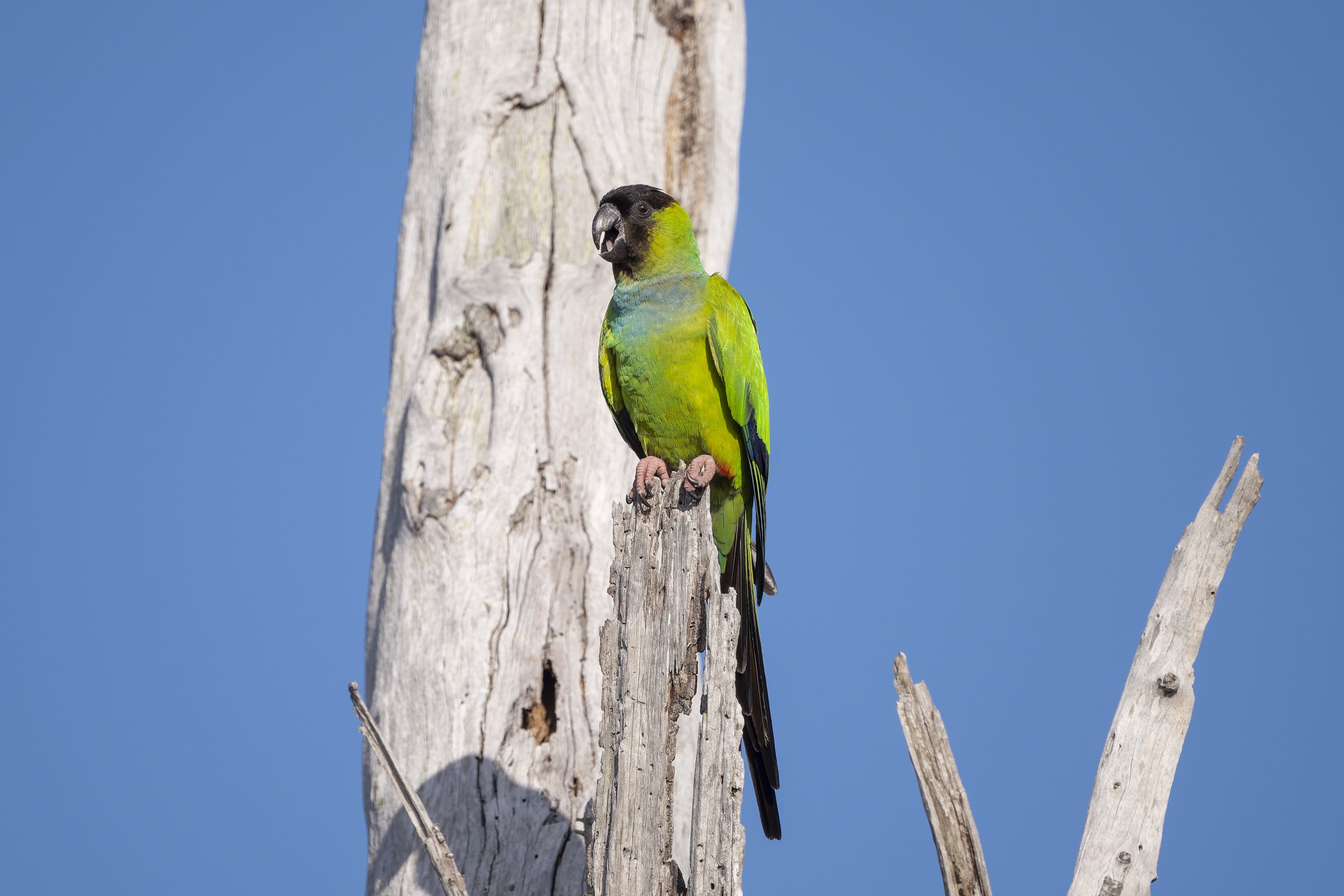
Nanday Parakeet. Photographed at the East Beach Picnic area. Nikon Z8 with Nikkor Z 800mm f/6.3 VR S lens at f/6.3, 1/1250 sec, ISO 140.
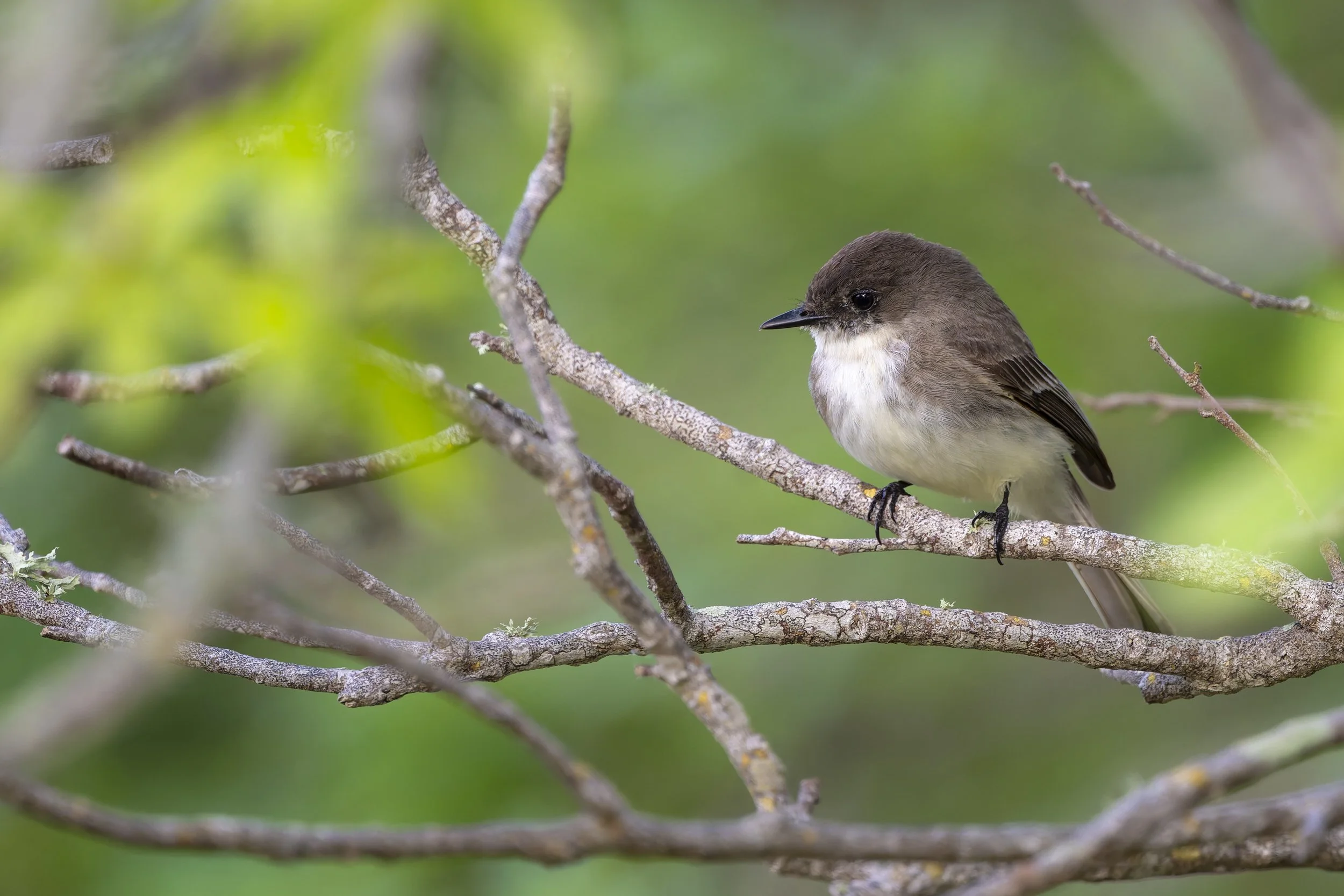
Eastern Phoebe. Photographed in the trees at the East Beach Picnic area. Nikon Z8 with Nikkor Z 800mm f/6.3 VR S lens at f/6.3, 1/1000 sec, ISO 2000.
I then drove down to the East Beach turnaround circle. The road of the turnaround circle was heavily damaged by the 2024 hurricanes and has still not been repaired. While the road was closed, the area was still open to pedestrians in 2025. Not anymore. Now there are signs that say “No Trespassing” which to me indicates that the area is off-limits to both cars and pedestrians. That’s too bad. This area is a popular spot for spring migrants, in particular Northern Parula, Prairie Warbler, Indigo Bunting, Brown-headed Cowbirds, and more.
So that’s the state of spring migration at De Soto for now. In short, it’s still early.
My next stop was North Beach where I thought I’d get some shorebird photography under my belt. Walking out onto the beach at high tide, I hung a right and went as far as I could go. Near the end of the beach there was a large flock of birds made up mostly of Laughing Gulls, but also mixed in where Sandwich Terns, Least Terns, Marbled Godwit, and Willet. There also seemed to be a lot of Wilson’s Plover scurrying about, so I took extra care to make sure I didn’t trample any nests (which can be a simple divot in the sand).
There were two photographers in the area. One was a wedding photographer photographing a couple wearing their wedding clothes. The other was a bird photographer who, quite frankly, was far too close to the birds. He was photographing a Reddish Egret (white morph).
Now this was the first time I have seen the White Morph in a couple of years, so I was really excited to him. I spent the next half hour photographing this bird until the setting sun ended my shoot. It was really good.
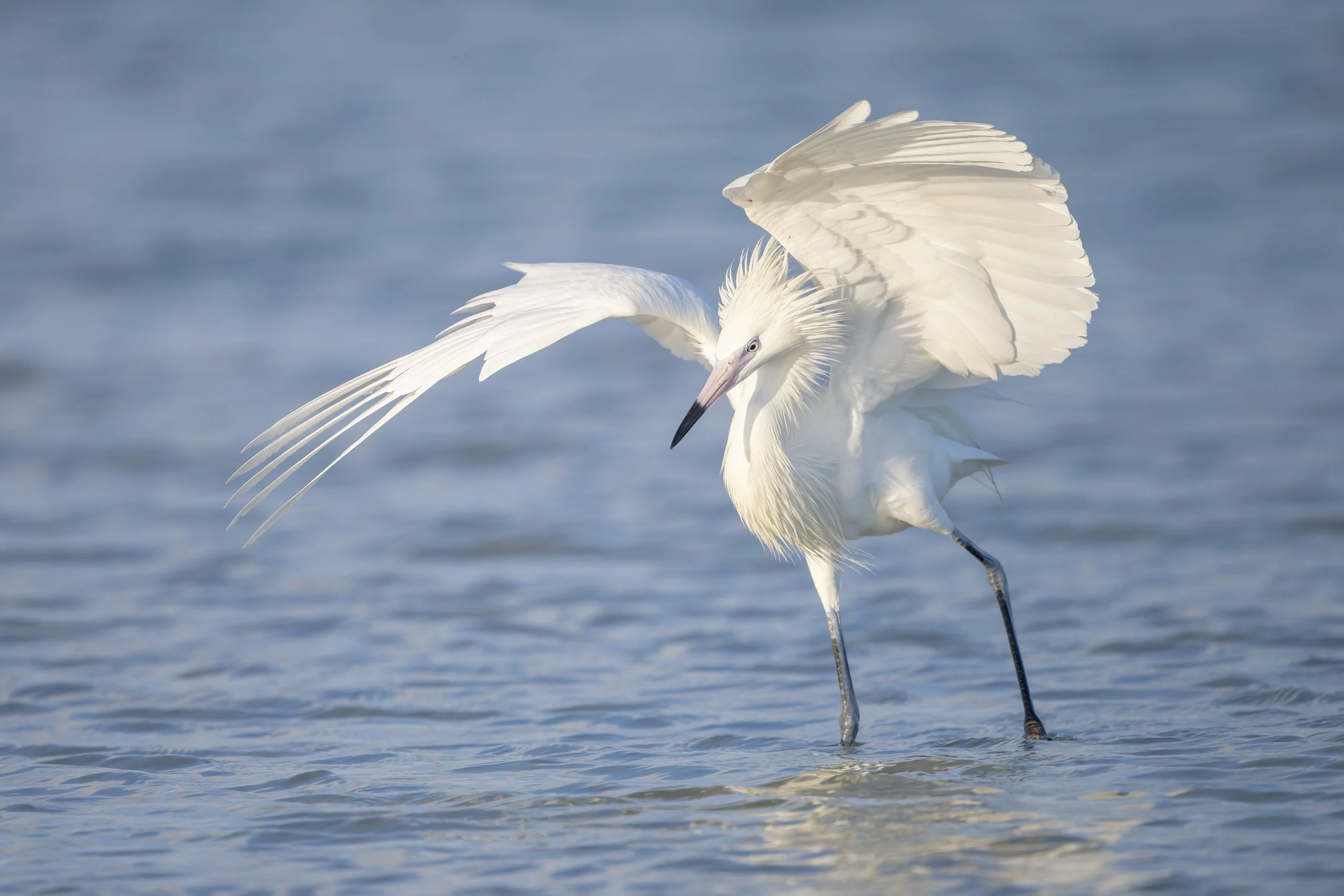
Reddish Egret (white morph). This bird is a total badass! Photographed on North Beach. Nikon Z8 with Nikkor Z 800mm f/6.3 VR S lens at f/6.3, 1/2000 sec, ISO 360.
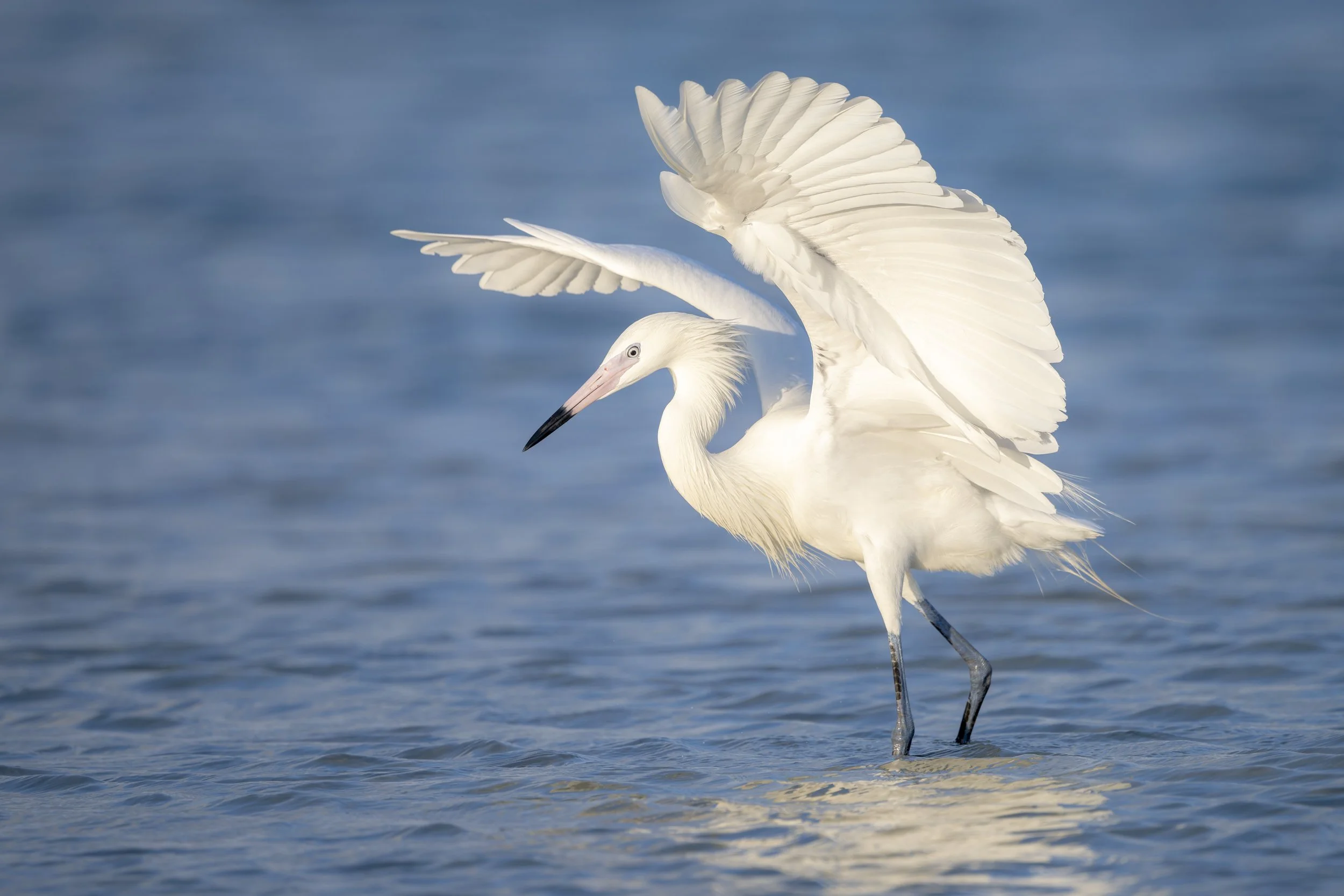
Reddish Egret (white morph). Photographed on North Beach. Nikon Z8 with Nikkor Z 800mm f/6.3 VR S lens at f/6.3, 1/2000 sec, ISO 250.
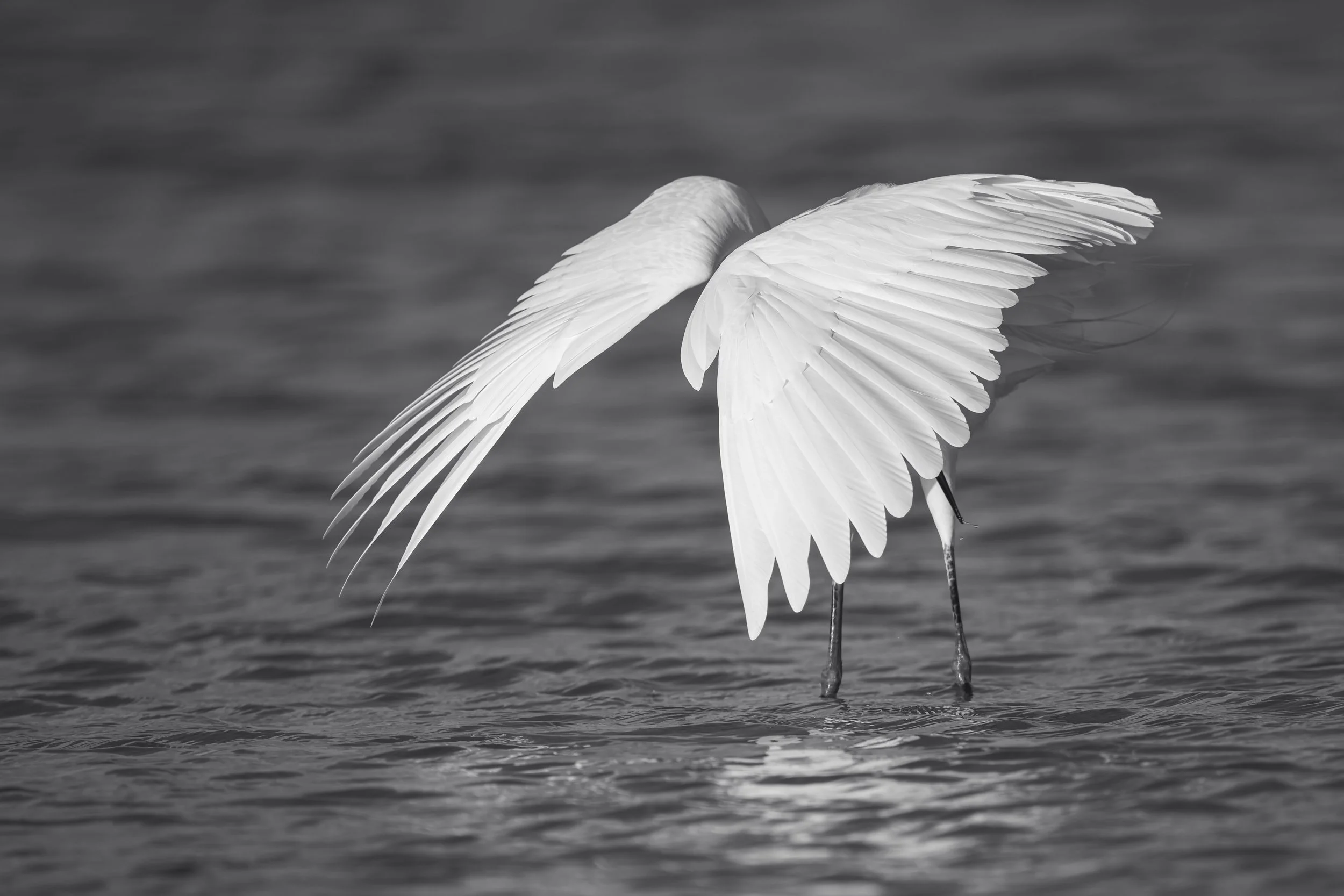
Reddish Egret (white morph). Photographed on North Beach. Nikon Z8 with Nikkor Z 800mm f/6.3 VR S lens at f/6.3, 1/2000 sec, ISO 360.
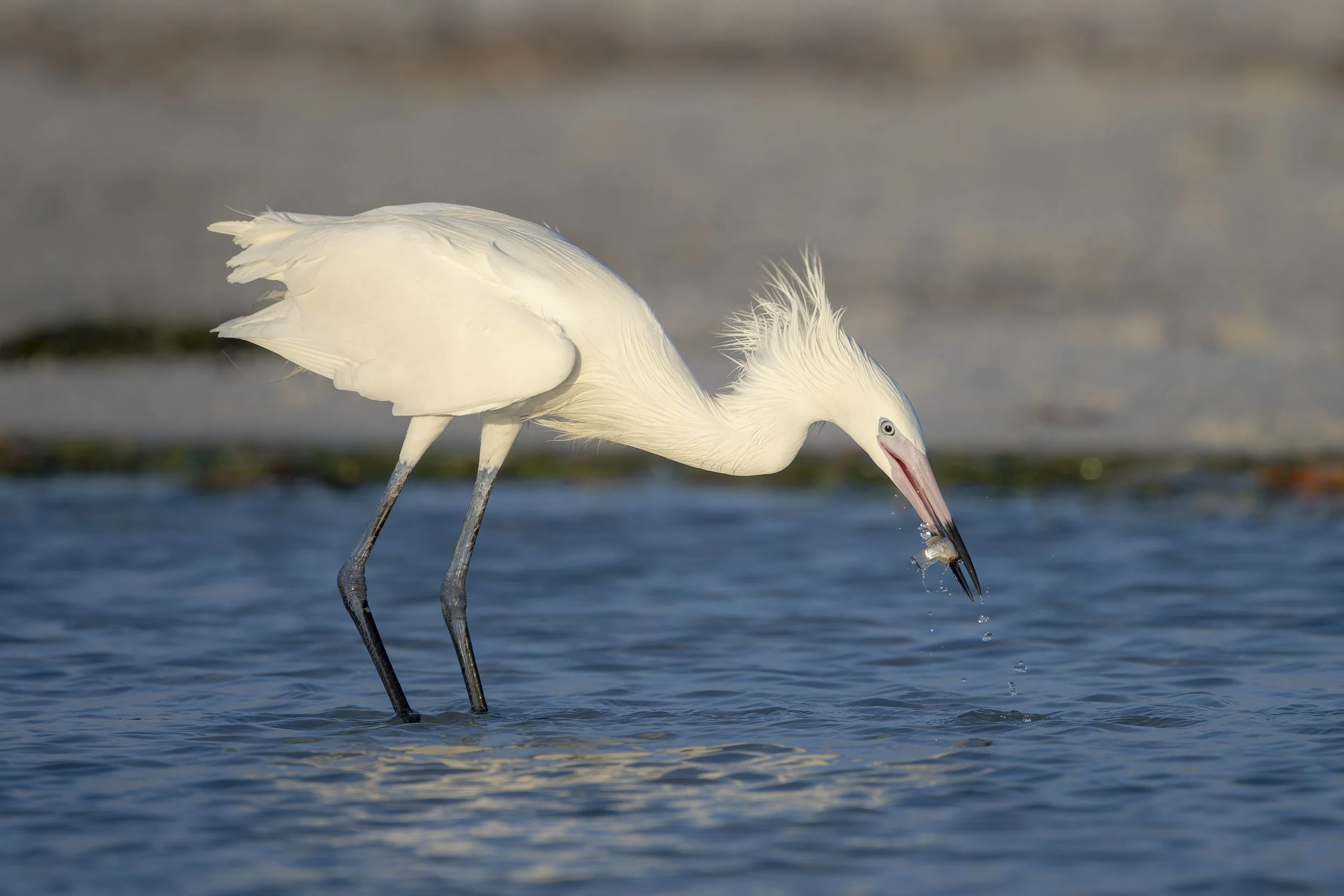
Reddish Egret (white morph). Photographed on North Beach. Nikon Z8 with Nikkor Z 800mm f/6.3 VR S lens at f/6.3, 1/2000 sec, ISO 320.
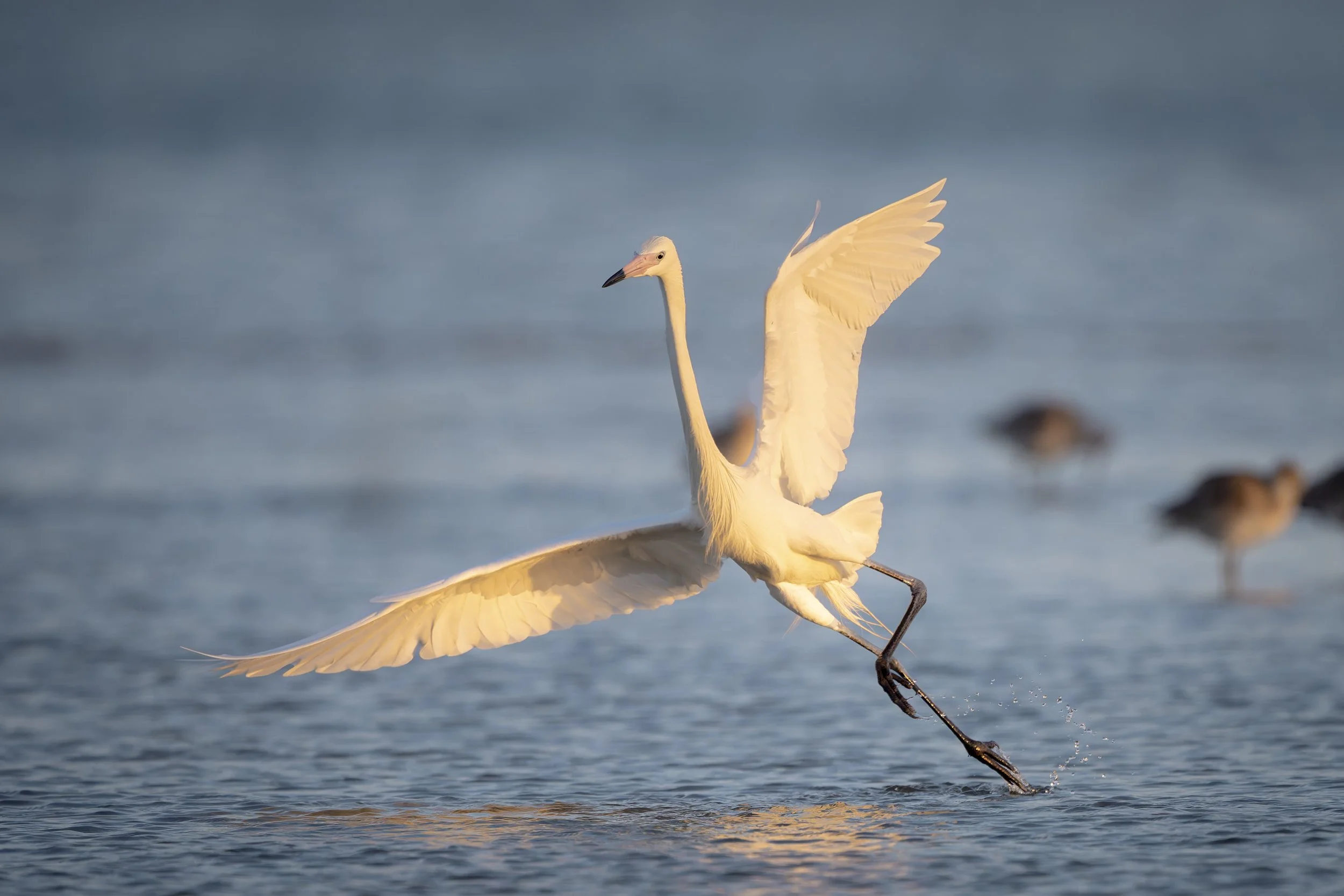
Reddish Egret (white morph). Photographed on North Beach. Nikon Z8 with Nikkor Z 800mm f/6.3 VR S lens at f/6.3, 1/2500 sec, ISO 1800.
As the sun was setting, I spotted two American Oystercatchers at the water’s edge. Turns out it was AE (the banded bird) and “Archie,” probably the two most well-known Oystercatchers in Florida, if not the entire east coast. This mated couple have fledged new chicks for the past several years at De Soto so I am hopeful they will this year too. It was good to see them again. They are like old friends now.
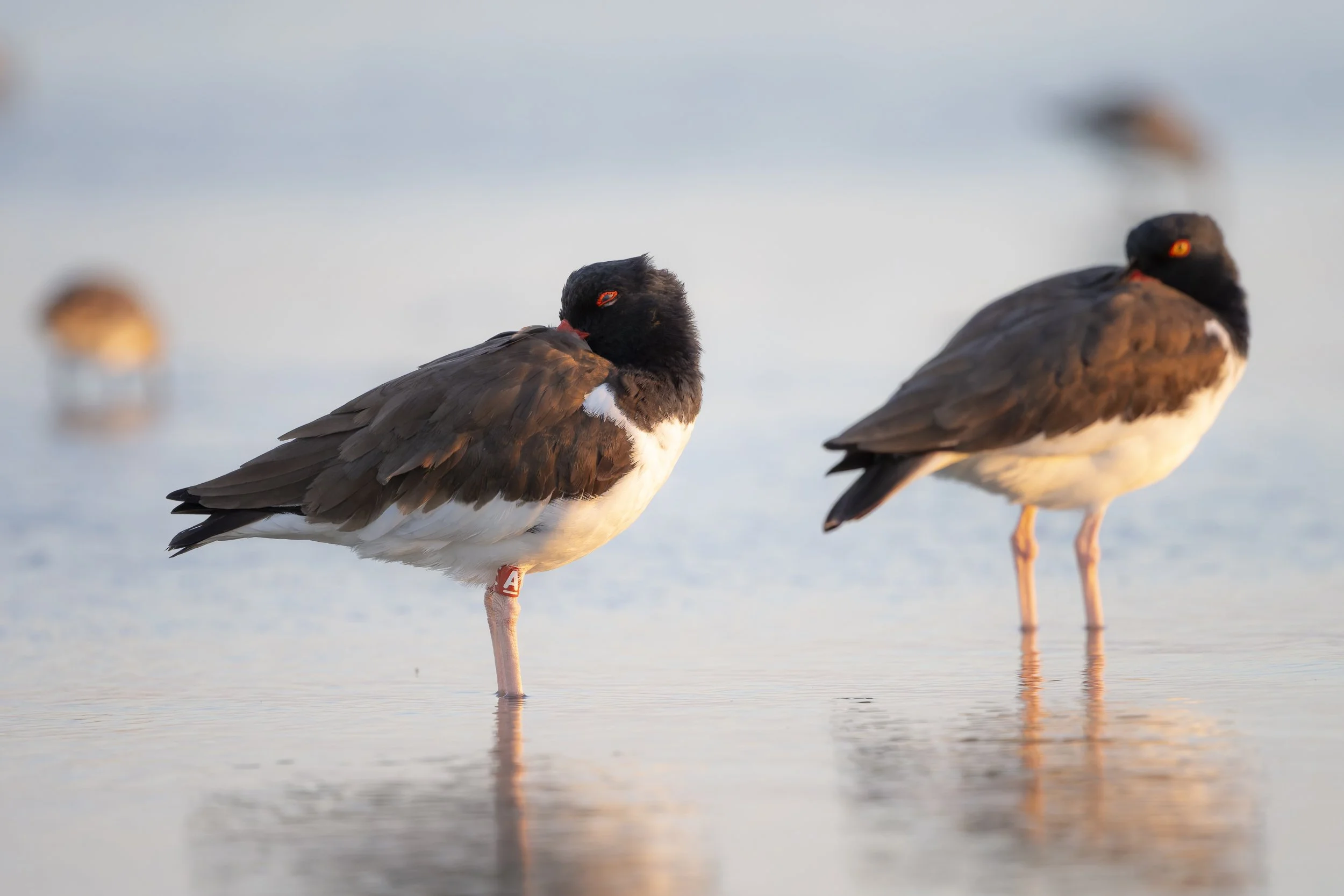
American Oystercatchers. “AE”, the banded bird on the left is the female and her mate, “Archie” on the right. Photographed on North Beach. Nikon Z8 with Nikkor Z 800mm f/6.3 VR S lens at f/6.3, 1/1250 sec, ISO 1250.
While the spring migration season is not quite here yet, it was such a thrill to see the white morph. Even though I didn’t photograph the Marbled Godwits, Ruddy Turnstones, gulls, terns, and other birds, I was very happy to see them there. There weren’t many birds on North Beach the last several times I visited, so this was a really positive sign.
I’m going to keep a close eye on things and will be taking time off work in late March / early April so that I can focus on bird photography. I’ll be making regular blog posts throughout the spring, so check back often.
Happy birding!