Prairies! (and more)
Over the last few days I’ve been out and about looking for those long-awaited spring migrants. Northern Parula continue to be the most commonly seen warbler, aside from Palm Warblers and Black-and-white Warblers. However, this weekend, I managed to find a whole bunch of Prairie Warblers.
The scene was Fort De Soto Park, Saturday morning. The first Prairie I came across was near the old Ranger’s house. He was in the grass along the side fence. He flitted from tree to tree, and I took all kind of blurry shots. The best I got was this photo where he is about to pluck a spider out of its web.
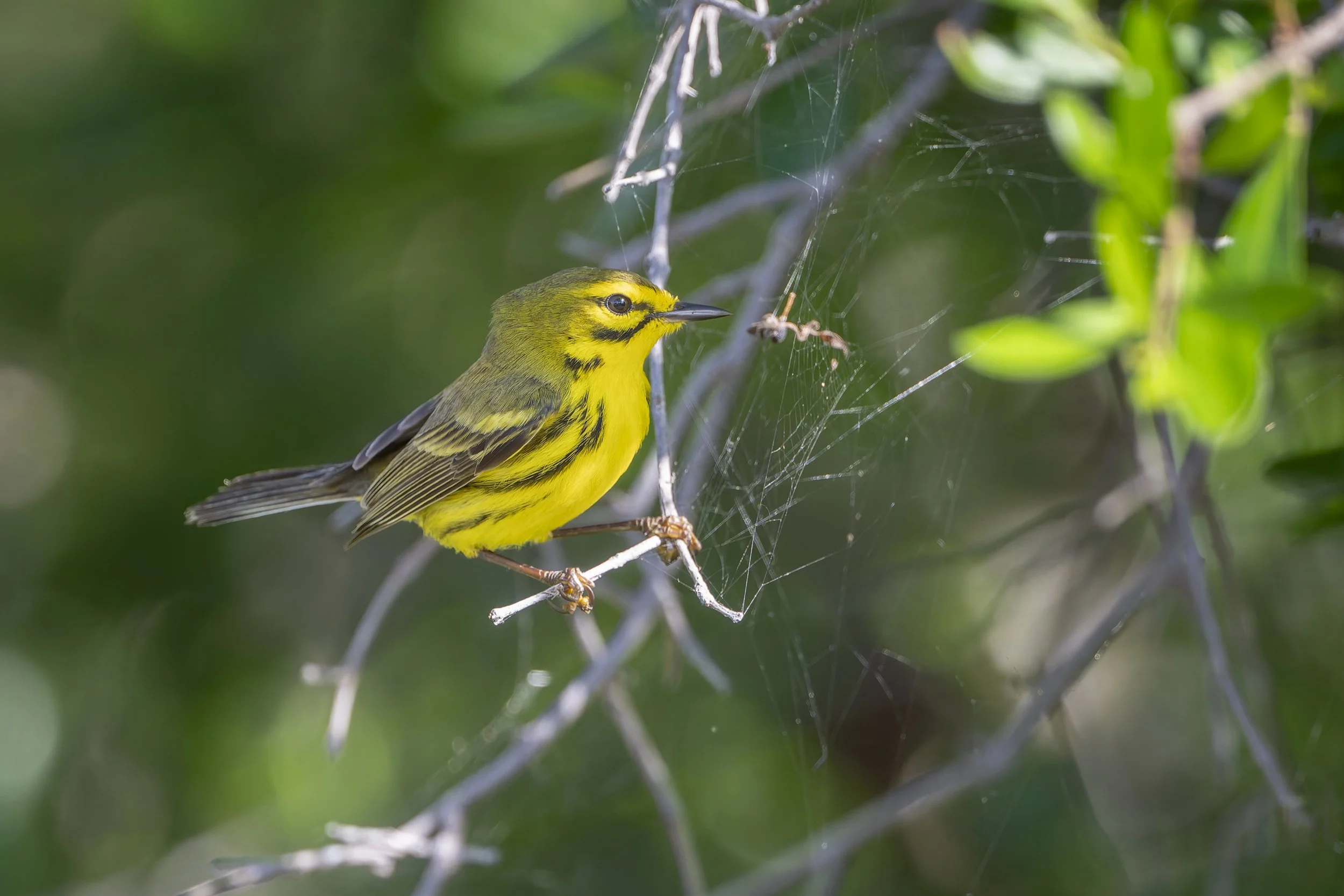
Prairie Warbler. 4 Apr 2026, Fort De Soto Park. Nikon Z8 with Nikkor Z 800mm f/6.3 VR S lens at f/6.3, 1/1250 sec, ISO 2000.
Not seeing much more than this single Prairie around the Ranger’s house and fountain, I moved on to the trail that starts near the park headquarters at the flagpole. Here is where I saw around a dozen Prairies silently working over small bushes low to the ground, looking over every limb and leaf in search of small insects and worms.
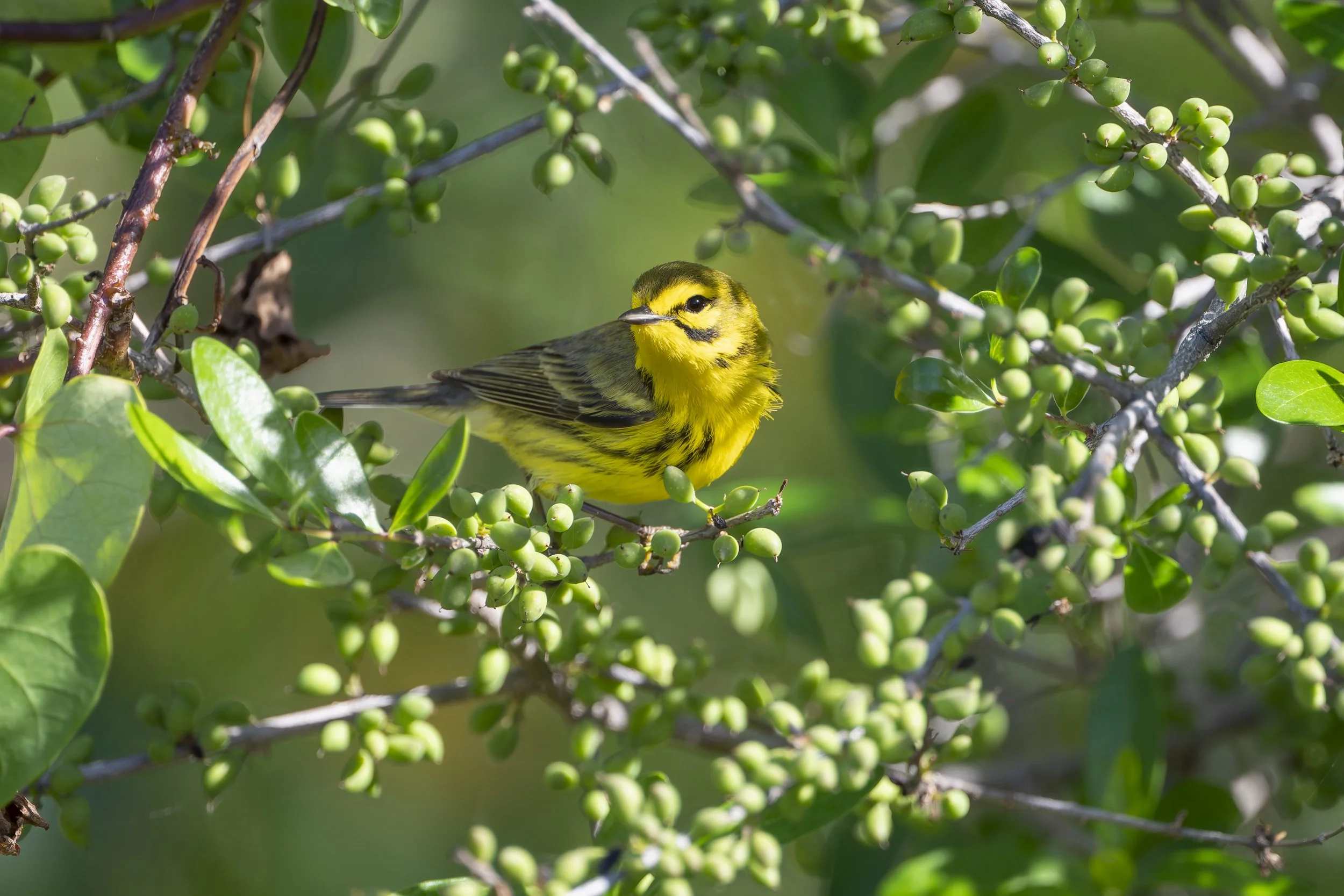
Prairie Warbler. 4 Apr 2026, Fort De Soto Park. Nikon Z8 with Nikkor Z 800mm f/6.3 VR S lens at f/6.3, 1/1250 sec, ISO 720.
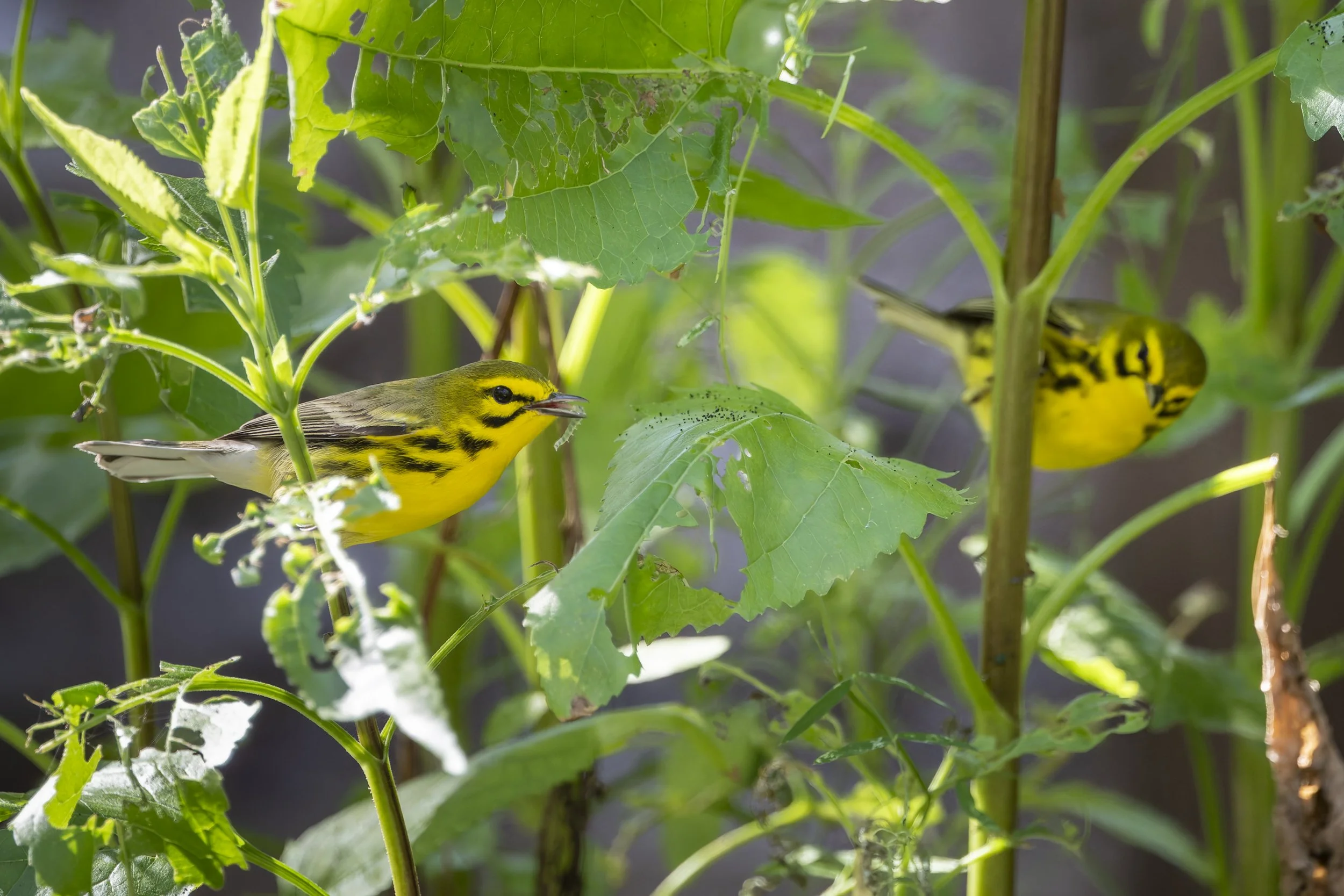
Prairie Warbler. 4 Apr 2026, Fort De Soto Park. Two male Prairies in the same plant, one eating a small green worm. Nikon Z8 with Nikkor Z 800mm f/6.3 VR S lens at f/6.3, 1/800 sec, ISO 2200.
A Black-and-white Warbler, seeing how successful the Prairies were in their foraging, left the comfort of the Live Oak tree and joined the Prairies in the bushes.
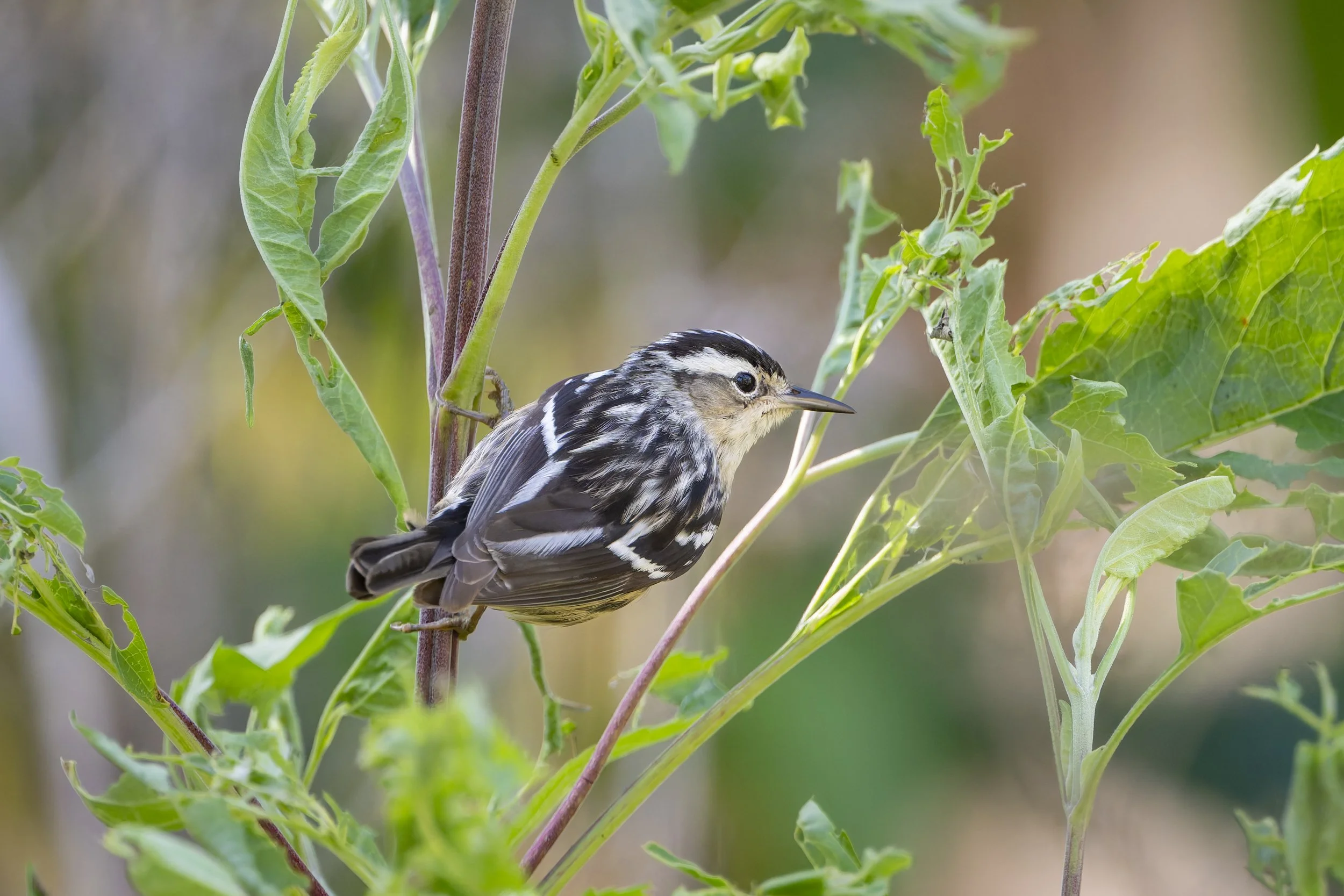
Black-and-white Warbler. This is a female. You can tell because she does not have a black throat that is seen in males. 4 Apr 2026, Fort De Soto Park. Nikon Z8 with Nikkor Z 800mm f/6.3 VR S lens at f/6.3, 1/800 sec, ISO 2200.
I continued on the trail, but I keep running into more Prairies. This handsome bird perched nicely for me in an evergreen tree.
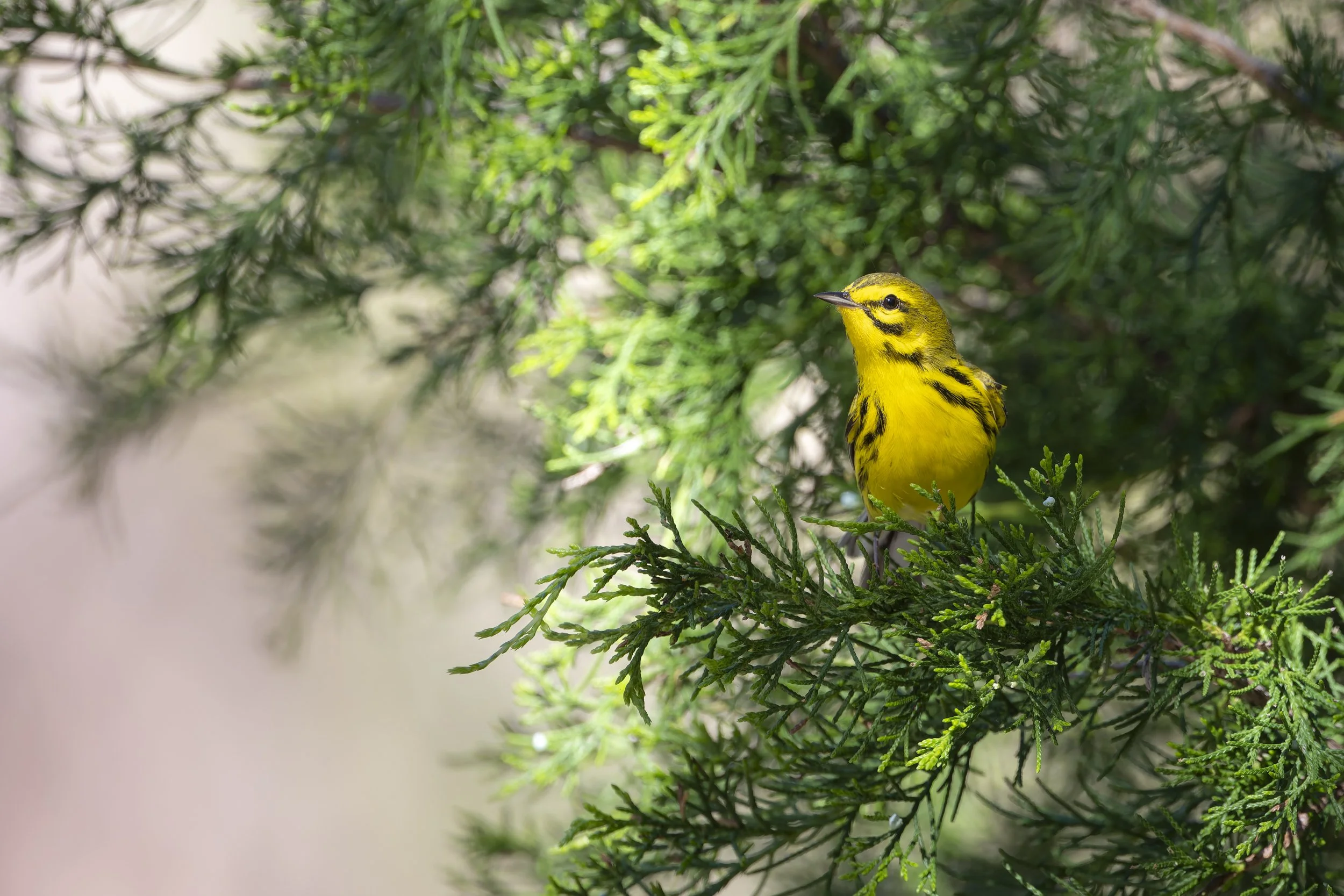
Prairie Warbler. 4 Apr 2026, Fort De Soto Park. Nikon Z8 with Nikkor Z 800mm f/6.3 VR S lens at f/6.3, 1/1250 sec, ISO 1250.
I went to the East Beach picnic area and didn’t see or hear anything in the trees. This is usually a good spot for Vireos. I walked out the the beach and checked out the sea grapes. Here I found a couple of Northern Parula and a Palm Warbler. This area gets direct sunlight and the shadows around the leaves is especially harsh. I had a hard time getting a good photo here.
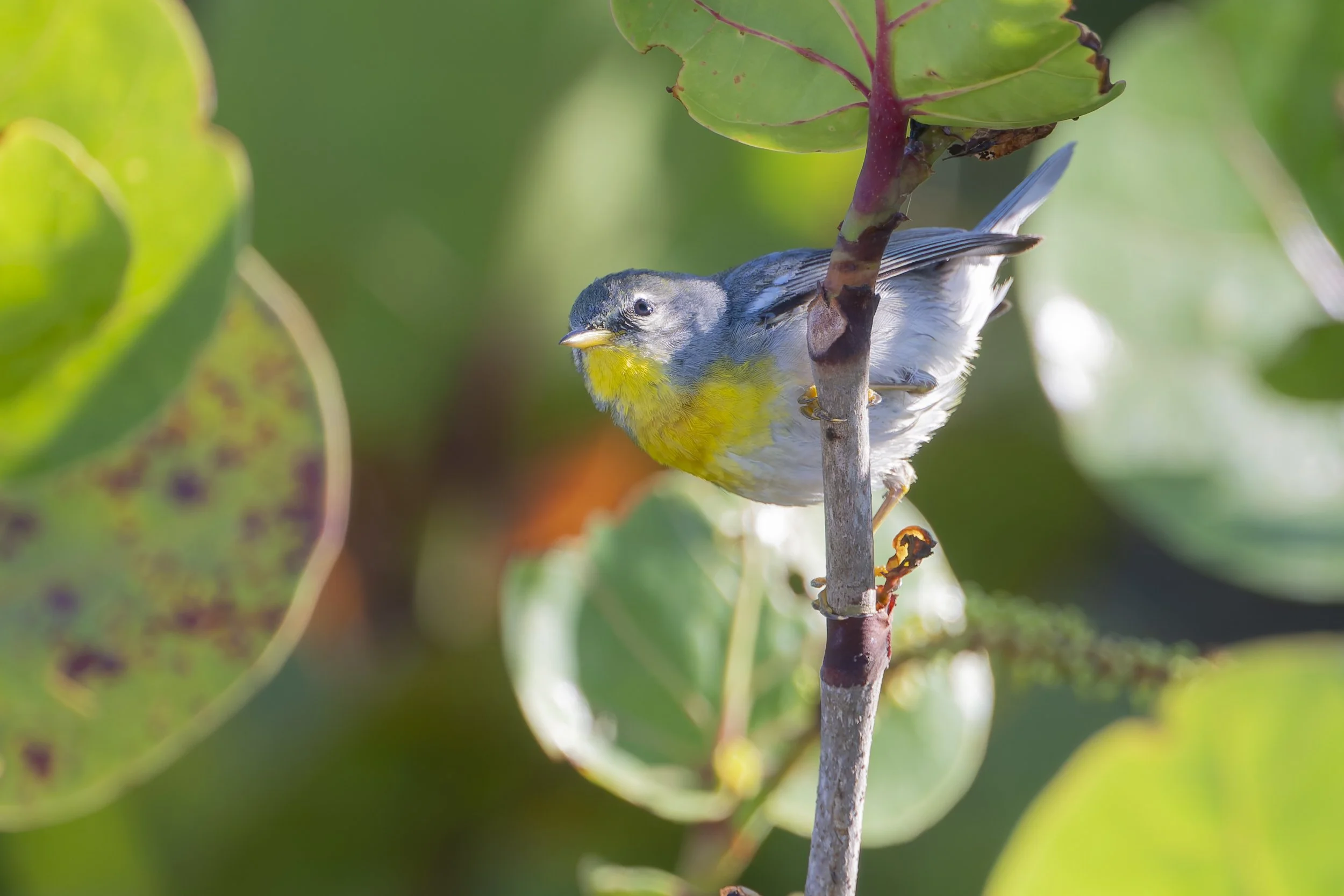
Northern Parula. 4 Apr 2026, Fort De Soto Park. Nikon Z8 with Nikkor Z 800mm f/6.3 VR S lens at f/6.3, 1/1250 sec, ISO 560.
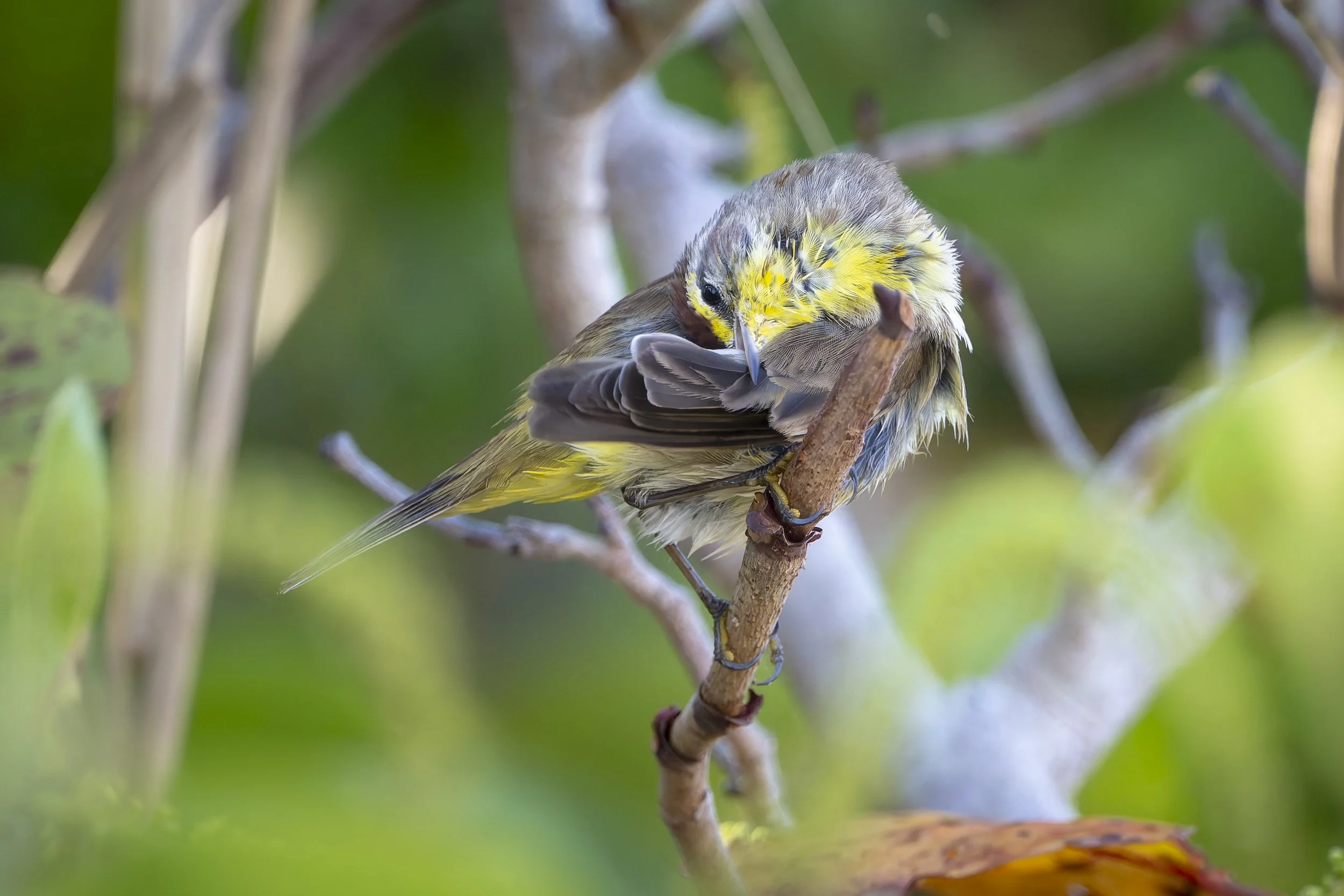
Palm Warbler. 4 Apr 2026, Fort De Soto Park. This ball of feathers is a Palm Warbler bent over backwards preening. Nikon Z8 with Nikkor Z 800mm f/6.3 VR S lens at f/6.3, 1/1250 sec, ISO 2500.
The East Beach turnaround circle/point is now closed, with “No Trespassing” signage. It’s too bad, as this is usually a really good spot for birding. I also did a slow drive-thru the Arrowhead Picnic area, but didn’t see or hear anything.
This wrapped up my morning at Fort De Soto. Later that afternoon I visited my local park, Lettuce Lake Conservation Park, in north Tampa. In the native plant garden around the nature center I found a Yellow-throated Warbler gathering nesting material.
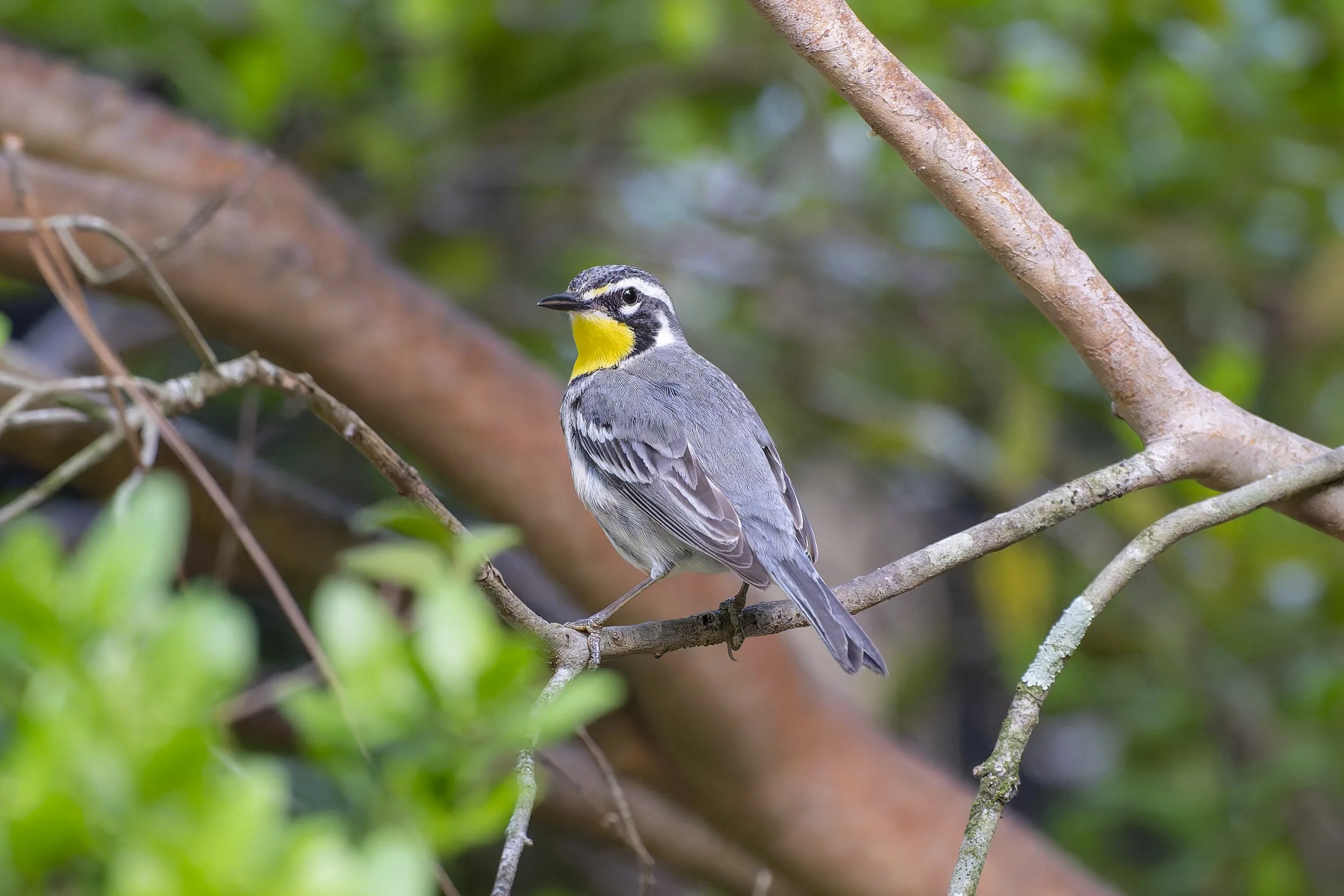
Yellow-throated Warbler. 4 Apr 2026, Lettuce Lake Conservation Park. Nikon Z8 with Nikkor Z 180-600mm f/5.6-6.3 VR lens at 600mm, f/6.3, 1/1000 sec, ISO 8000.
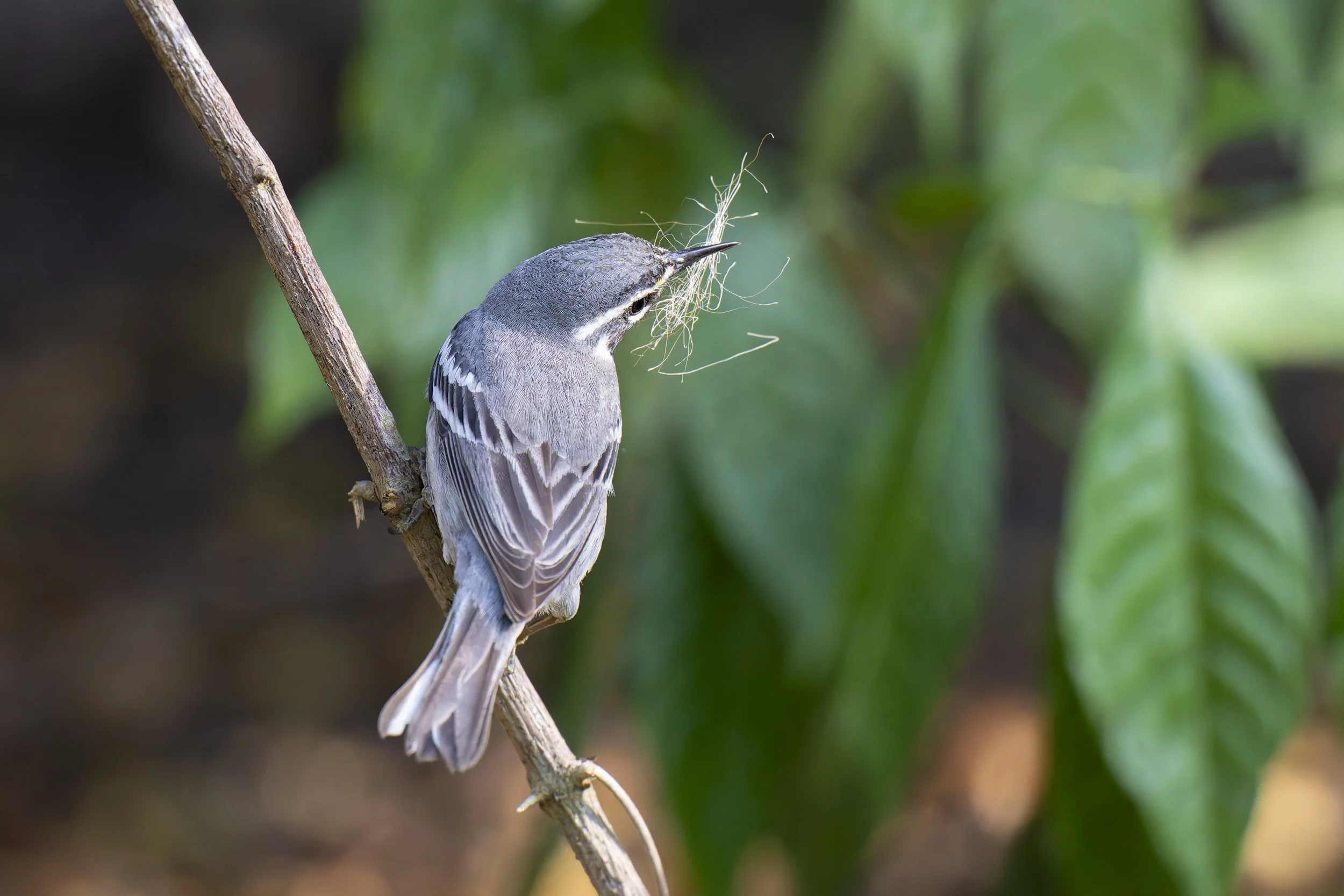
Yellow-throated Warbler. Gathering nesting material in the native plant garden. 4 Apr 2026, Lettuce Lake Conservation Park. Nikon Z8 with Nikkor Z 180-600mm f/5.6-6.3 VR S lens at 600mm, f/6.3, 1/1000 sec, ISO 10,000.
I heard many Northern Parula in the trees along the boardwalk at Lettuce Lake, and occasionally I would spot one. When I photographed the bird below, I thought it had caught a bug. Only when I downloaded the images did I realize that this bird, like the Yellow-throated Warbler, was also collecting nesting material. These small, hairlike filaments are a mix of stringy growth coming from the dead tree limbs and spider webs.
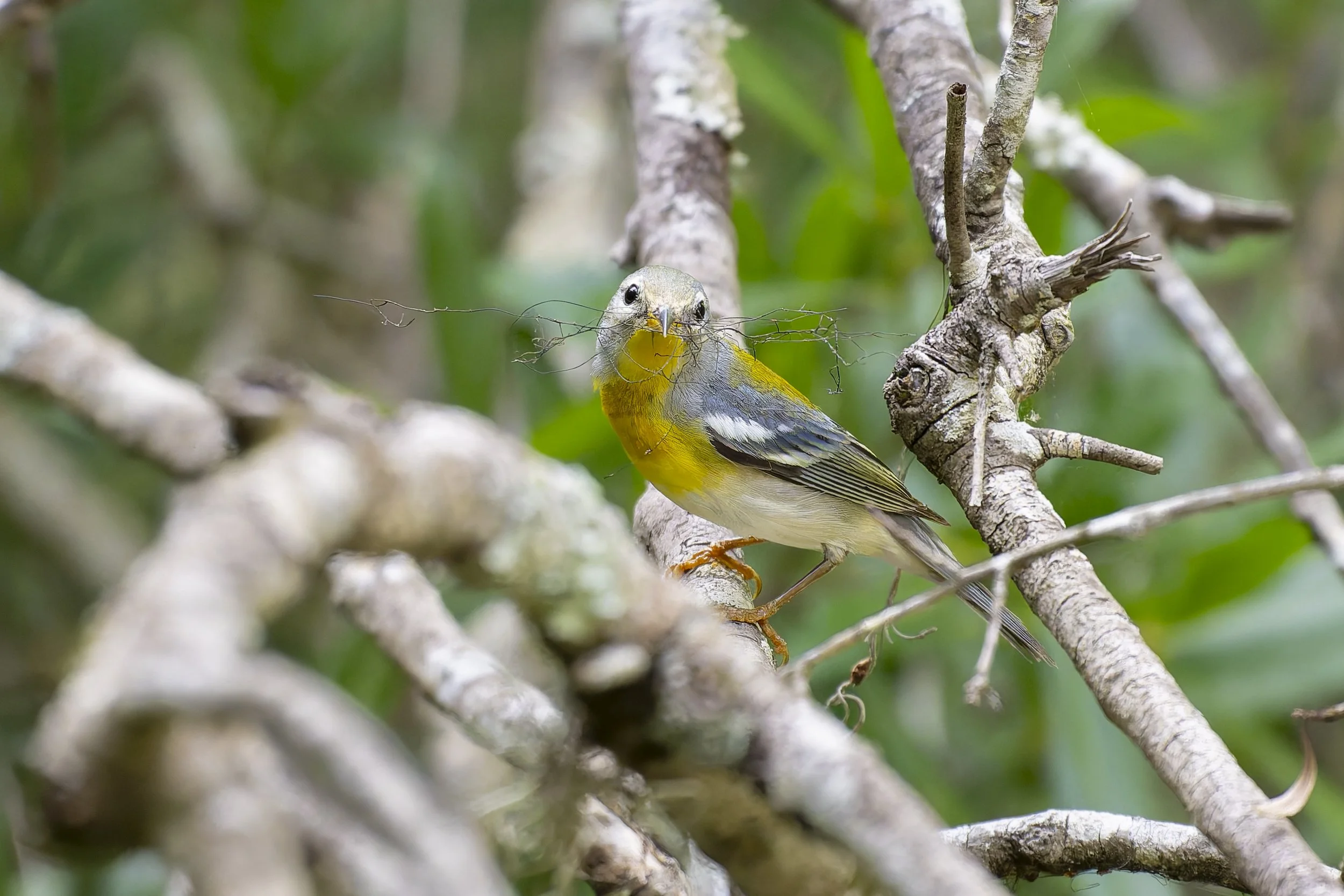
Northern Parula. Gathering nesting material from dead tree branches. 4 Apr 2026, Lettuce Lake Conservation Park. Nikon Z8 with Nikkor Z 180-600mm f/5.6-6.3 VR S lens at 600mm, f/6.3, 1/1000 sec, ISO 4500.
While I was at Fort De Soto, I also saw a small flock of about a dozen Cedar Waxwings fly over. I didn’t see them land. This aligns with the many reports of Cedar Waxwings that others are also making.
At Lettuce Lake and around my home I have been hearing and seeing Great-crested Flycatchers. Others have been posting their sightings online as well.
Merlin has been picking up a wide variety of vireos, but my eye nor my camera has seen them yet.
They are out there guys! Go find ‘em!
Happy birding!