Wakodahatchee Wetlands: Two Visits, Two Very Different Experiences
Living in Tampa, I don’t get down to southern Florida too often. The harrowing 4-hour white-knuckling driving experience along Florida’s interstates is just too much. But in the last two months, I have made that drive twice. Each time I tell myself I won’t ever do that again.
The first visit to Wakodahatchee Wetlands was on Saturday, February 28 in Delray Beach. I had an appointment at a local jeweler at 2pm to pick up a watch (I’m also a watch enthusiast). Once I picked up my watch I had a little time so I headed over to Wakodahatchee Wetlands. This nature park was created by the Palm Beach County Water Utilities system on reclaimed land in the middle of an urban environment. Its standout feature is a wooden boardwalk that leads visitors through the ponds and marshes. In spring, the park becomes a rookery for a wide variety of nesting birds. The birds do not see people on the boardwalk as a threat, so they nest literally an arms-length away from the boardwalk. Therefore, you do not need a long lens here. Unfortunately, I didn’t think this through and absentmindedly grabbed my Nikon Z8 with attached 800mm lens when I left the house. Bringing that lens was a big mistake. It was simply too much reach to photograph birds in this park.
I arrived on this Saturday afternoon around 4pm to an empty parking lot. It was lightly raining, which probably had something to do with that. I had the boardwalk to myself and a few other hearty souls.
All kinds of birds were nesting with Wood Storks and Great Egrets making up the bulk of the birds. Also nesting were Tricolored Heron, a few Glossy Ibis, Great Blue Heron, and Anhinga. The only chicks hatched at this time were the Great Blue Herons; they are the earliest to hatch.
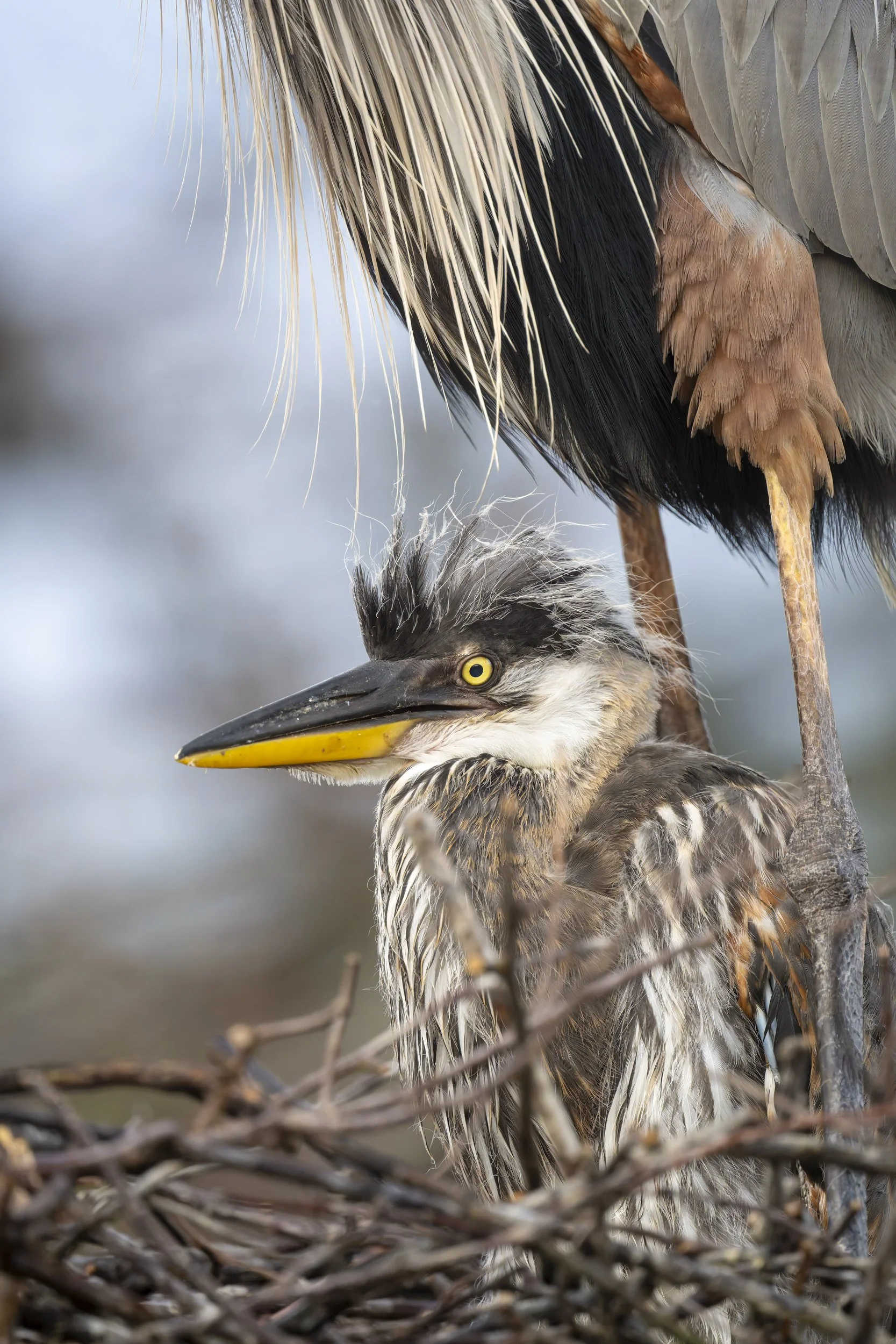
Great Blue Heron. Nikon Z8 with Nikkor Z 800mm f/6.3 lens at f/6.3, 1/2500 sec, ISO 4000.
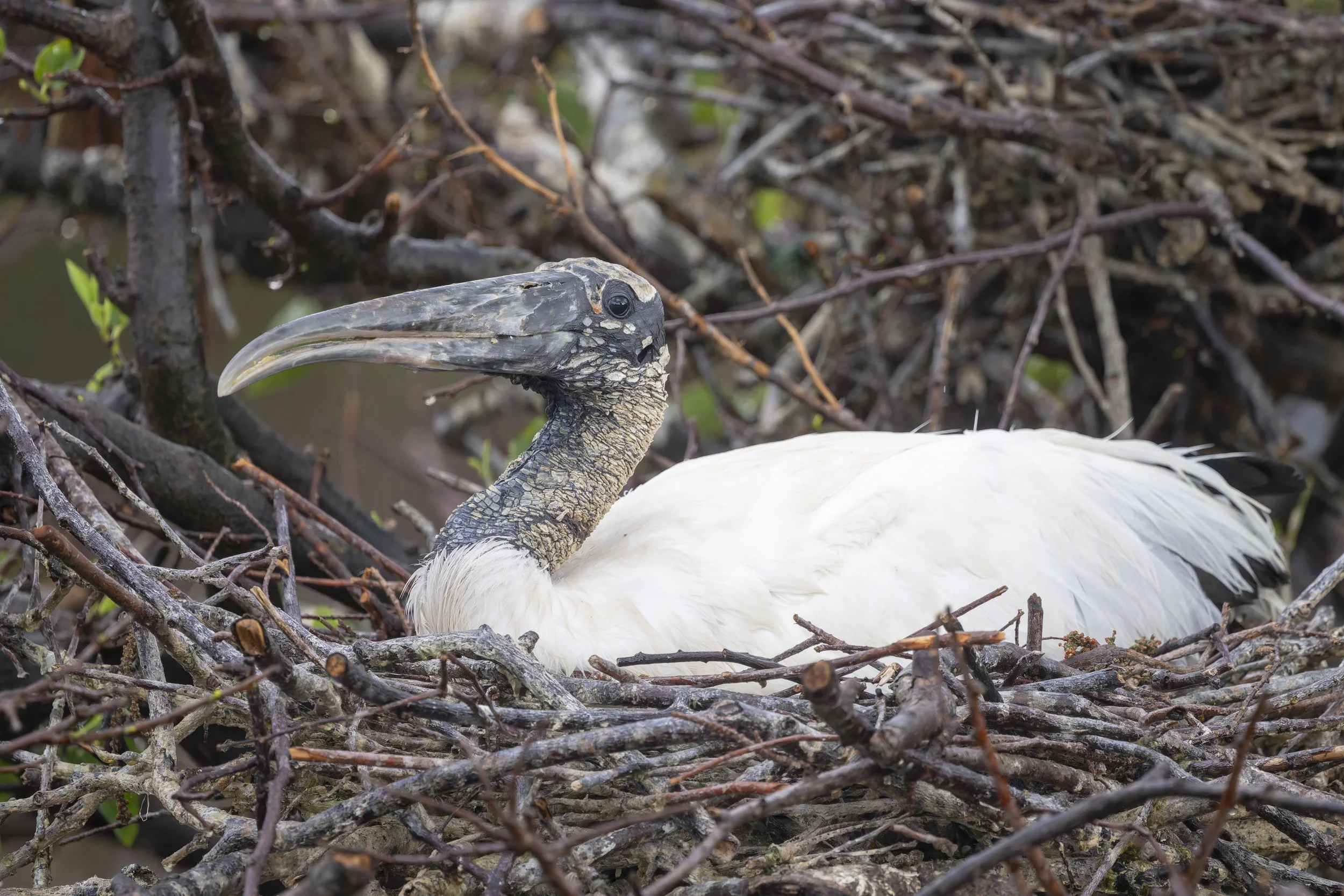
Wood Stork. Nikon Z8 with Nikkor Z 800mm f/6.3 lens at f/6.3, 1/800 sec, ISO 4000.
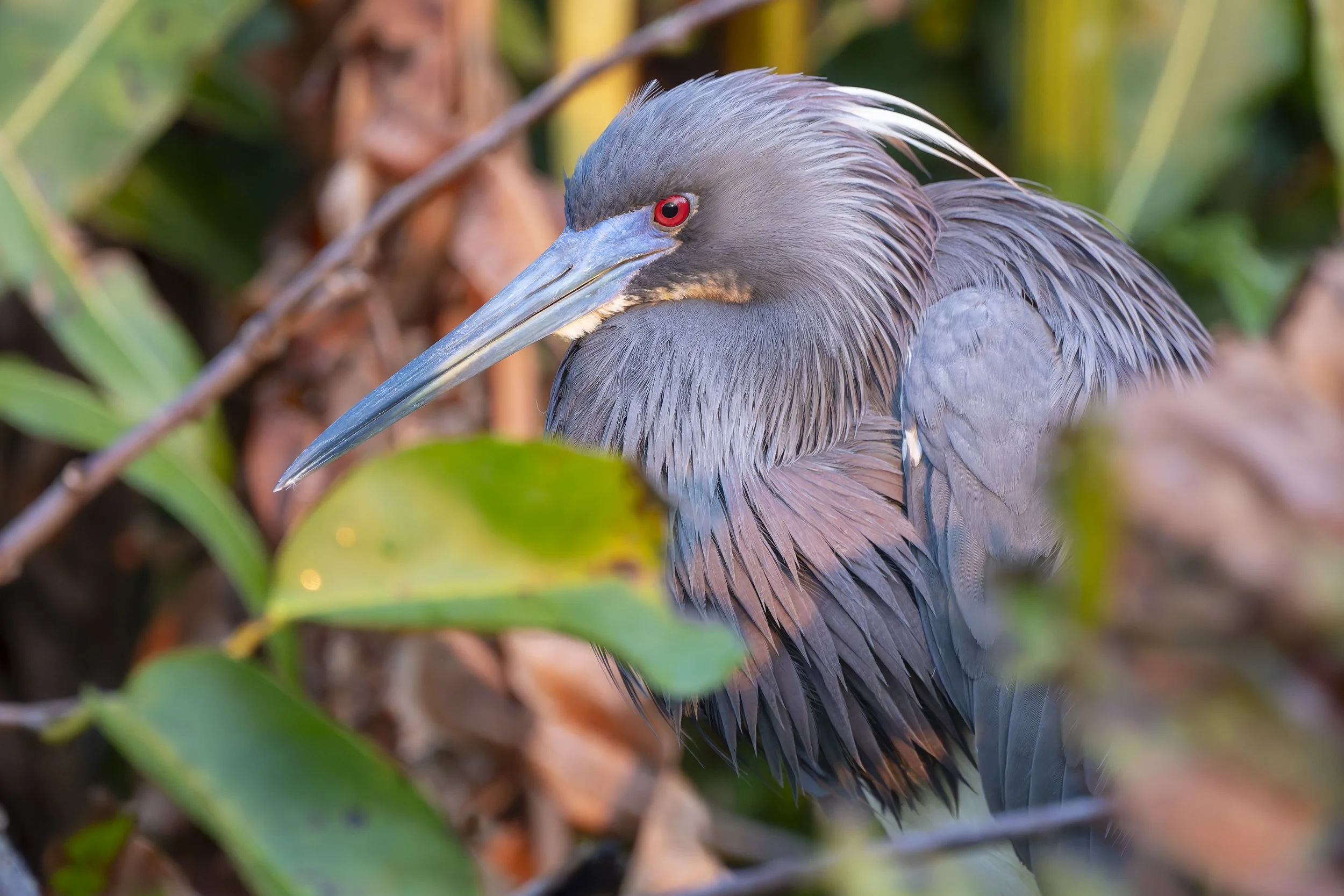
Tricolored Heron. Nikon Z8 with Nikkor Z 800mm f/6.3 lens at f/6.3, 1/640 sec, ISO 5600.
I was surprised by the number of Green Herons that I saw - at least a dozen. Usually secretive little birds, these guys were particularly active and out in the open. The highlight of the day, though, was spotting a beautiful Least Bittern in the trees. I was lucky to be able to get a clean shot through the branches.
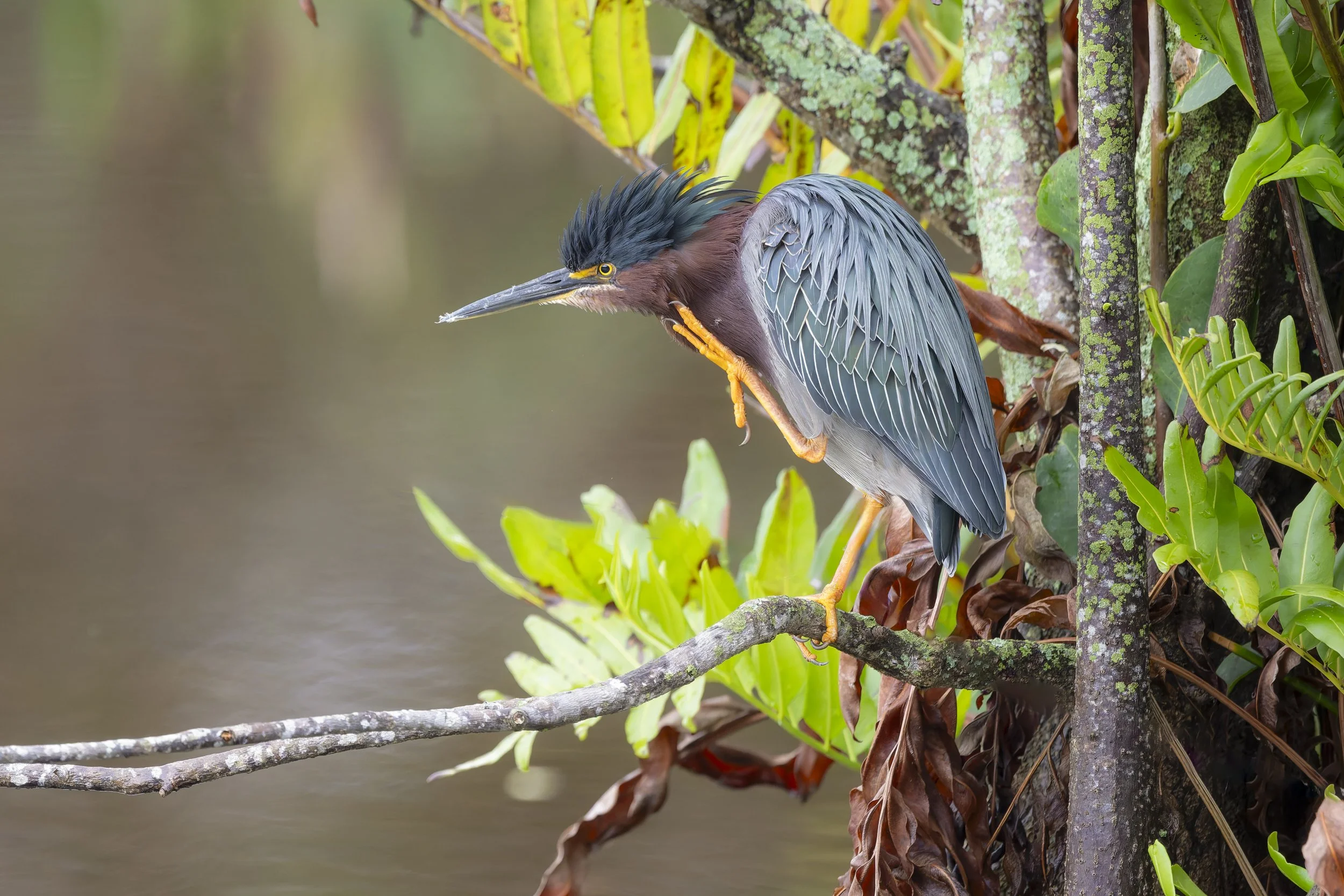
Green Heron. Nikon Z8 with Nikkor Z 800mm f/6.3 lens at f/6.3, 1/1000 sec, ISO 4000.
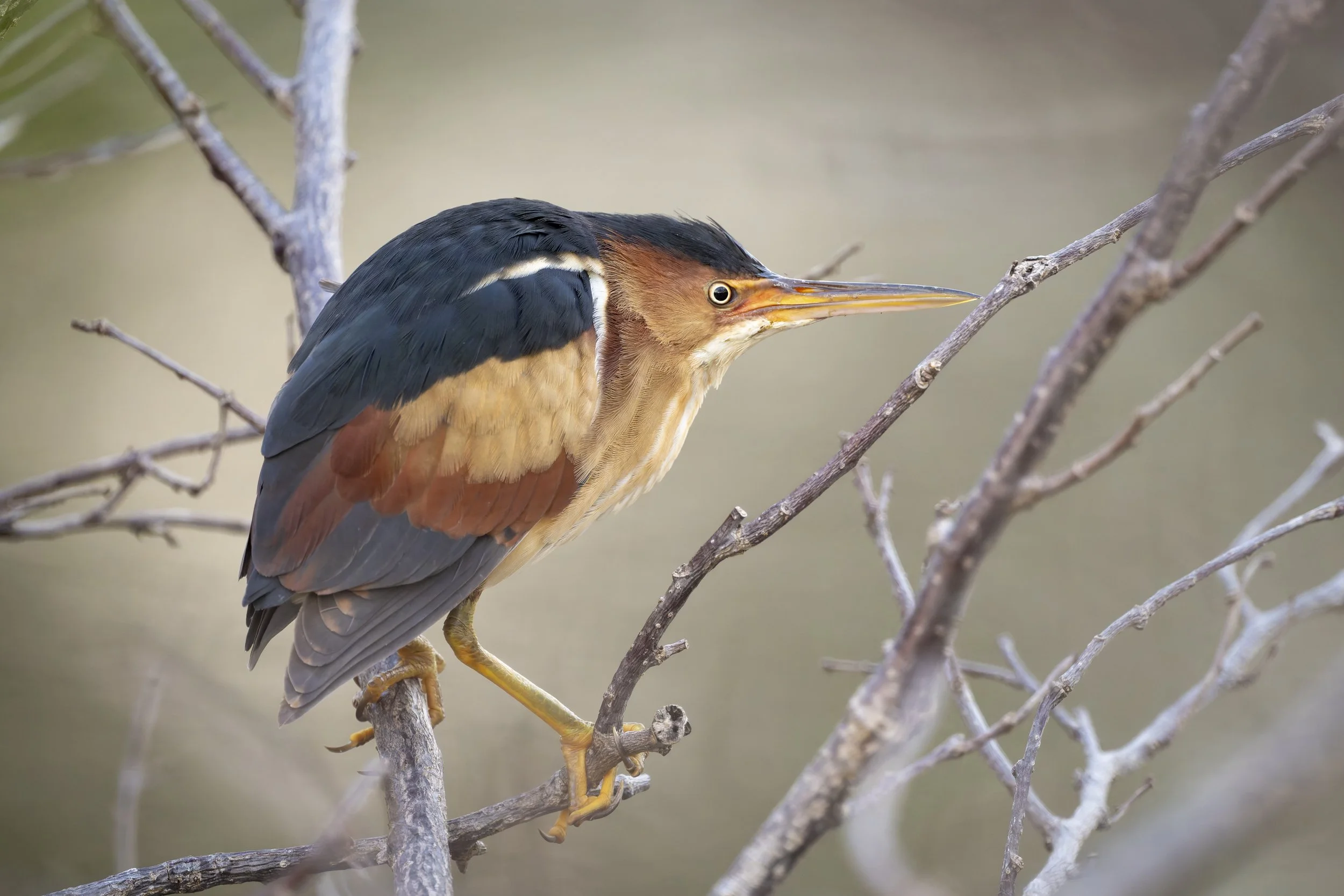
Least Bittern. Nikon Z8 with Nikkor Z 800mm f/6.3 lens at f/6.3, 1/800 sec, ISO 5600.
I was hoping to spot some spring migrants in the trees, but the only cool little bird I saw was this Common Yellowthroat.
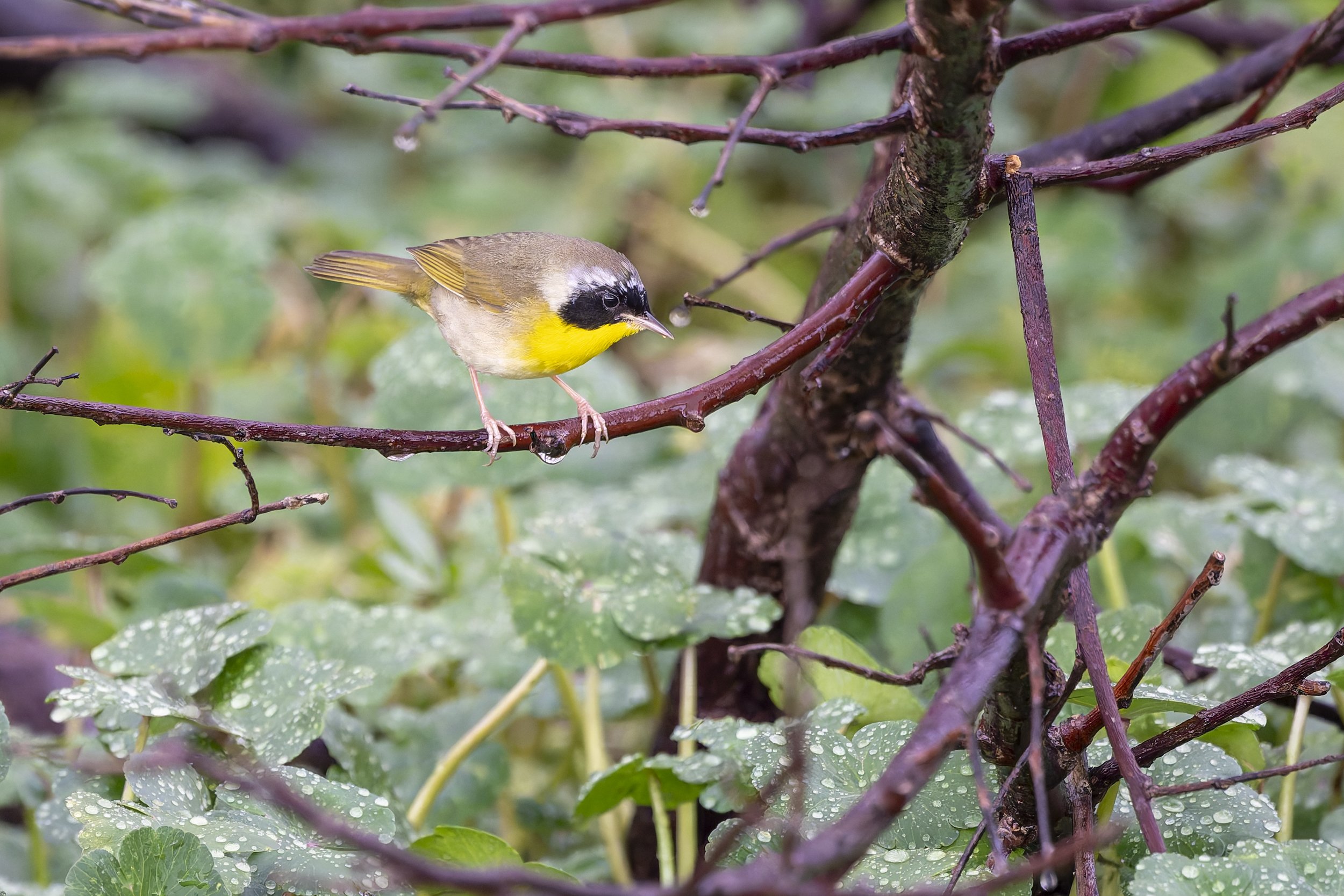
Common Yellowthroat. Nikon Z8 with Nikkor Z 800mm f/6.3 lens at f/6.3, 1/800 sec, ISO 7200.
With overcast rainy conditions, the light level was very low. Even though I adjusted my shutter as slow as I could, I still had to shoot at ISO 4000 or higher. Thank goodness for DXO Pure Raw for cleaning these images up.
Now, fast-forward one month. I revisited Wakodahatchee Wetlands on Tuesday, March 31, at about 10am. It was a very different experience from my previous visit. Although this was a Tuesday morning with clear blue skies, the place was slamming with people. The small parking lot was full and Security personnel were only letting cars in one at a time as cars departed. The star attraction: bird babies.
Some, but not all, of the Great Egret and Wood Stork nests had chicks out. For many visitors it’s their first time at rookery, much less seeing egret chicks, so it was a thrilling experience. For someone like me who has seen my fair share of bird babies, the throngs of people were already making me regret my decision. Still, I hung in there and snapped my photos as quickly as I could. I still ended up catching a cold from these people. About right, lol.
Having learned from my last trip, this time I chose the Nikkor 180-600mm f/5.6-6.3 VR lens. This was the perfect choice.
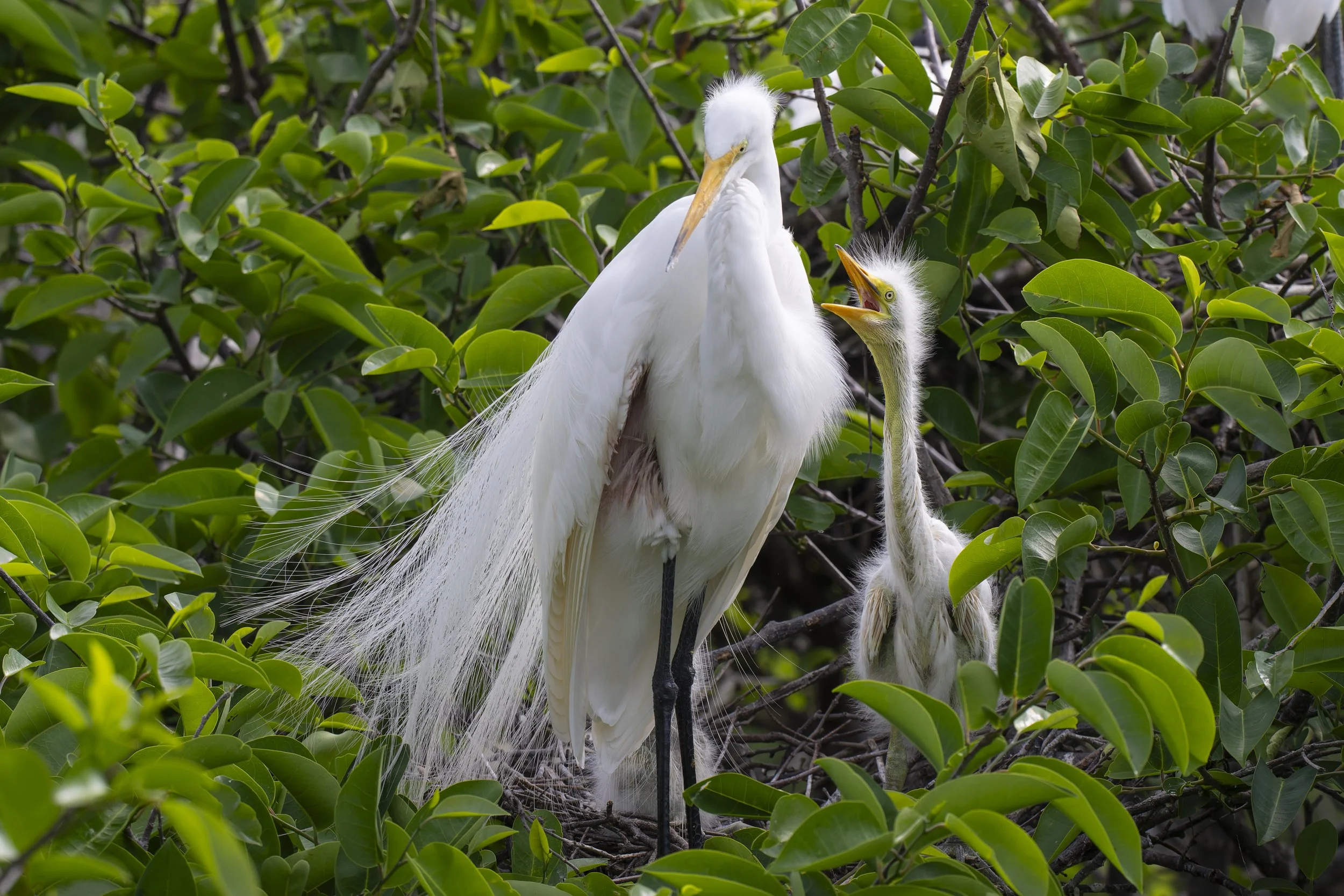
Great Egret. Nikon Z8 with Nikkor Z 180-600mm f/5.6-6.3 VR lens at 260mm, f/8.0, 1/1250 sec, ISO 720.
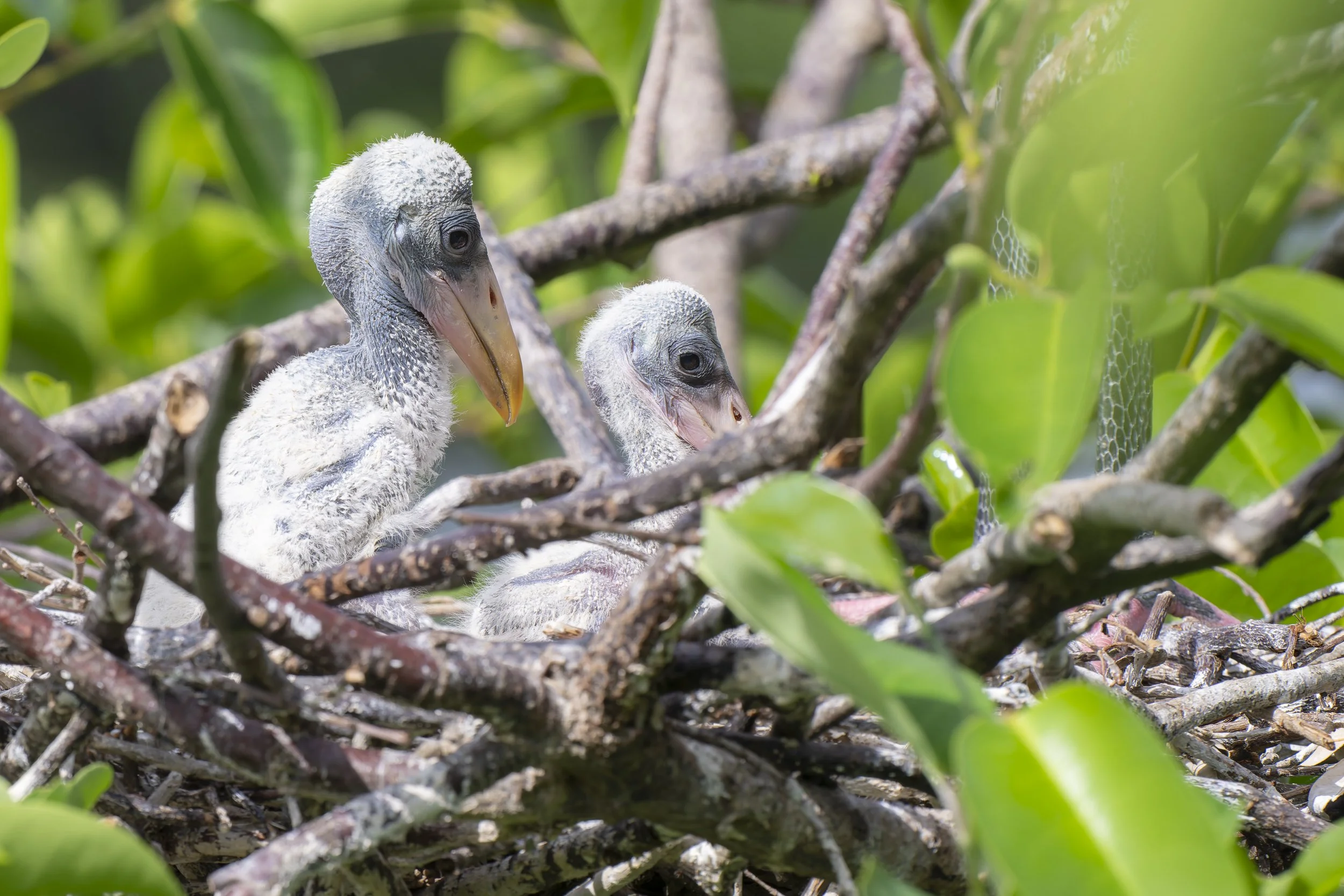
Wood Stork chicks. Nikon Z8 with Nikkor Z 180-600mm f/5.6-6.3 VR lens at 410mm, f/11, 1/1000 sec, ISO 1000.
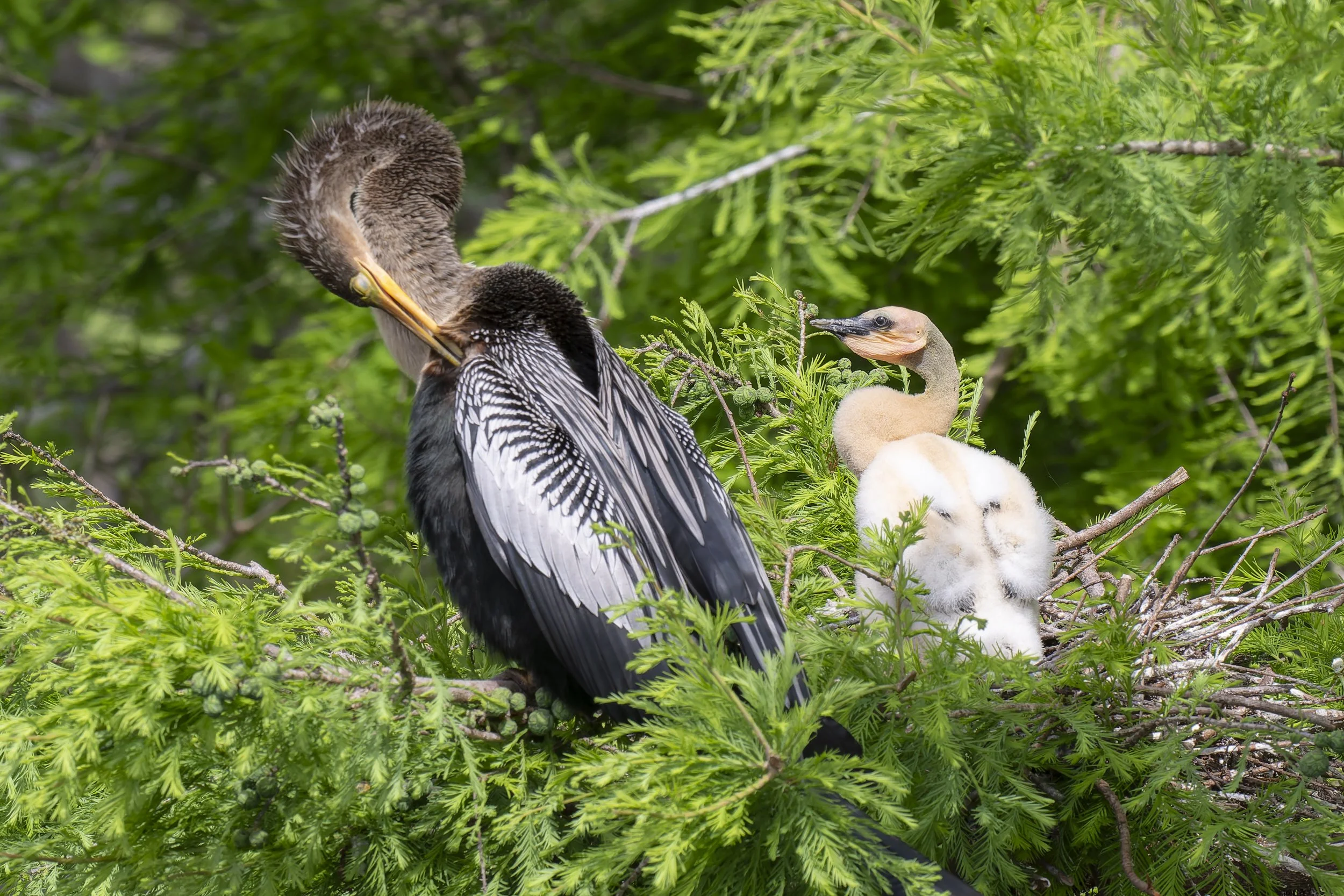
Anhinga. Nikon Z8 with Nikkor Z 180-600mm f/5.6-6.3 VR lens at 320mm, f/11, 1/800 sec, ISO 800.
I was hoping to see spring migrants on this trip, but again, there weren’t any. Aside from the Grackles and Red-winged Blackbirds, the only songbird I saw was a single Palm Warbler pumping his tail through the trees.
I made one loop around the boardwalk and had enough of the foreign tourists who were clapping and shouting “hey” at the birds to get their attention for their cell phone pics. I then headed over to Green Cay, about 1.5 miles down the road, but I’ll make a blog post about that experience soon.
I would imagine Wakodahatchee only gets crazy like this in the spring time. It’s probably deserted the rest of the year. Plan accordingly. Or go after a rainfall, which is my recommendation.
Until then, don’t clap or shout at the birds, and happy birding!