Birding at Myakka
Myakka River State Park has been a spectacular birding hotspot for the past six months. It’s been so good that I have been favoring it over nearby Fort De Soto. So, after a couple of weeks of being cooped up due to the unusually cold weather we’ve been having, I decided to head back down to Myakka this Saturday.
If you’re new to Myakka, there are two main birding areas. The first, when looking at the map below, is labeled as the “Myakka Outpost” on the southern shore of the Upper Myakka Lake. The Myakka Outpost is a small camp store with souvenirs. There are also restrooms, a food truck, and picnic tables. There used to be a restaurant, but it’s been closed for years.
On old weir used to be on the southern shore of the lake, but it was taken out in 2022 to allow for more seasonal water level fluctuations and habitat restoration. This area is still under restoration so access to the old weir site is restricted. However, wading birds often walk along the lake shore providing ample photo opportunities.
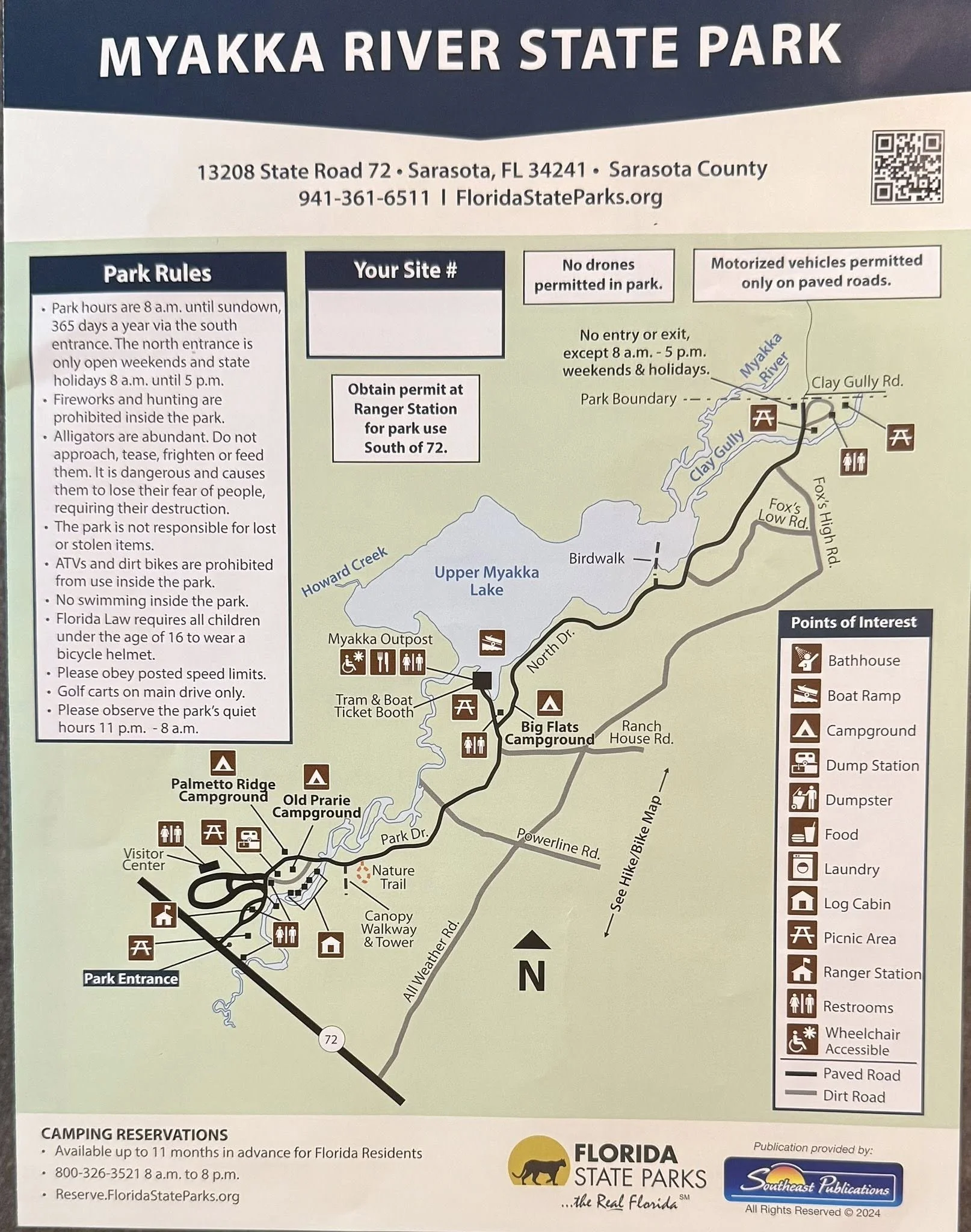
Map of Myakka River State Park
The last time I visited the park there were dozens of Roseate Spoonbills where the old weir used to be. This time I saw one juvenile spoonbill who was hiding in a heavily shaded area. The main bird at this spot was the Limpkin. There were dozens (i.e., 50 - 75) of them, certainly the most I have ever seen in one place. I suspect the dry weather is the reason.
This area of Central Florida has been under a drought and the lake levels are extremely low. This is beneficial for wading birds like the Limpkin because it provides for a larger wading area for them to find food, and the Limpkins were having no trouble finding mussels to eat.
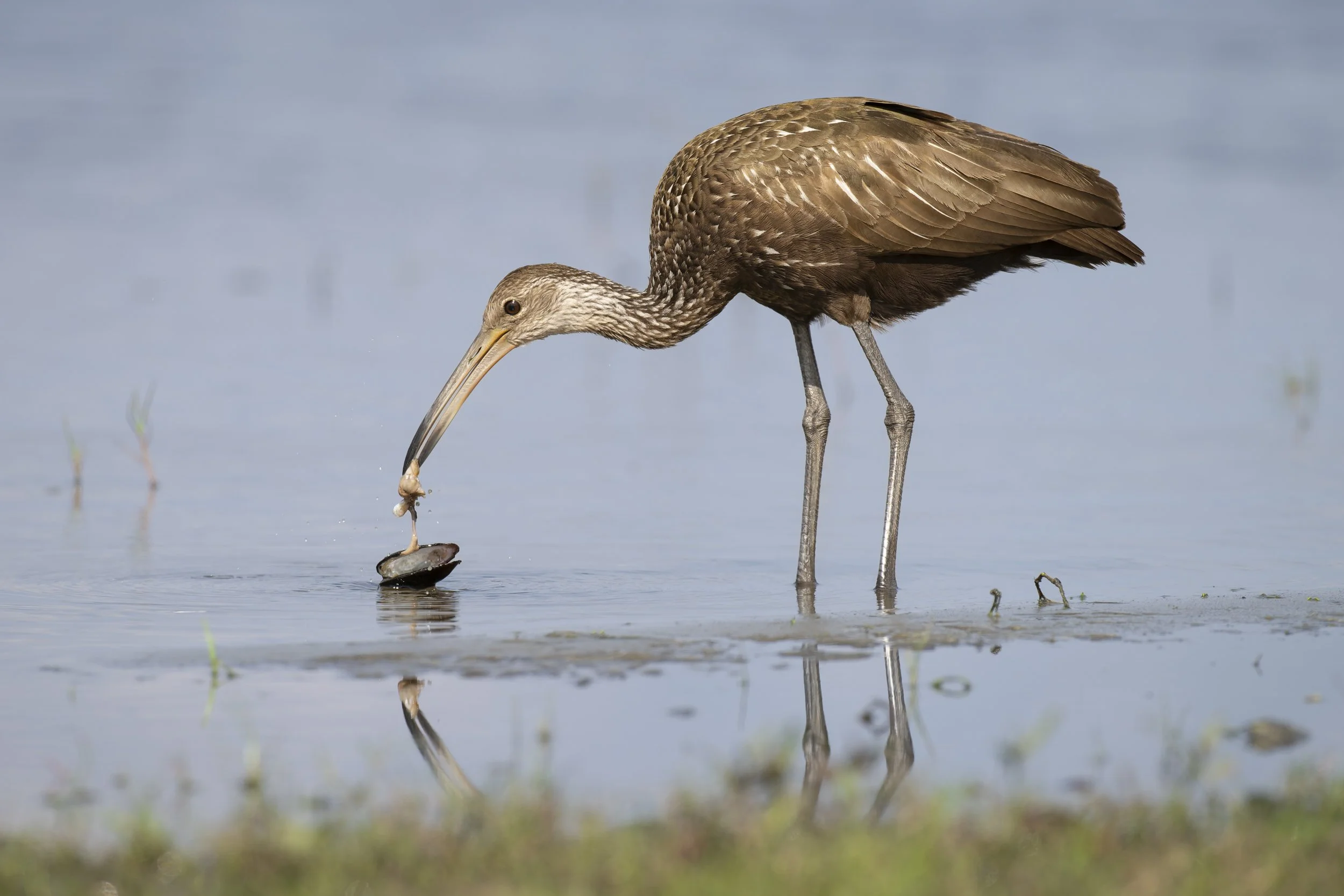
Limpkin. Nikkon Z8 with Nikkor Z 180-600mm f.4.5-6.3 VR lens at 470mm, 1/1250 sec, f/6.3, ISO 280.
Unusually, there were lots of dead fish on the lake shoreline. They were all one species, the plecos, or armored catfish, a highly-invasive, non-native species. As a result there were hundreds of vultures, nature’s clean-up crew, in the park. Vultures filled the trees and kettled overheard, and occasionally one would fly low and swoosh right by.
Here is a Great Blue Heron doing his part to help clean up, toying with this live pleco. The GBH played with this fish for about an hour and I don’t think he ate it. Too bony I’m sure.
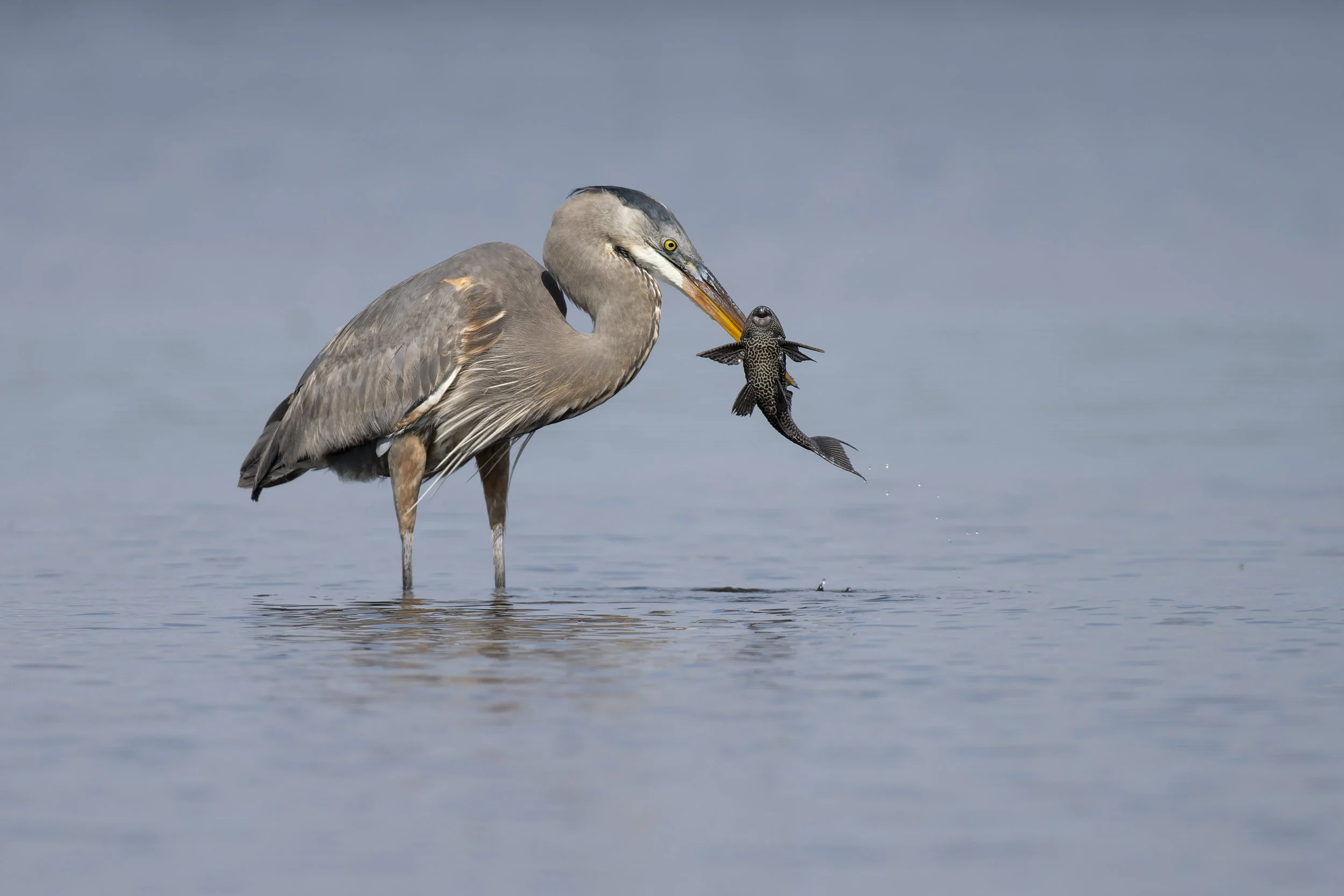
Great Blue Heron. Nikkon Z8 with Nikkor Z 180-600mm f.4.5-6.3 VR lens at 600mm, 1/1250 sec, f/6.3, ISO 200.
Also new since my last visit were Blue-winged Teals. A small group of about a dozen birds kept close to the shoreline. I stayed with them for quite some time hoping to see some bathing or wing-flapping/splashing action, but the best I got was the wing-stretch which revealed his beautiful light-blue shoulder patch.
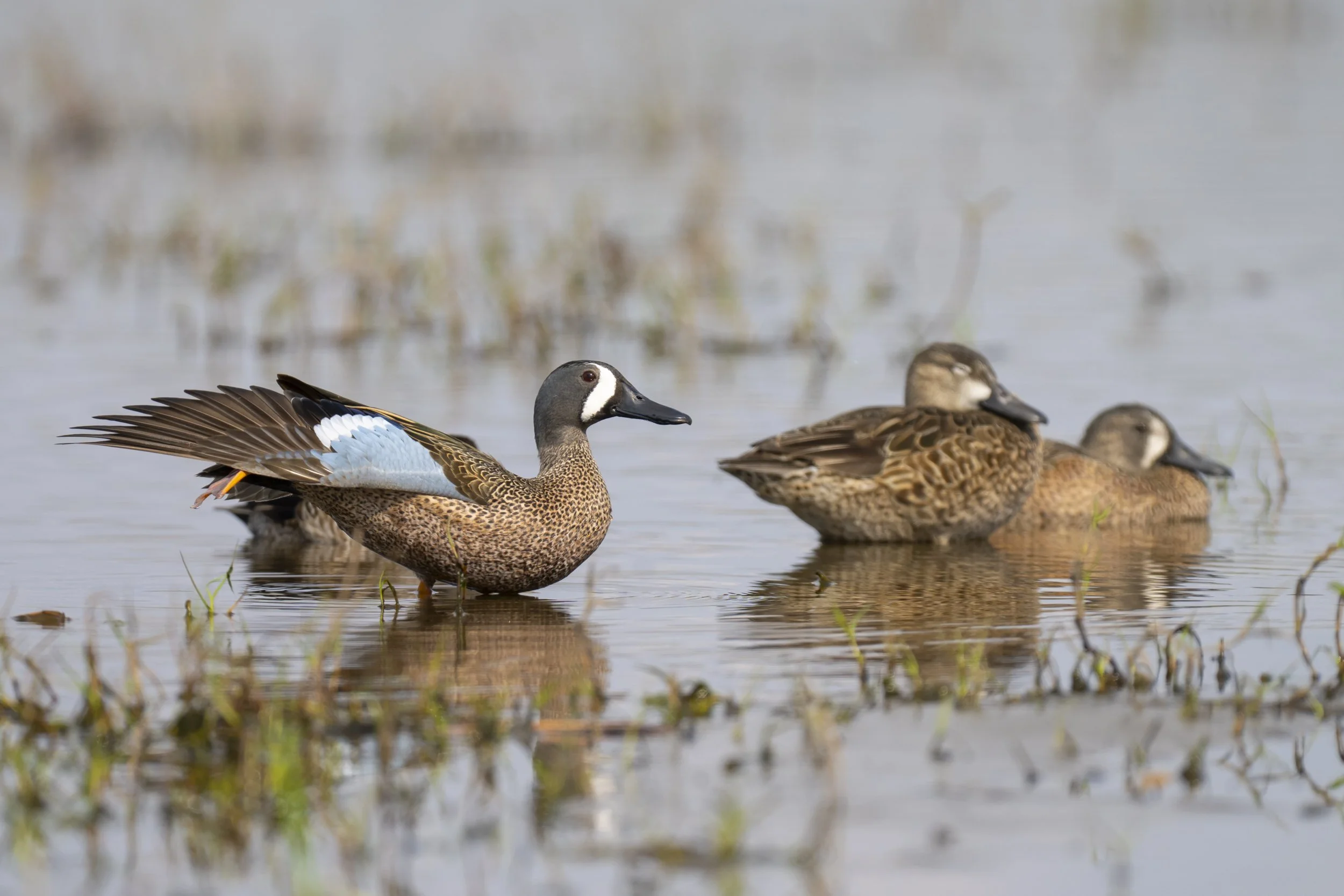
Blue-winged Teal. Nikkon Z8 with Nikkor Z 180-600mm f.4.5-6.3 VR lens at 600mm, 1/800 sec, f/6.3, ISO 200.
Where there is water in Florida you will find Boat-tailed Grackles. A common bird, they are easy to overlook while photographing other birds. But when the light hits them right, their iridescent feather really sparkle. This bird almost looks metallic.
Here is a male and a female. Note that there is a hint of blue in the upper part of the female’s wings.
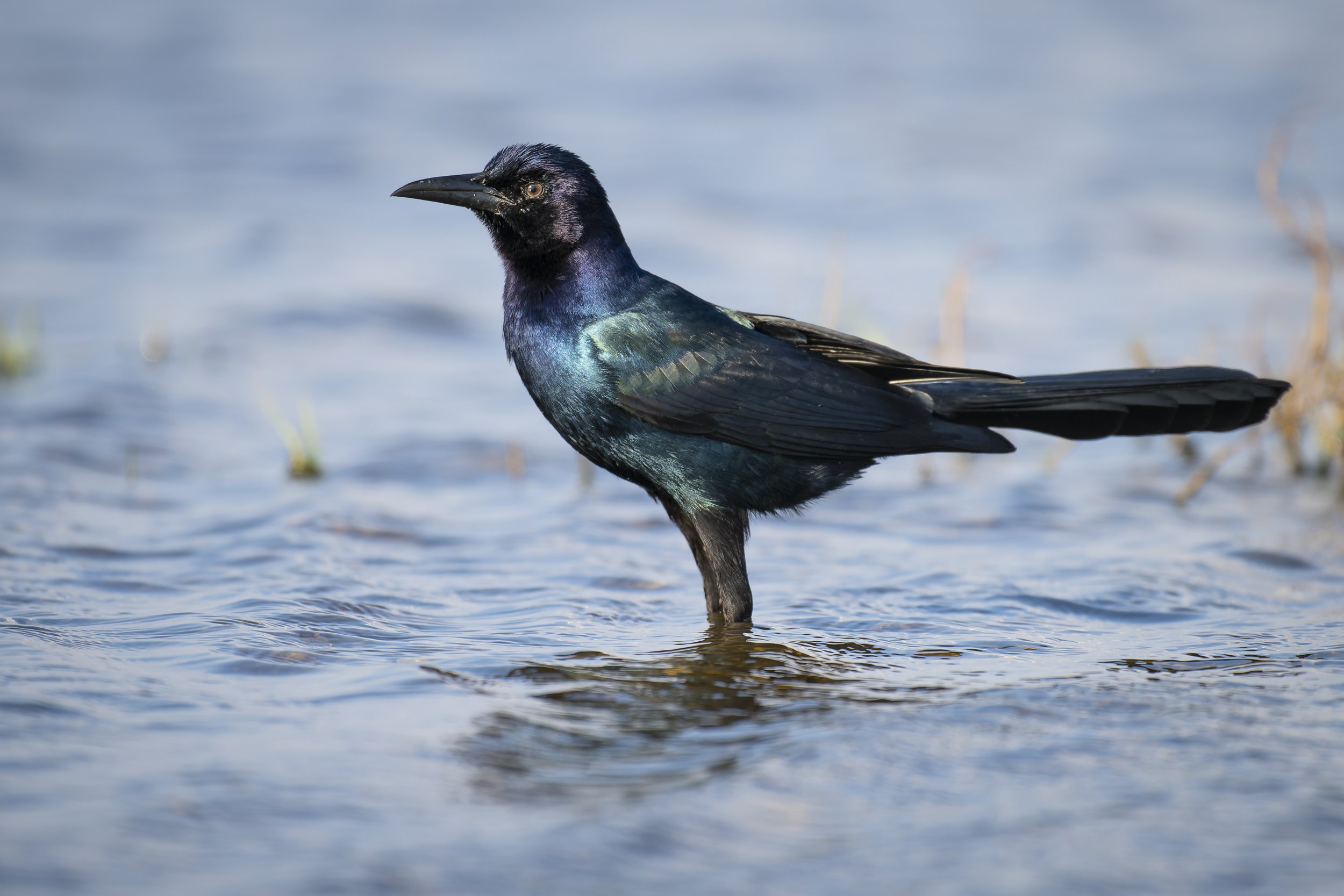
Boat-tailed Grackle (male). Nikkon Z8 with Nikkor Z 180-600mm f.4.5-6.3 VR lens at 600mm, 1/1000 sec, f/6.3, ISO 450.
Two other birds I photographed at the Myakka Outpost location was a Wood Stork and a Sandhill Crane. The Wood Storks picked at the dead plecos but did not eat any.
A couple of Sandhill Cranes were also prowling the area. The sun was setting and the golden light was just perfect.
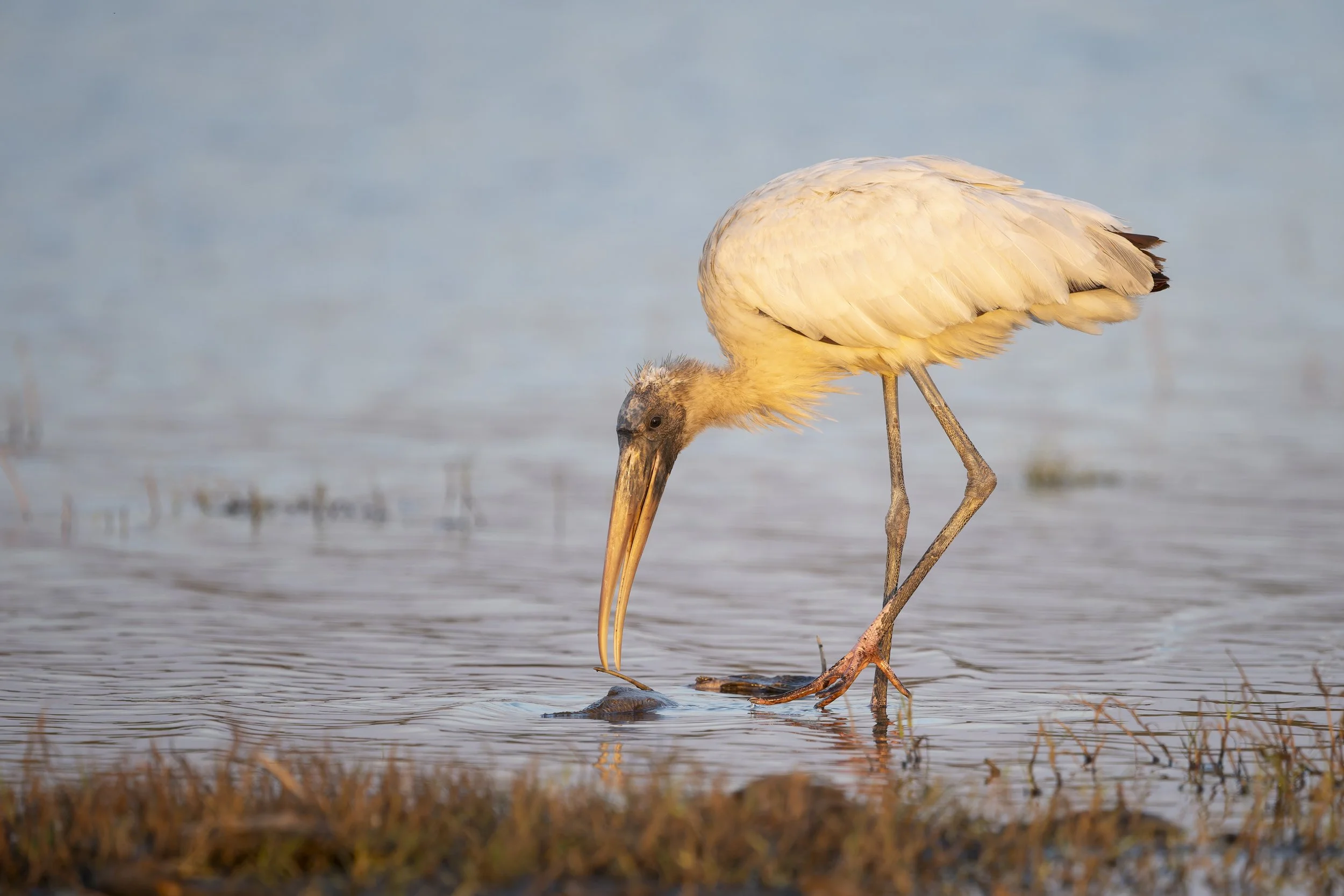
Wood Stork. Nikkon Z8 with Nikkor Z 800mm f/6.3 VR S lens at 1/1250 sec, f/6.3, ISO 1800.
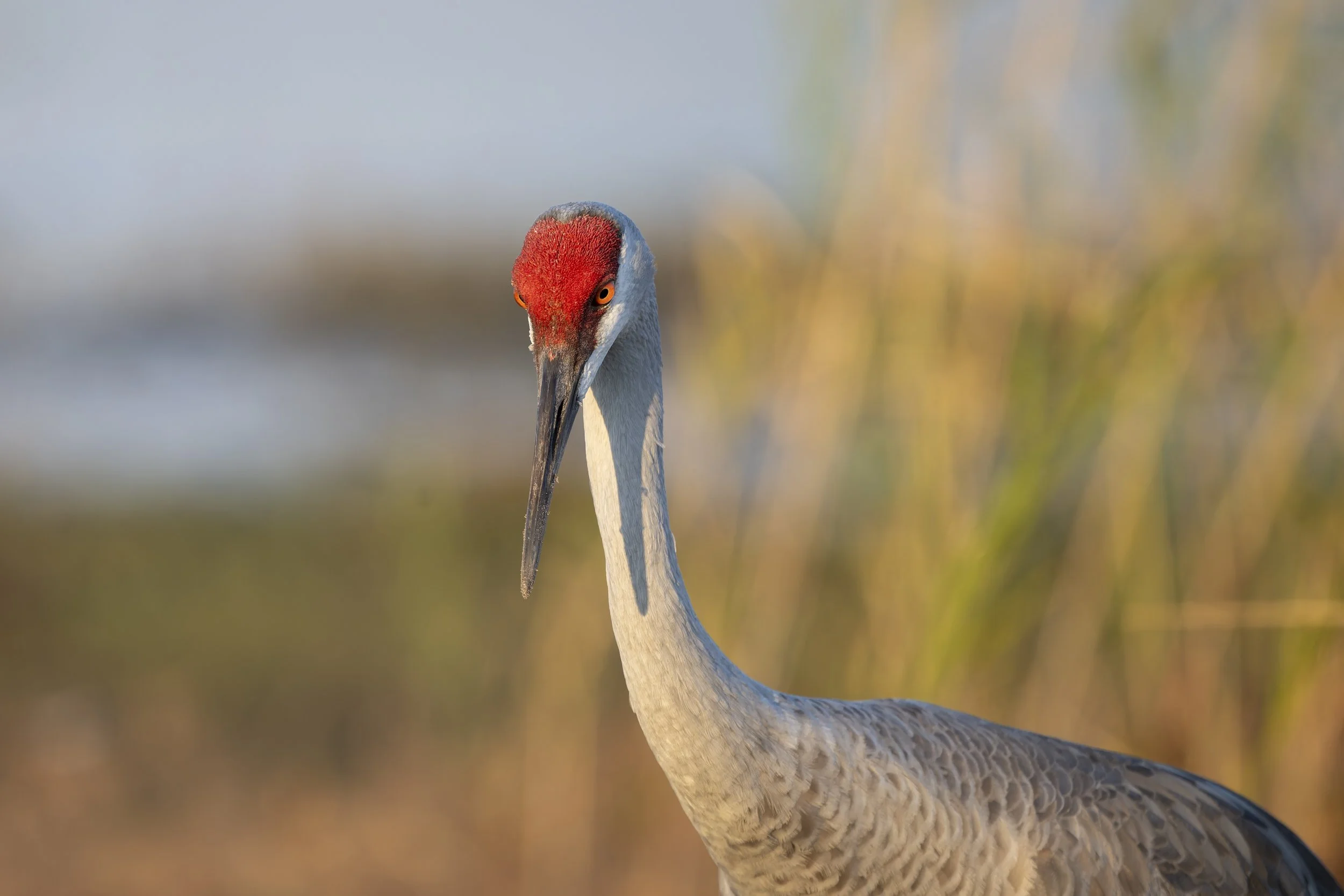
Sandhill Crane. Nikkon Z8 with Nikkor Z 800mm f/6.3 VR S lens at 1/1600 sec, f/6.3, ISO 1400.
The next birding spot at Myakka is the aptly named “Birdwalk” (see map). Previously, a boardwalk at this location took visitors out into a marsh. The lake has receded and the marsh is now a prairie. The boardwalk was severely damaged by hurricanes in 2024 and is no longer usable, but it’s not needed anymore. Now, you can simply walk in the prairie and out to the lake shore. On this trip I did just that and was pleased to find two Black-necked Stilts. Afternoon sunlight was very directional, 90 degrees to my left, so it was a bit of a challenge. But I managed to get a few good ones in the bag.
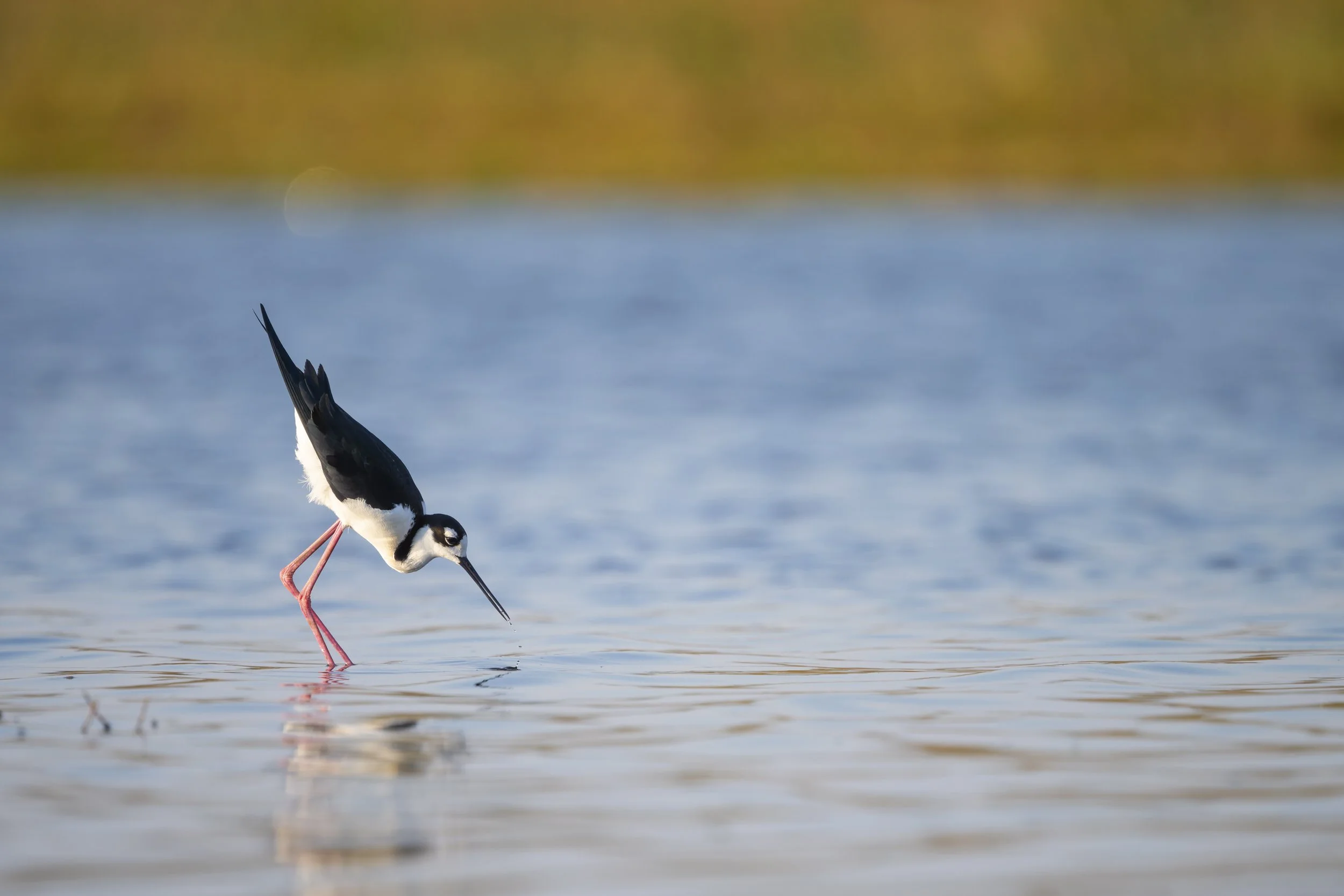
Black-necked Stilt. Nikkon Z8 with Nikkor Z 800mm f/6.3 VR S lens at 1/1250 sec, f/6.3, ISO 360.
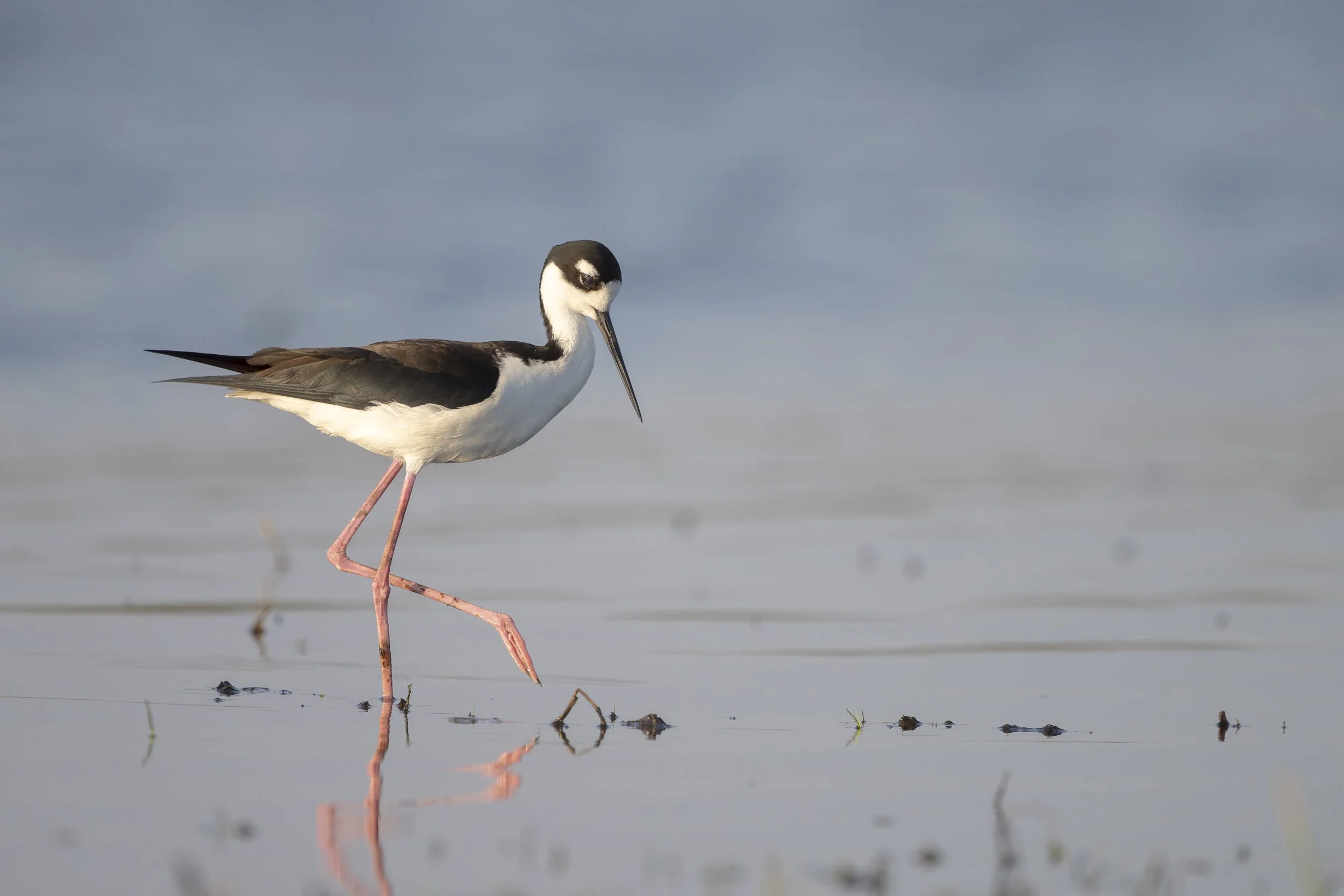
Black-necked Stilt. Nikkon Z8 with Nikkor Z 800mm f/6.3 VR S lens at 1/1250 sec, f/6.3, ISO 360.
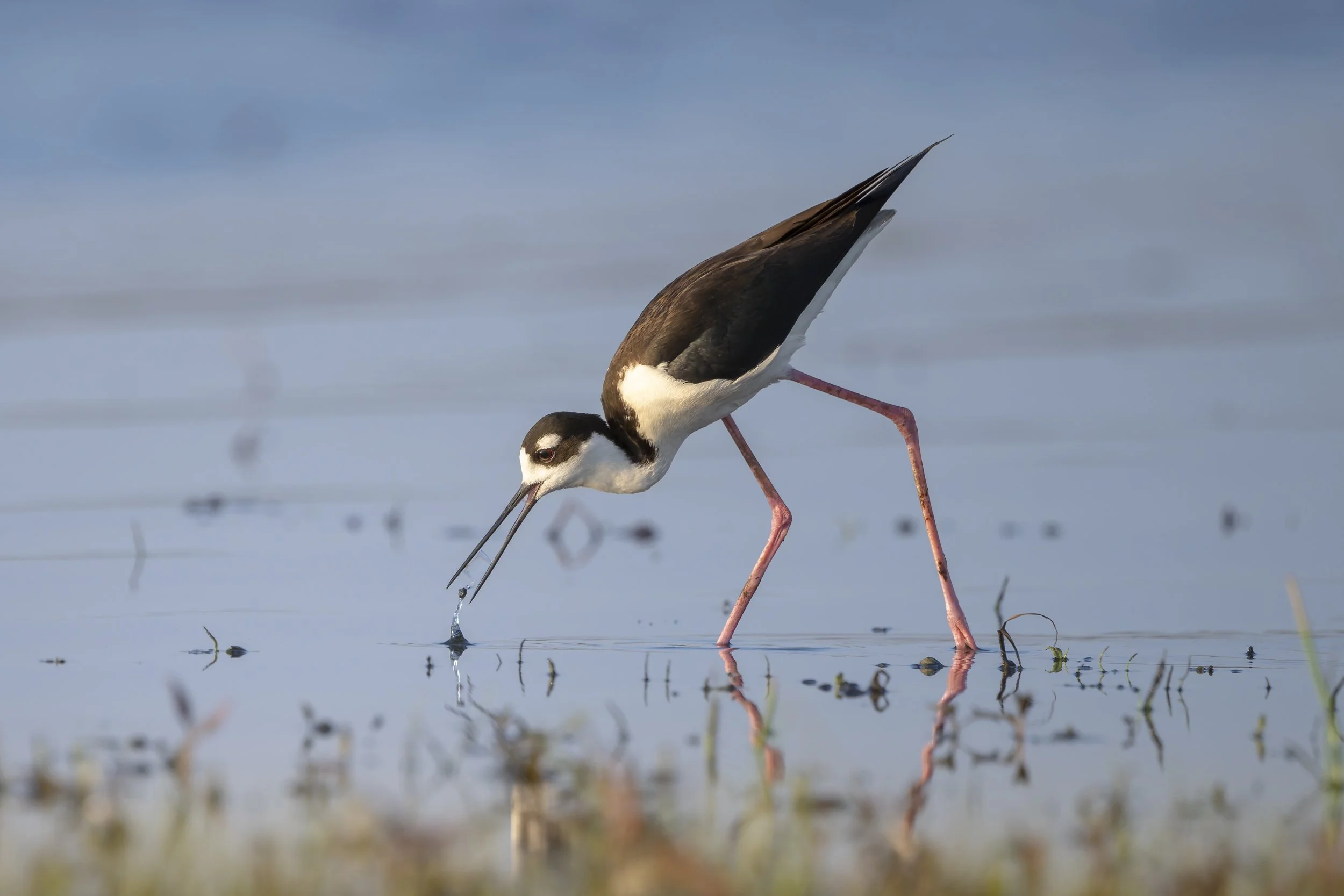
Black-necked Stilt. Nikkon Z8 with Nikkor Z 800mm f/6.3 VR S lens at 1/1600 sec, f/6.3, ISO 450.
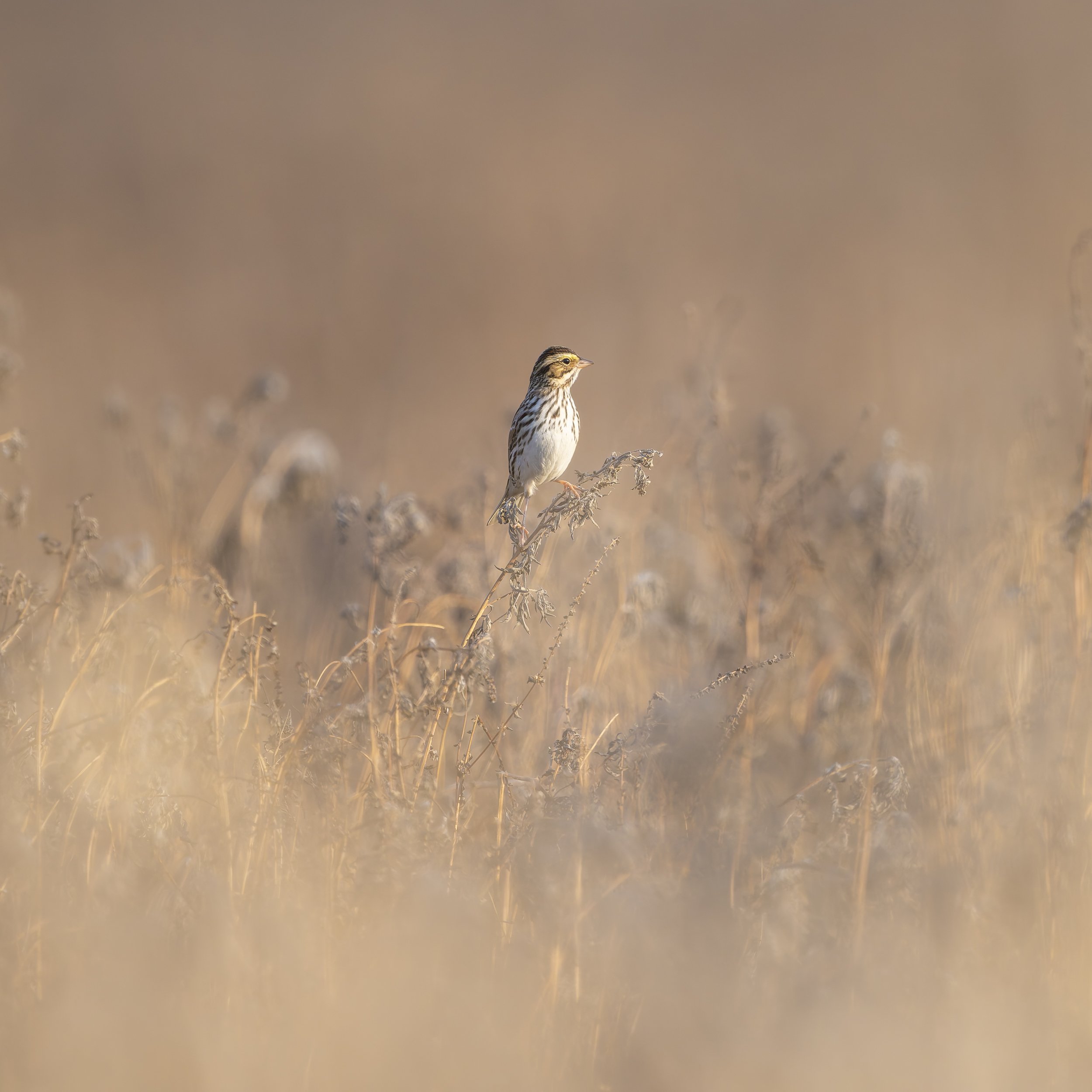
On my walk back I was looking for Eastern Meadowlarks. I’ve seen them in this area many times, but not on this trip. However, I did see lots of little Savannah Sparrows spiriting around. Most of the time these birds stay hidden in the grass, but I did spot one bird perched up on some dead foliage.
I should mention the gators. Most people come to Myakka to see the numerous American Alligators. They are in big numbers here, and I saw dozens of them in the water and on the shore line. So if gators are you’re thing, you’ll like Myakka.
The area is also popular with eagles. In fact, I photographed an adult Bald Eagle and three older juveniles. They were far away and were great to see, but not for photography. Well, I did take a photograph. It’s crappy, but why not - here you go. See - they’re here.
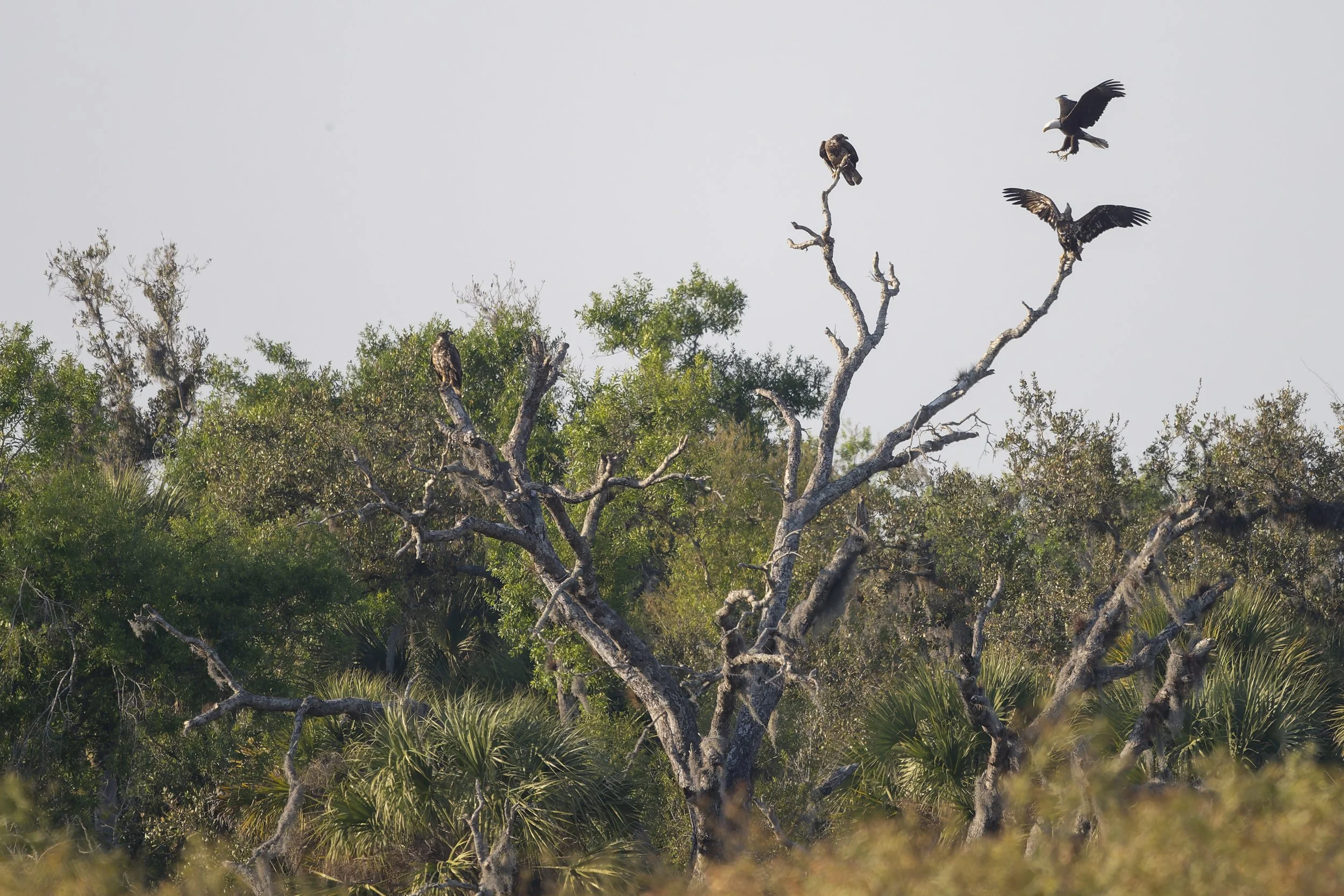
Bald Eagles. Deeeeeep crop. One adult and three juveniles. Nikkon Z8 with Nikkor Z 800mm f/6.3 VR S lens at 1/1250 sec, f/6.3, ISO 500.
If you are heading to Myakka, be sure to also stop at the Celery Fields in Sarasota. It’s only 20 minutes away.
Good luck, stay safe, and happy birding!