Bird Supermodel: The Reddish Egret
In my last post I mused that there are some birds that remind me of supermodels. They have that special “IT” factor with a personality that comes through in their behavior. They have a distinctive charisma and style that is unique and sets them apart from all other birds. To me, the Roseate Spoonbill is a supermodel. So is the Anhinga (for reasons I have previously described in other posts). And today, I’m adding the Reddish Egret.
While the Anhinga might a controversial pick, I don’t think you’ll disagree with the choice of the Reddish Egret if you’ve ever had the pleasure of watching it dance around.
It was warm here in Tampa on Saturday with highs in the mid-80s. About midday I packed up the camper van and drove south from Tampa to Fort De Soto Park. I was hoping to see American White Pelicans as there have been reports throughout the week that they were in the park. Alas, while I did spot a few flying over, none were on North Beach.
What I did see was a lot of people. That’s to be expected though. It was a warm January Saturday, so lots of families were at the beach. That meant most birds were somewhere else.
Although there were no White Pelicans I was happy to see the Reddish Egret. He was hunting in the tidal area just to the right as the trail from the parking lot reaches the beach. No photographers were around. I got comfortable and started snapping away. I didn’t have to wait long for the catwalk dance to begin.
As you can see in this first image, the Reddish is coming into its breeding plumage characterized by the two-toned bill, lilac lores (the skin between its eyes and bill), and bluish legs. These characteristics should become even more pronounced in the weeks to come.
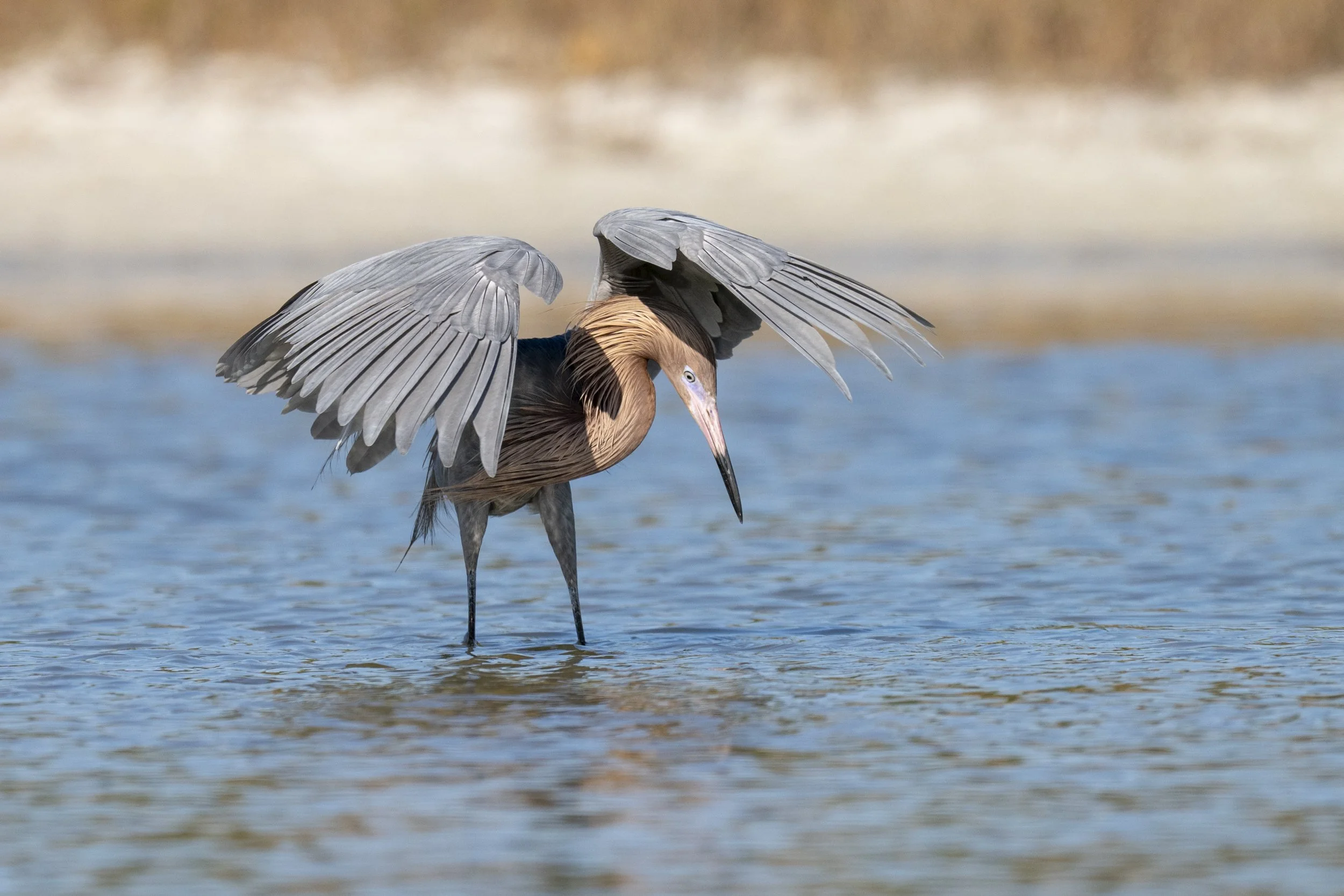
Reddish Egret. Using the “wings overhead” pose to shadow the water for better visibility. Nikon Z8 with Nikkor Z 180-600mm 1:5.6-6.3 VR lens at 520mm, f/6.3, 1/2000 sec, ISO 360.
I always crack a smile when I watch the Reddish dance around stalking prey. One moment the bird looks completely elegant - even fierce - as it zeroes in on its target. Then, a fraction of a second later it looks like a totally different bird as it twists and turns, throwing his wings around. It’s these different looks that make it so fun to photograph.
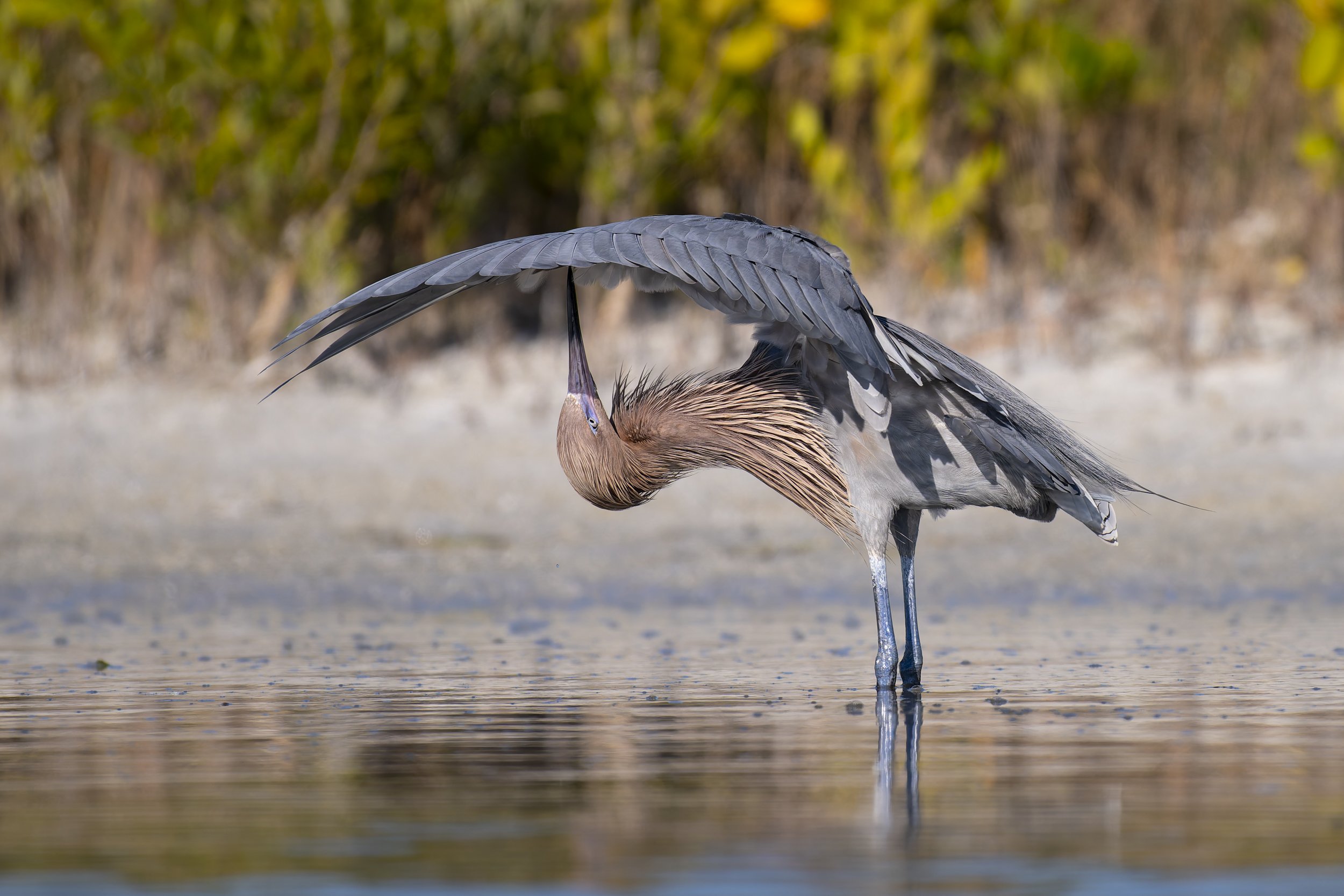
Reddish Egret. An “under the hood” wing inspection. Nikon Z8 with Nikkor Z 180-600mm 1:5.6-6.3 VR lens at 560mm, f/6.3, 1/3200 sec, ISO 560.
Soon the Reddish decided to move on and flew to its other favorite spot, a nearby lagoon. A Snowy Egret and an immature Little Blue Heron were there waiting. The Reddish wasted no time and snagged a nice size little fish.
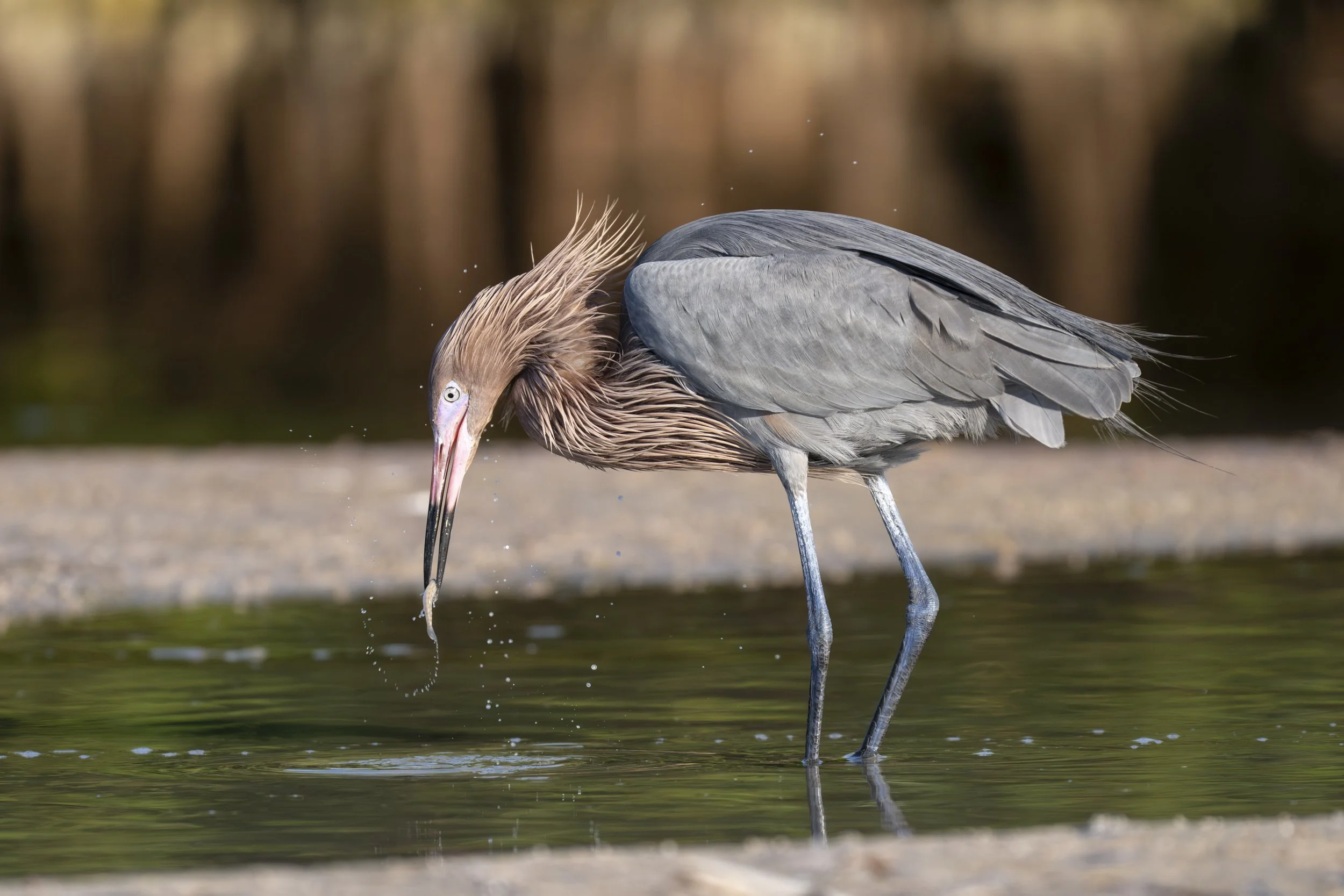
Reddish Egret. Nikon Z8 with Nikkor Z 180-600mm 1:5.6-6.3 VR lens at 600mm, f/6.3, 1/3200 sec, ISO 900.
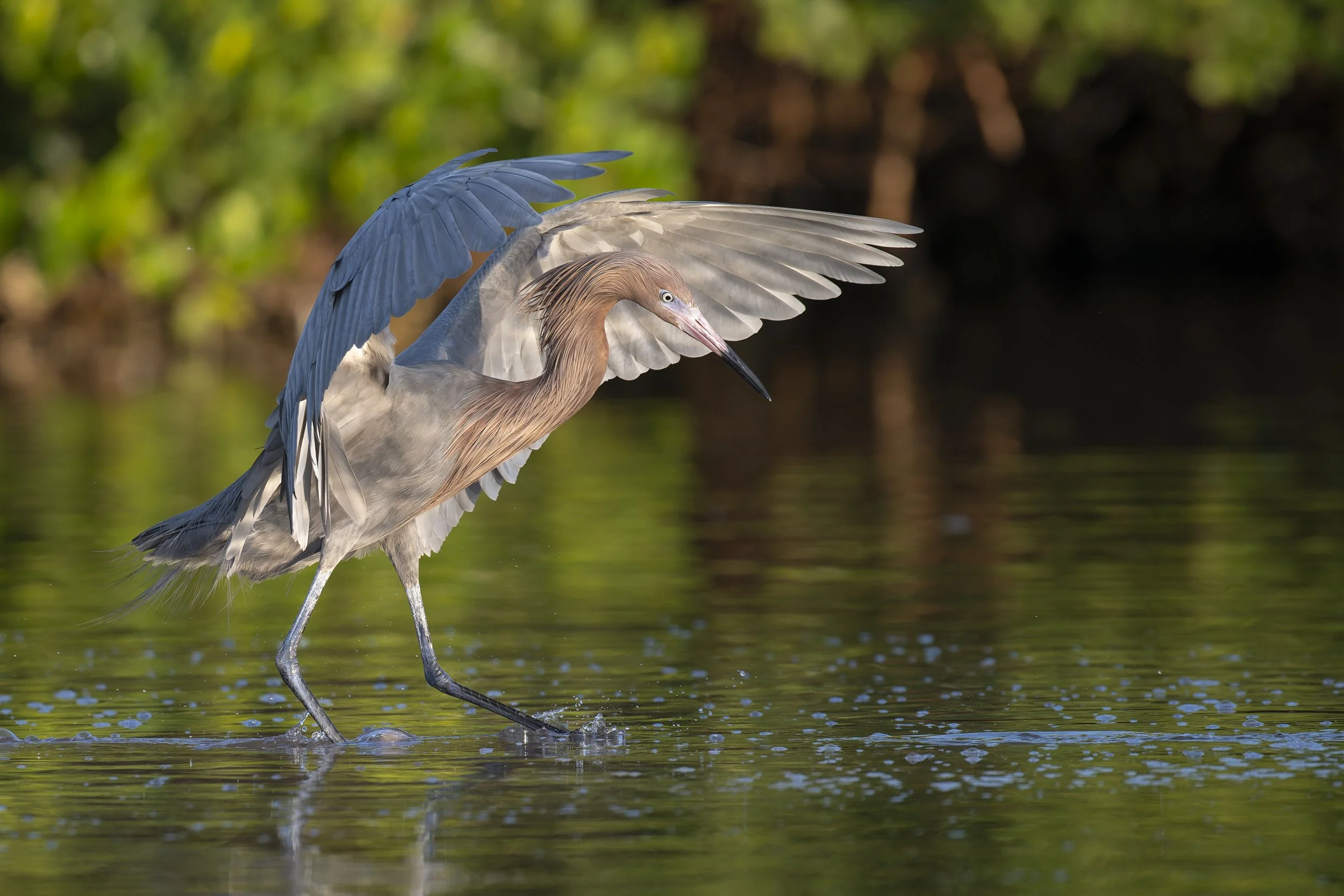
Reddish Egret. Going into the “wings overhead” pose. Nikon Z8 with Nikkor Z 180-600mm 1:5.6-6.3 VR lens at 510mm, f/6.3, 1/3200 sec, ISO 1600.
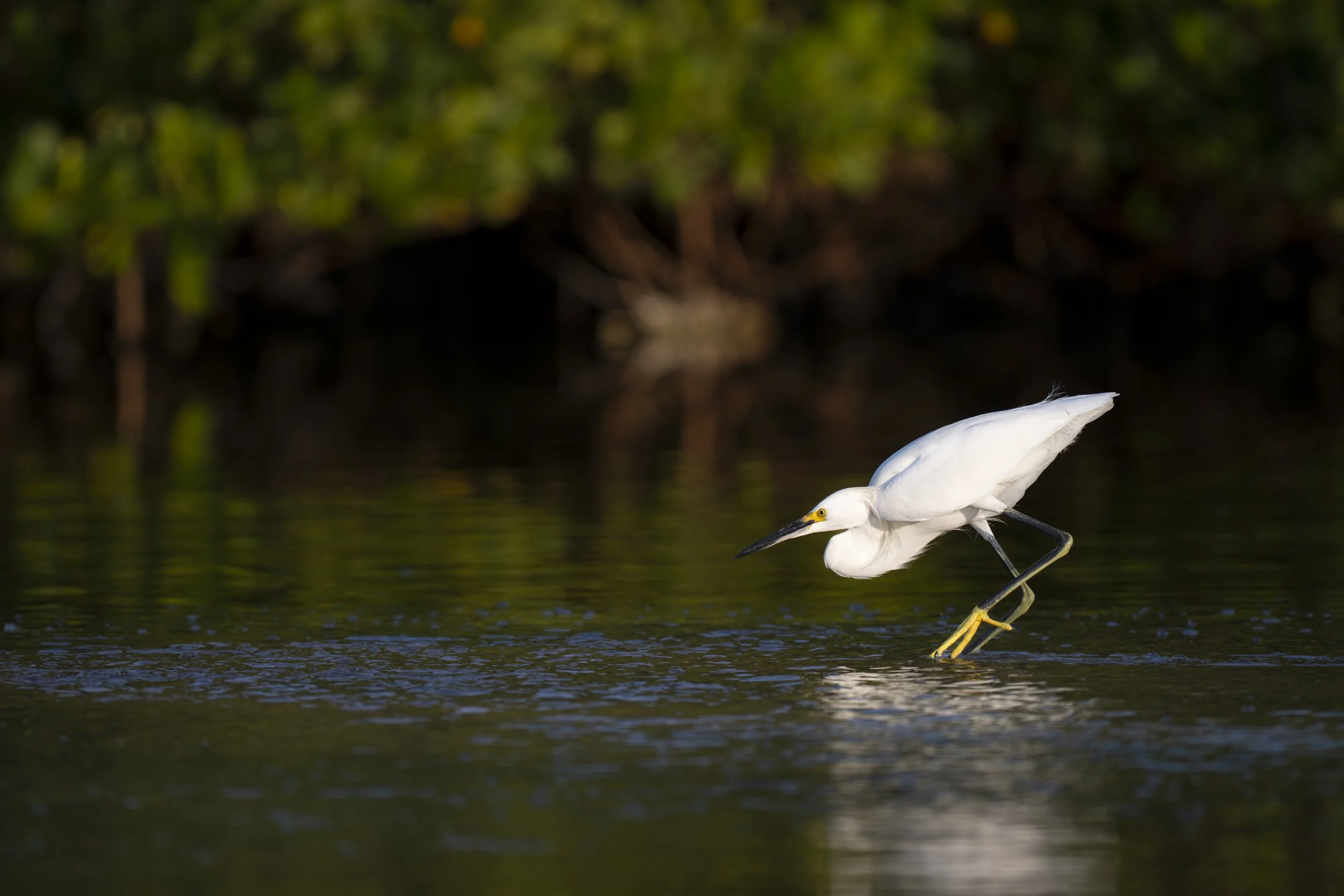
Snowy Egret. Poised for a strike. Nikon Z8 with Nikkor Z 180-600mm 1:5.6-6.3 VR lens at 600mm, f/6.3, 1/3200 sec, ISO 1250.
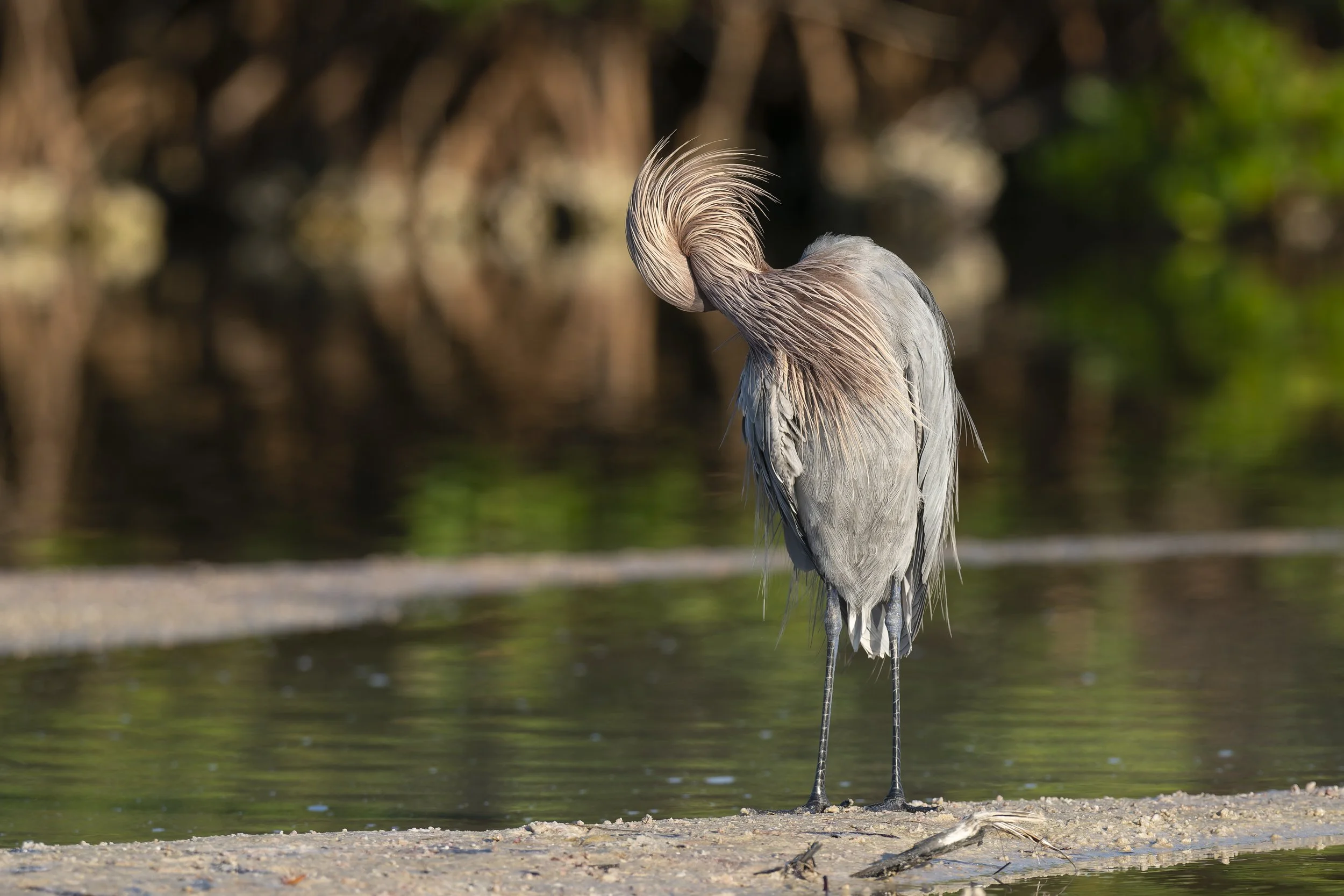
Reddish Egret. The “I ain’t got no head” look. Nikon Z8 with Nikkor Z 180-600mm 1:5.6-6.3 VR lens at 410mm, f/6.0, 1/1250 sec, ISO 320.
After preening the Reddish Egret started to prowl around and from years of observation I know this usually means he’s about to take off. I started to leave ahead of him and ran into a photographer who was just reaching the lagoon area. He looked familiar and when he spoke, I recognized him as Steve Perry, a professional bird and wildlife photographer,YouTube star, and owner of Backcountry Gallery. I have followed Steve for many years on YouTube, and learned so many helpful birding and Nikon tips. To meet him was a real treat. He was very kind, and once I got over running into THE Steve Perry, I gave him the rundown on the birds on the beach. I then let him go on his own as I know that sometimes birders like to fly solo.
About 50 feet down the beach I saw the Reddish Egret flying out of the lagoon, right over my head, and right back to the tidal beach area where I first saw him earlier. I felt bad for Steve that it left him.
Turns out the Reddish was not done hunting. He soon got busy as the tide was coming in bringing in new fish. The sun was also getting low on the horizon giving everything an amazing warm glow. In fact, in Lightroom I had to cool down the photos because they had too much of an orange tone. It can sometimes be difficult when adjusting the white balance to show that warm golden hour light while not have everything look too orange - especially with a brown subject like the Reddish Egret.
Since I’ve mentioned editing, let me also point out that anytime you have a horizon or water in the scene, those are your reference points for leveling the photos. Nothing quite drives me crazier than seeing uneven water. 😁
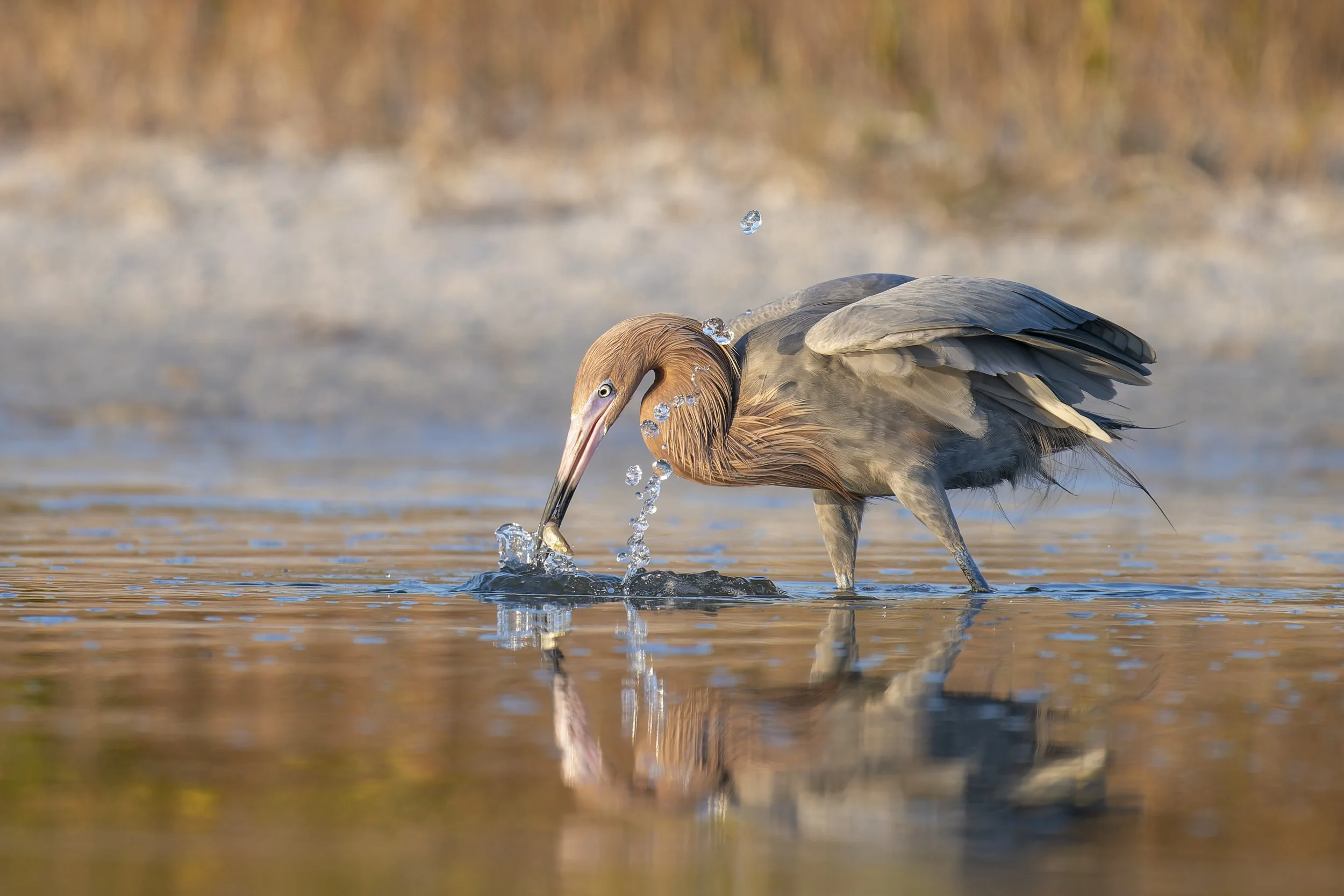
Reddish Egret. A successful strike. Nikon Z8 with Nikkor Z 180-600mm 1:5.6-6.3 VR lens at 600mm, f/6.3, 1/1600 sec, ISO 640.
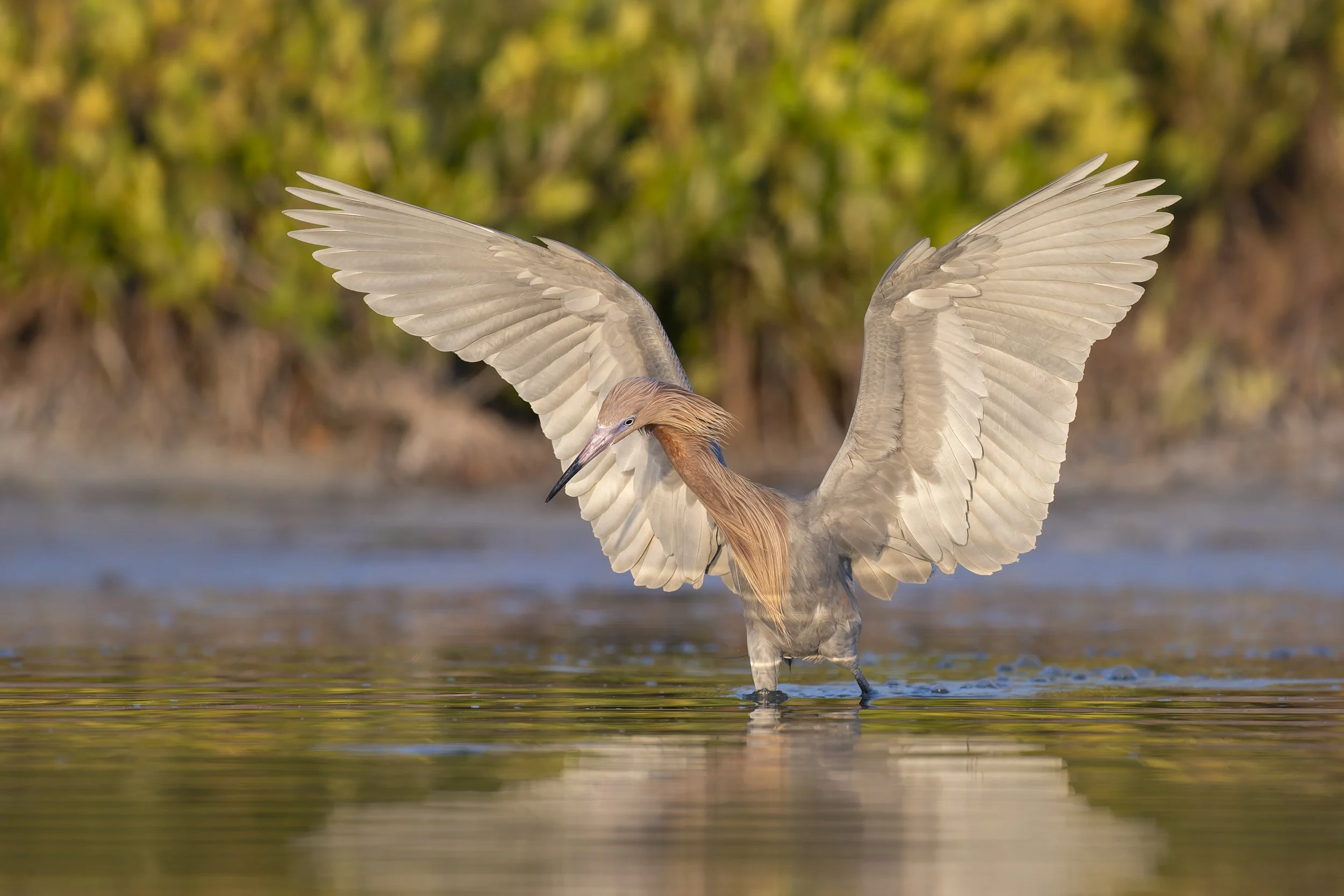
Reddish Egret. “Wings Out.” Nikon Z8 with Nikkor Z 180-600mm 1:5.6-6.3 VR lens at 410mm, f/6.3, 1/2500 sec, ISO 1250.
Soon a second Reddish Egret flew in. When Reddish Egrets meet, they spike up the feathers on top of their heads. It’s a really cool look, one that I call “Spike.”
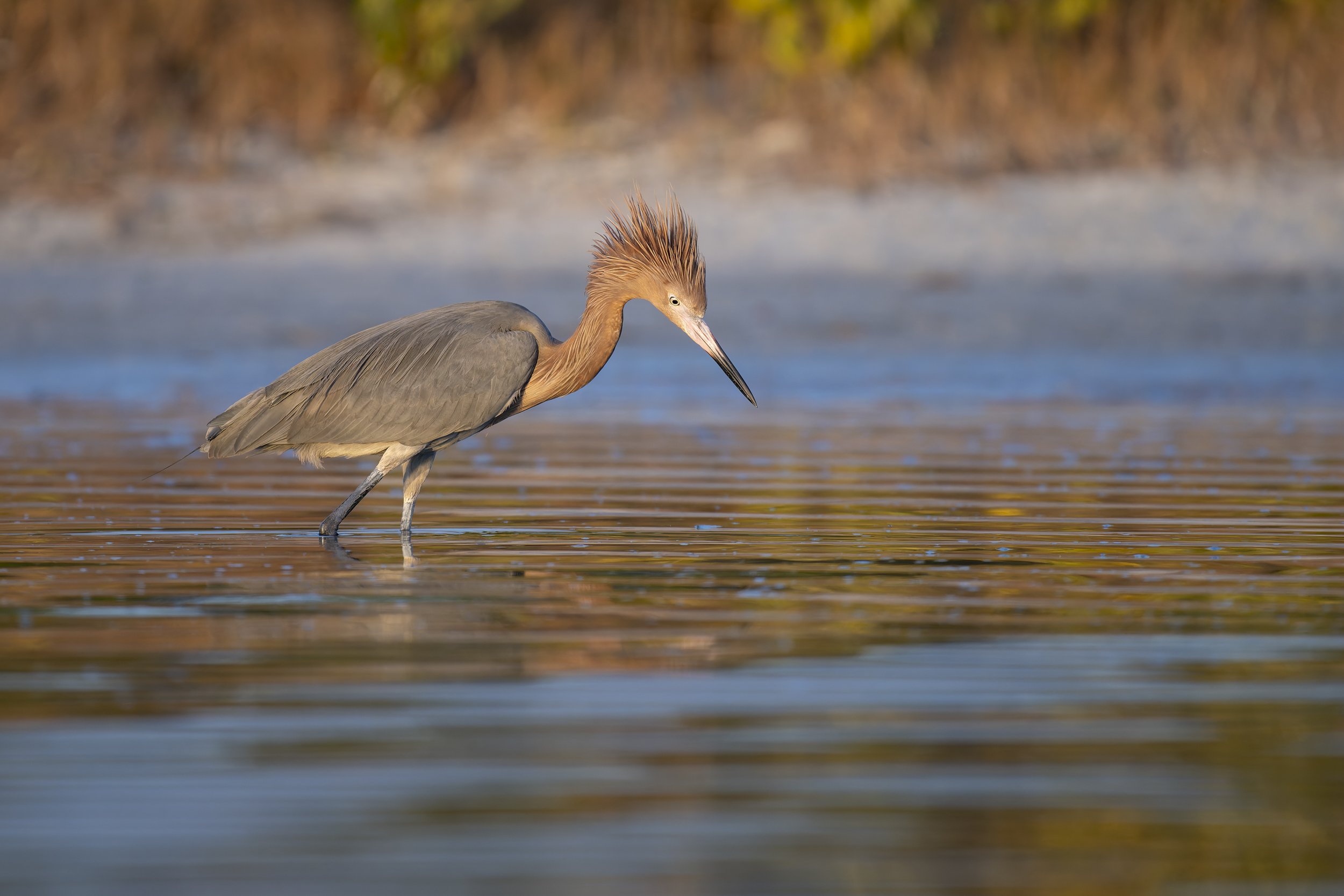
Reddish Egret. “Spike” look. As you can see, this second Reddish doesn’t yet have lilac lores. That should change in about two to four weeks. Nikon Z8 with Nikkor Z 180-600mm 1:5.6-6.3 VR lens at 600mm, f/6.3, 1/2000 sec, ISO 1800.
I’ll finish with this image. Just a perfect ending to a lovely day. It was a delight to get reacquainted with my local “supermodel” bird friend. And it was equally delightful to meet Steve, a really cool birder and educator who I have looked up to and respected for many years. I hope to run into both again in the future. What a great day at Fort De Soto.
Stay safe, and happy birding friends!
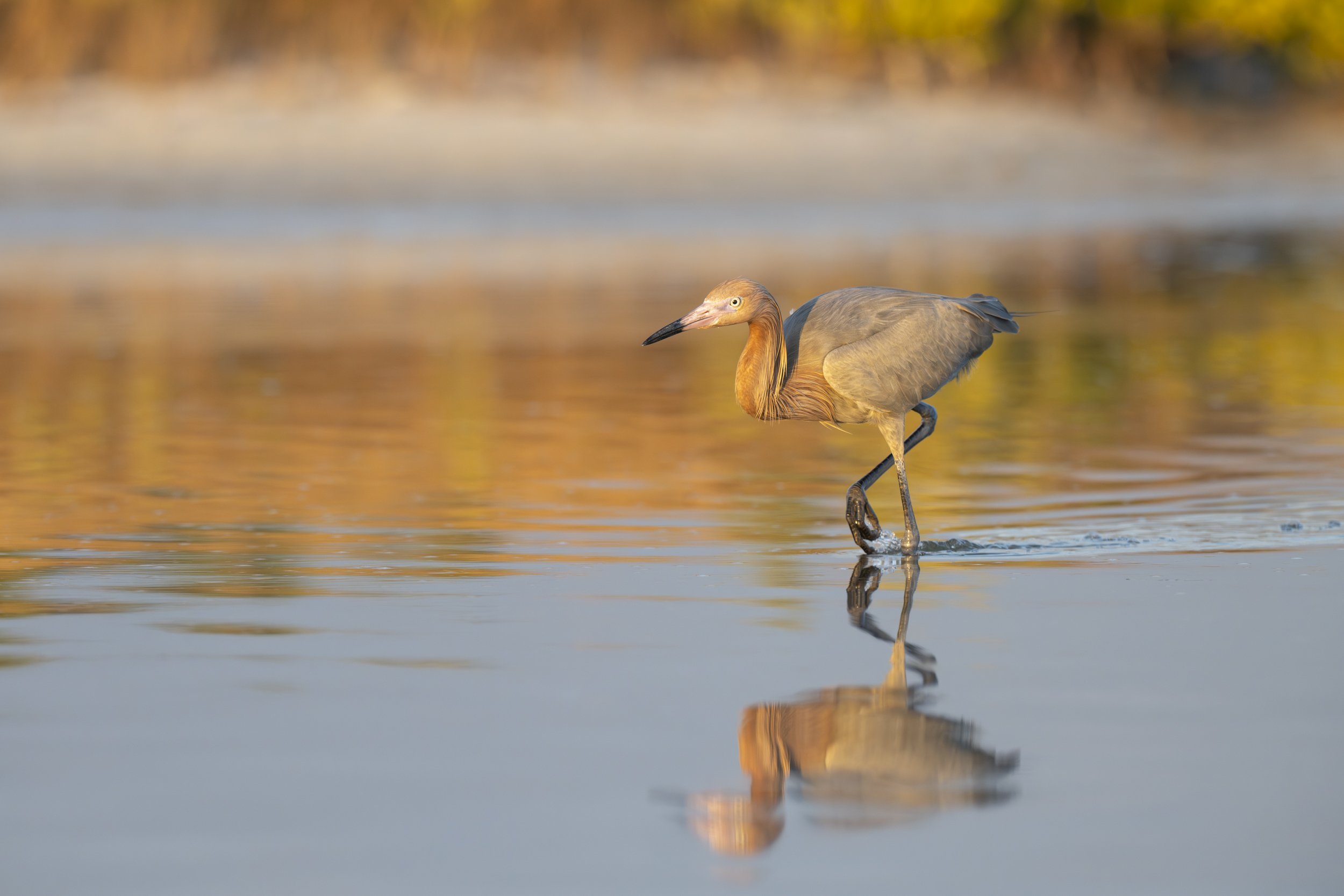
Reddish Egret. Nikon Z8 with Nikkor Z 180-600mm 1:5.6-6.3 VR lens at 330mm, f/6.0, 1/1600 sec, ISO 1400.