Orlando Wetlands Trip Report, 17-18 Jan 2026
Saturday I had the pleasure of visiting Orlando Wetlands park in Christmas, Florida. The drive from Tampa is about two hours.
I arrived at about 1pm. Weather was very comfortable, about 75F, with clear skies. The parking lot was nearly full, but I didn’t have any trouble finding a place for my 24 ft camper van.
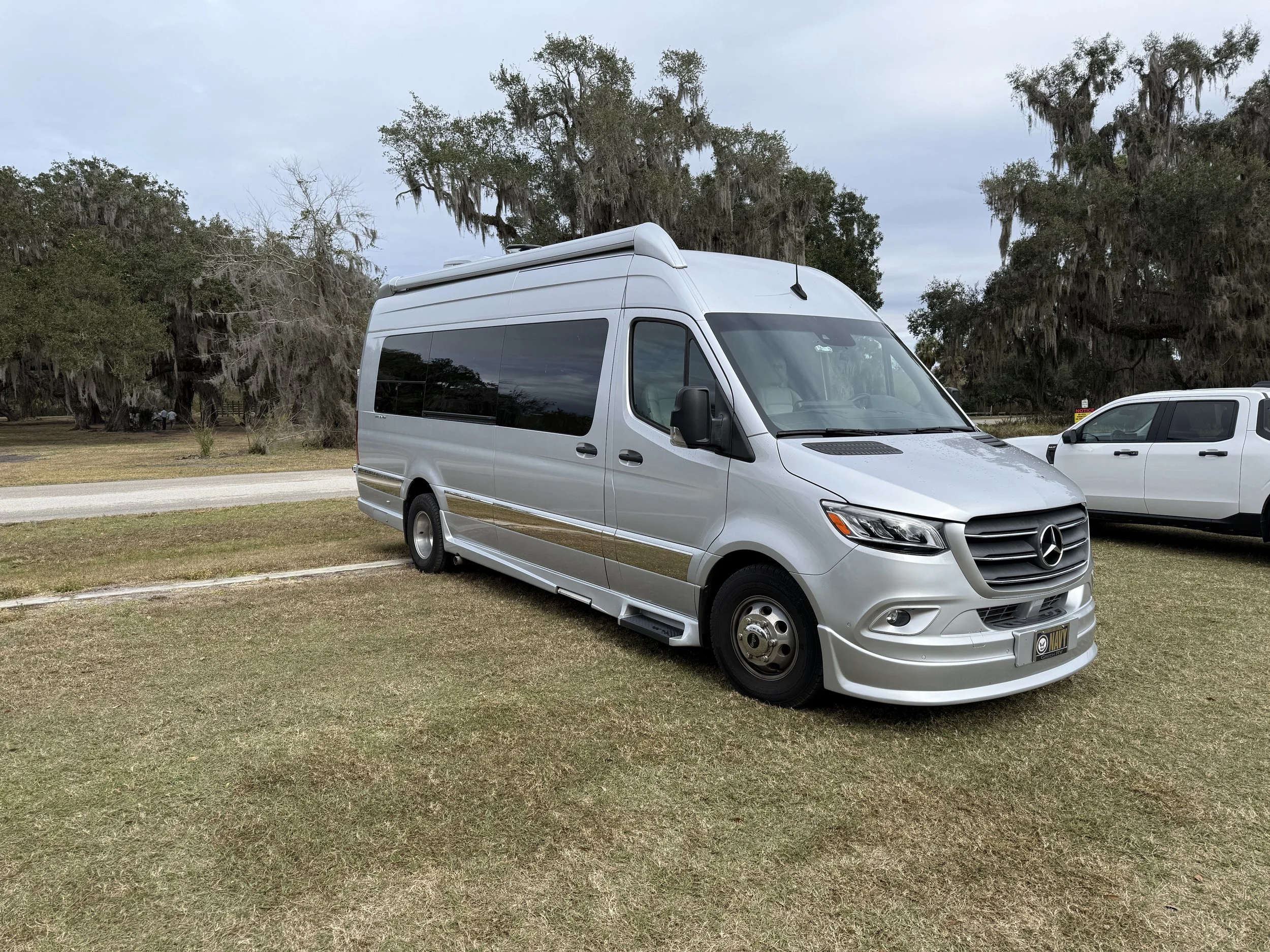
My camper van, a 2024 Grech RV Strada-ion. As long as there is clearance behind me and I can back the rear wheels to the back of the parking space, I can fit in most parking lots.
I grabbed my Nikon Z8 and I chose my long lens, the 800mm f/6.3 VR S mounted to a monopod.
A word on lens choice: a long lens like the 800mm is great for small birds, but can prove limiting when photographing the large birds. A better choice given its versatility would be a zoom (something in the 200-600mm range) or if you’re set on a prime I’d go with either a 400mm + teleconverter option.
I started by walking past the restrooms towards the new visitor’s center. On the back side of the visitor’s center is a marsh pond with lots of wading birds. It’s not the best spot for photography, but for birders with scopes it’s a great place to start. A male Vermilion Flycatcher has also been known to hang out in this area but on this trip I didn’t see him.
The trail splits into a Y in front of the nature center. Take a right to head down to the boardwalk.
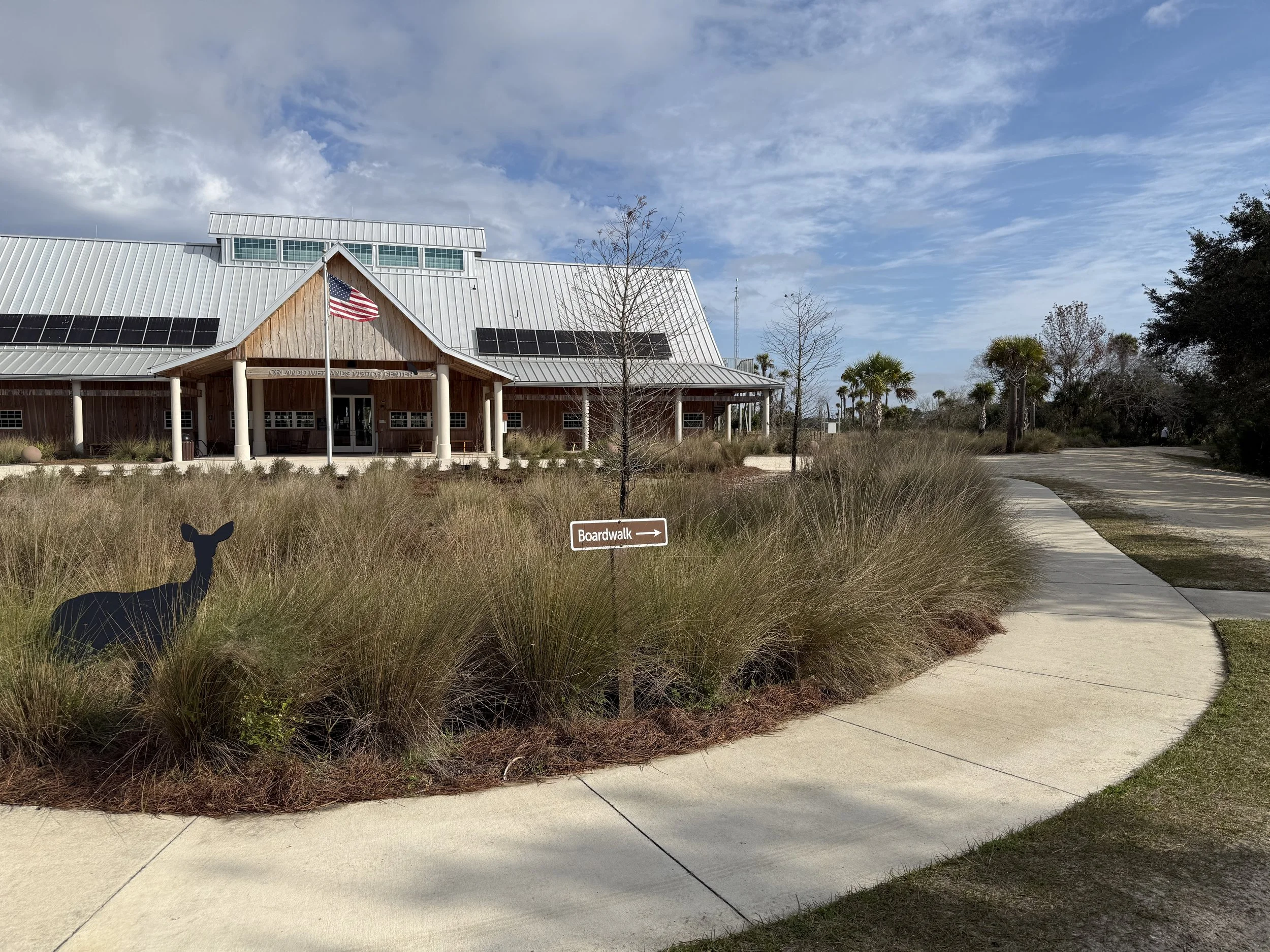
The new visitor’s center at Orlando Wetlands.
It’s about 0.25 miles down to the boardwalk and along the way you’ll spot Carolina Wren, Blue-gray Gnatcatchers, Northern Cardinal, Carolina Chickadees and Tufted Titmouse in the trees and shrubs. In the marsh you’ll see or hear Common Gallinule, Purple Gallinule and a few other wading birds. Keep going though - you’ll see all these birds up close on the boardwalk.
On the boardwalk you’ll see dozens of Common Gallinule and Purple Gallinule swimming about. At this time of season they are starting their courtship rituals, so there’s a lot of squawking and fighting.
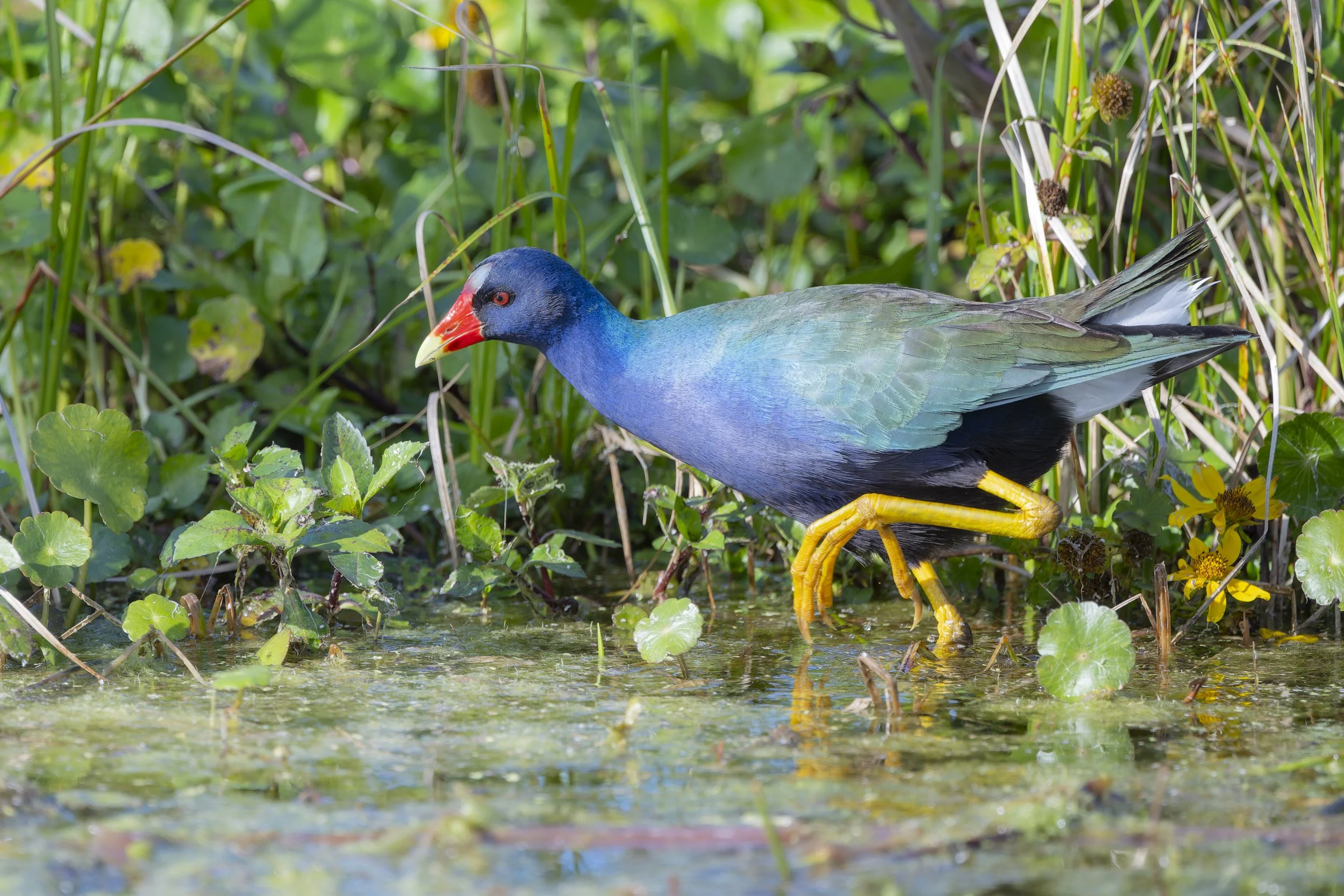
Purple Gallinule. Nikon Z8 with Nikkor Z 800mm f/6.3 VR S lens at f/6.3, 1/1250 sec, ISO 640.
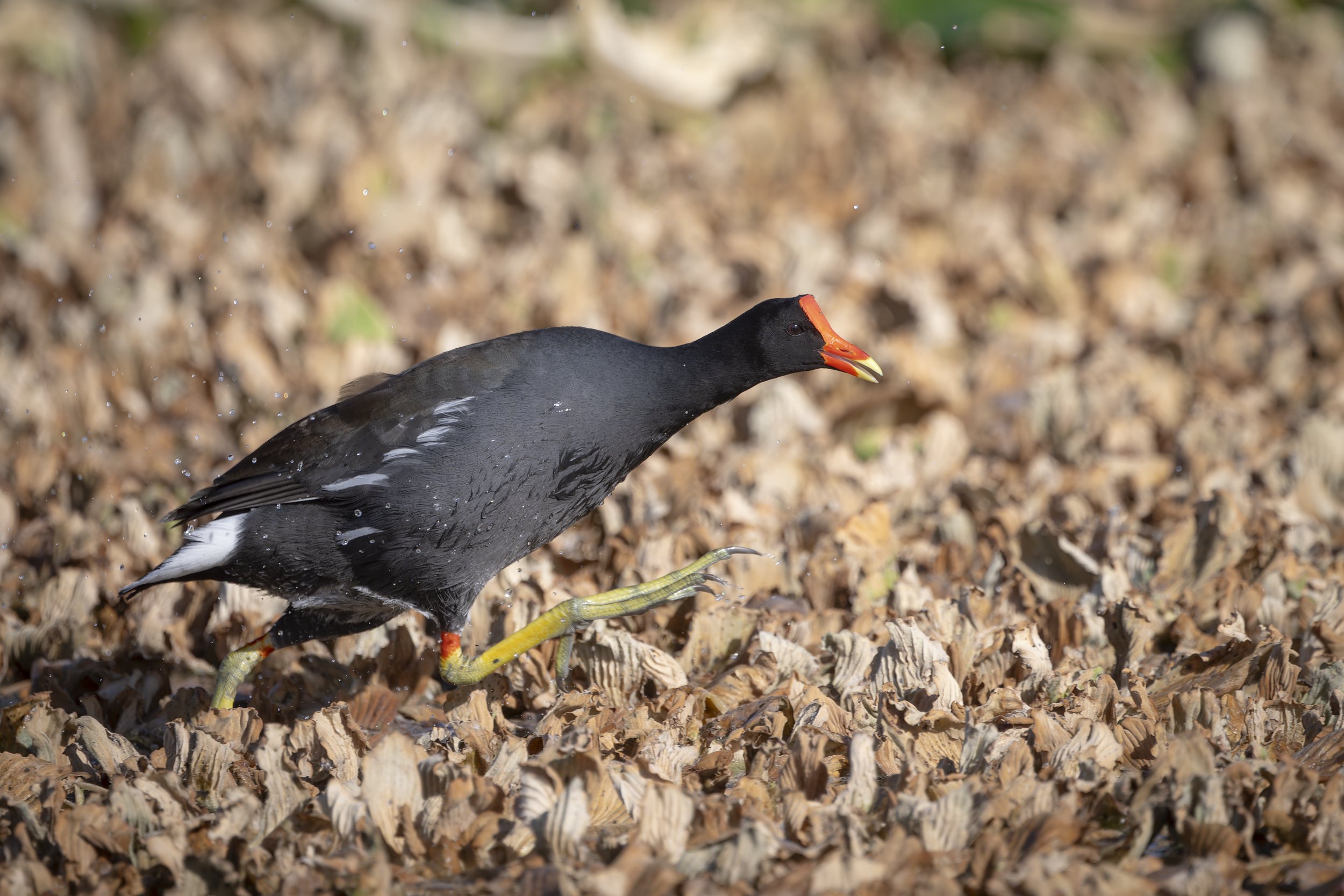
Common Gallinule. Breeding season is approaching and bird fights are starting to break out. This bird was racing towards another bird, itching for a fight. Nikon Z8 with Nikkor Z 800mm f/6.3 VR S lens at f/6.3, 1/2000 sec, ISO 560.
Only about a hundred yards down the boardwalk you’ll find the rookery area. It’s on the right hand side of the boardwalk, facing east. In the evening, this area (including the birds) is warmly lit by the setting sun. In the morning, you’ll be facing into the sun as it rises. Choose the time of day you visit wisely. Or if you’re like me, do an afternoon visit one day then come back the next morning.
Palm tree tops are prime real estate for nesting sites and there is a lot of competition amongst the Roseate Spoonbills and Great Egrets. It’s a great time to observe courtship behavior, nest building activity, and even mating. Both egrets and spoonbills were flying over to the nearby woods to grab branches and other nesting material which provides excellent bird-in-flight (BIF) opportunities.
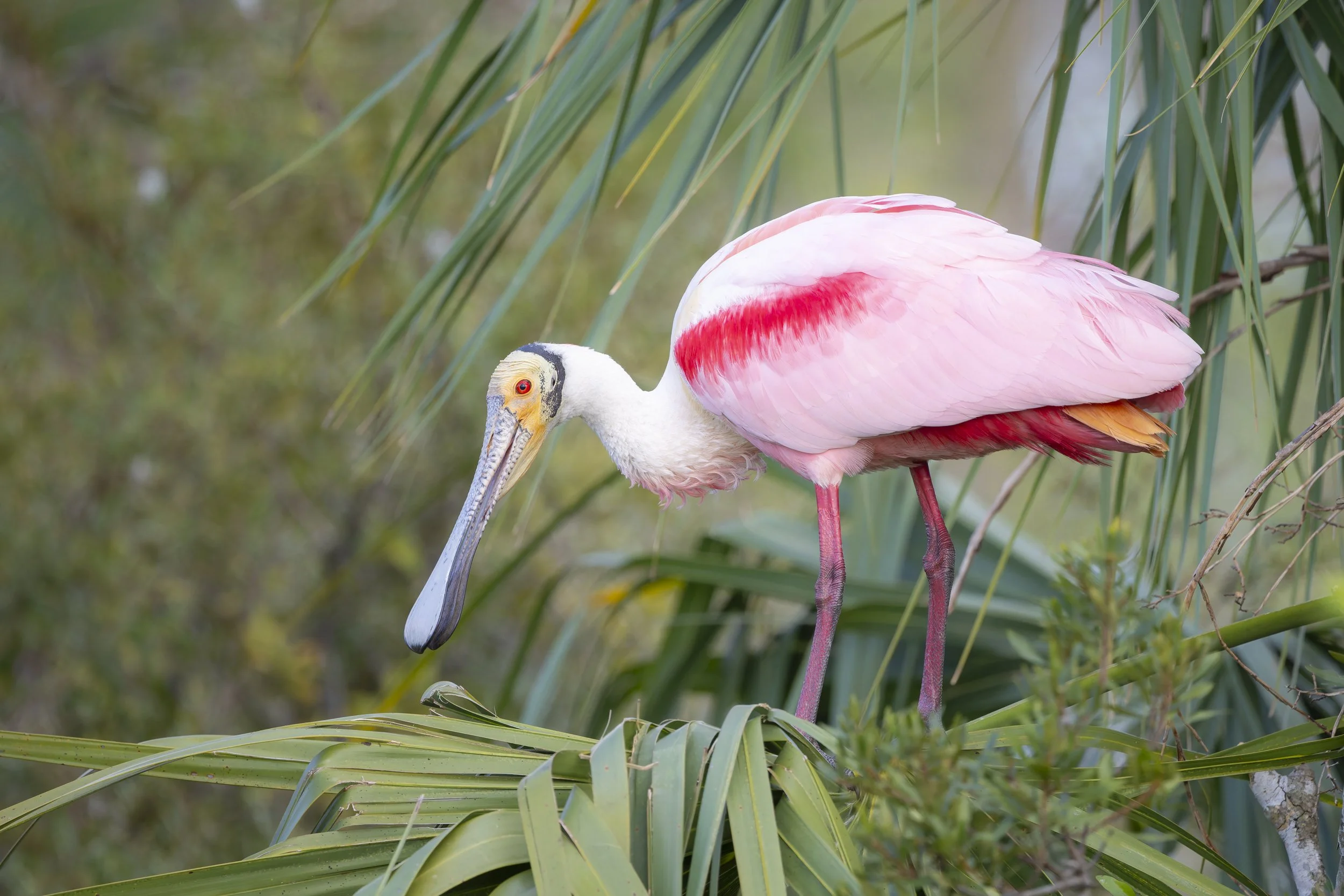
Roseate Spoonbill. Looks like this Spoonbill has found a good spot to make a nest. Nikon Z8 with Nikkor Z 800mm f/6.3 VR S lens at f/6.3, 1/2000 sec, ISO 2000.
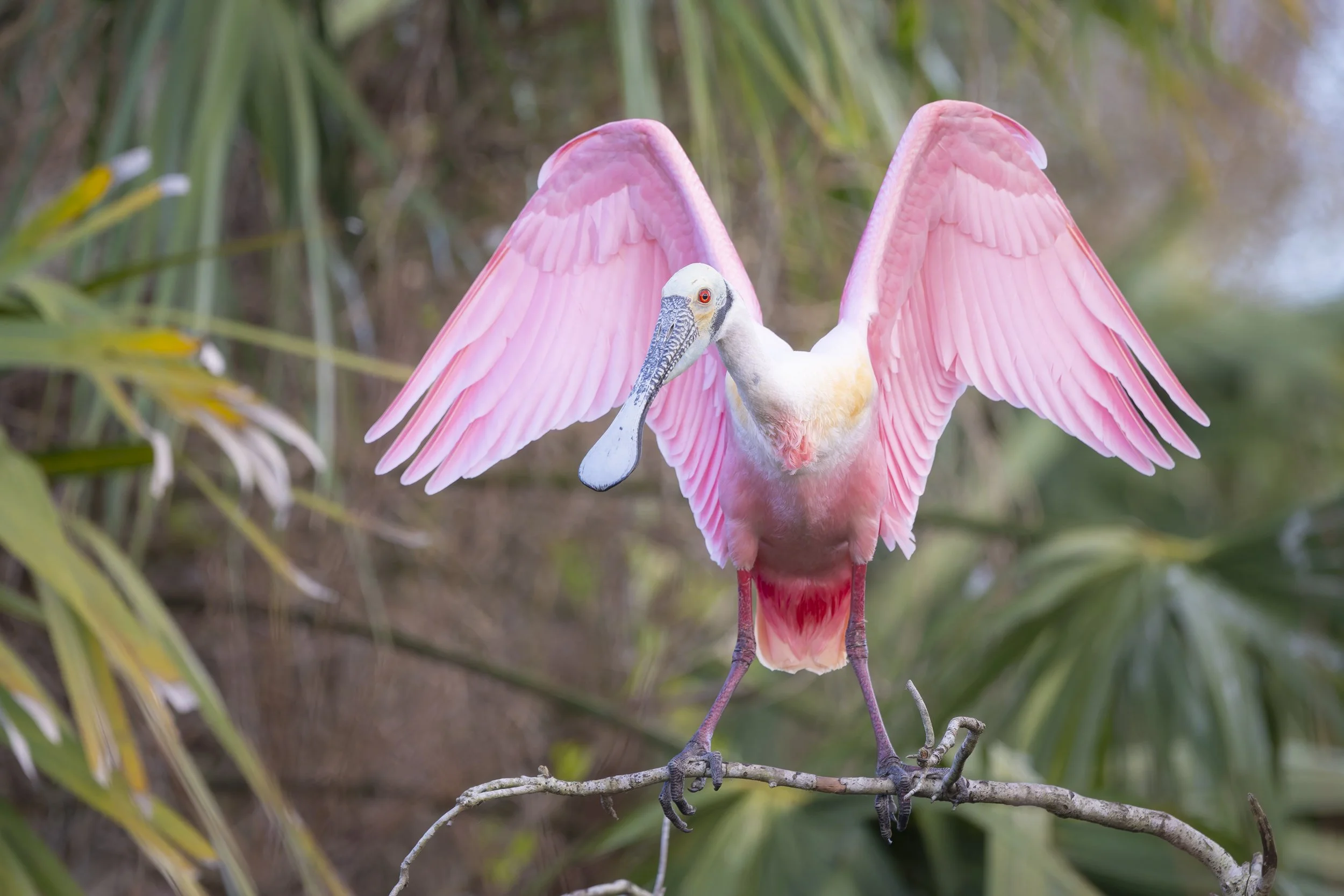
Roseate Spoonbill. Getting shots like this was tough while using an 800mm lens. A 600mm would be my selection, or a zoom such as the 180-600mm lens is also excellent. Nikon Z8 with Nikkor Z 800mm f/6.3 VR S lens at f/6.3, 1/2000 sec, ISO 2200.
I could show you the hundreds of photos of Roseate Spoonbills I took, but that would get old. And believe me, it’s tempting to photograph nothing but the Roseate Spooonbills. But let me recommend that you point your camera at other birds as well. There are some real beauties out there.
This Green Heron is an excellent example. He was literally 10 feet off the boardwalk and everyone who stopped looking at the Roseate Spoonbills long enough got this shot.
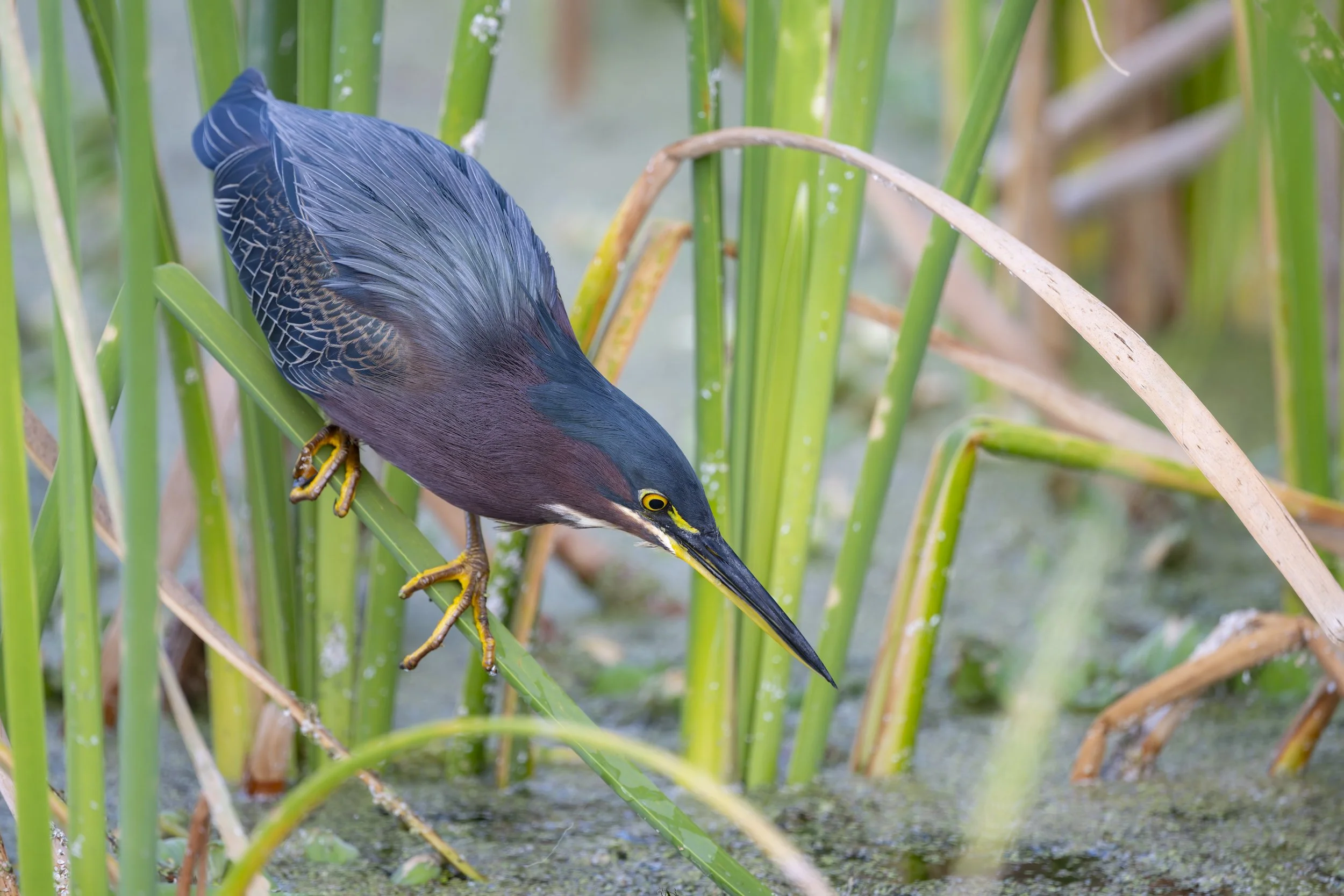
Green Heron. Nikon Z8 with Nikkor Z 800mm f/6.3 VR S lens at f/6.3, 1/1250 sec, ISO 1600.
The tell-tale rattle of a Belted Kingfisher rang out. I spotted him just as he dove into the water. I managed to get this shot as he raced off, surprised he had a lucky strike.
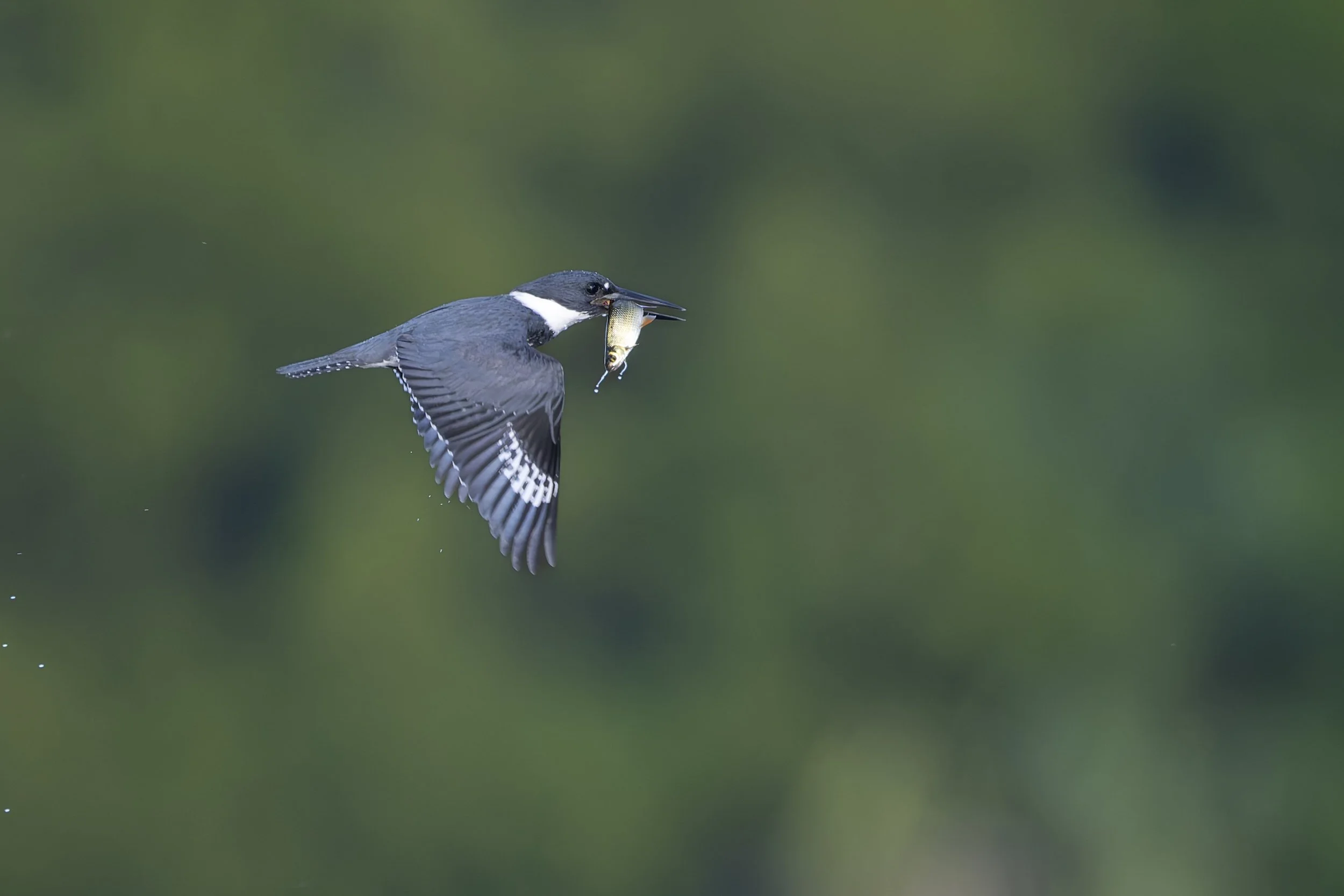
Belted Kingfisher. Nikon Z8 with Nikkor Z 800mm f/6.3 VR S lens at f/6.3, 1/2000 sec, ISO 2000.
Soon after I saw a raptor streaking across the sky headed right for a stand of trees. I knew instantly what it was - the Ferrari of raptors - the Peregrine Falcon. His head was already turned away by the time I took this image, but I was thrilled to see one nonetheless. Look how sleek he is. Nice.
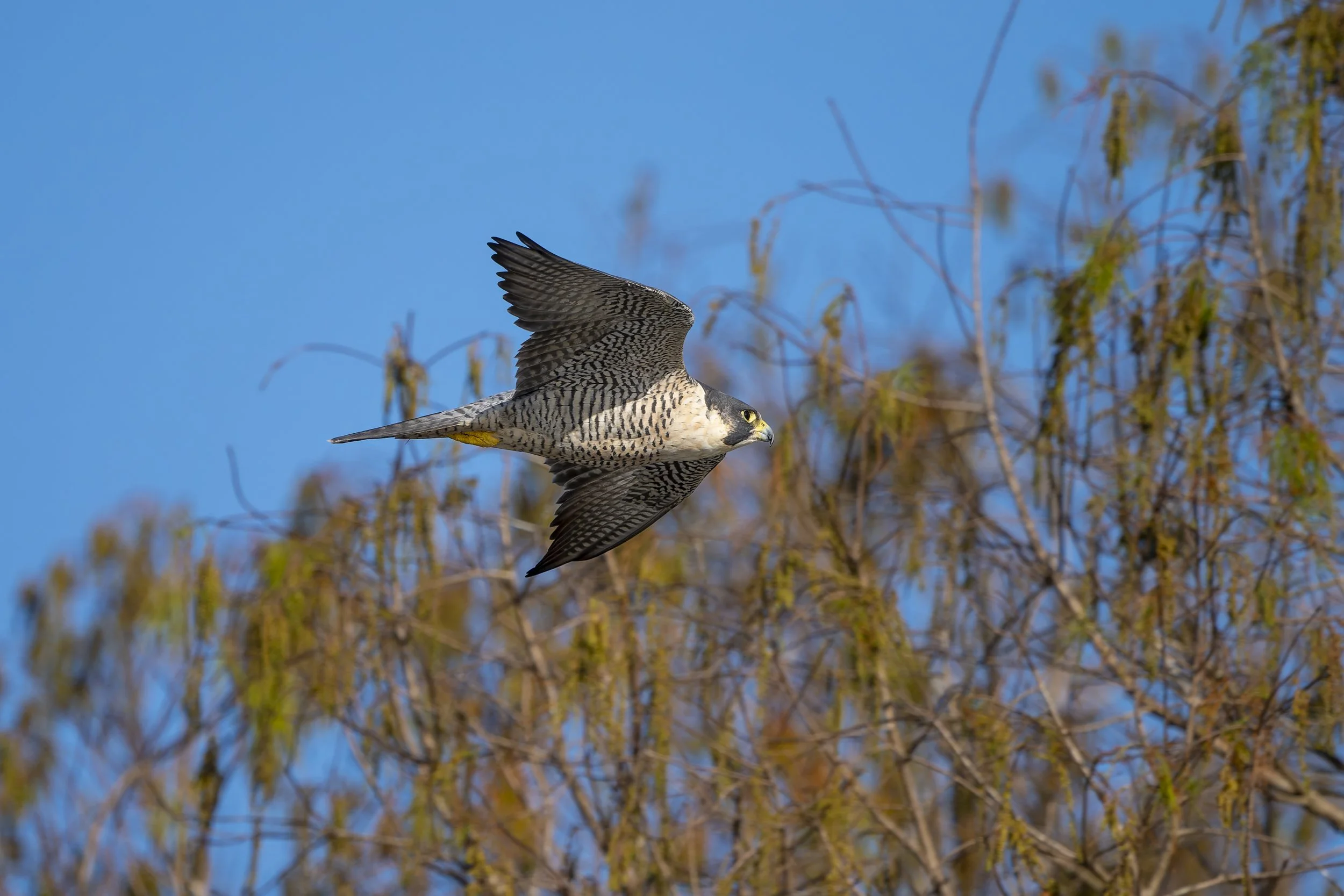
Peregrine Falcon. Nikon Z8 with Nikkor Z 800mm f/6.3 VR S lens at f/6.3, 1/3200 sec, ISO 320.
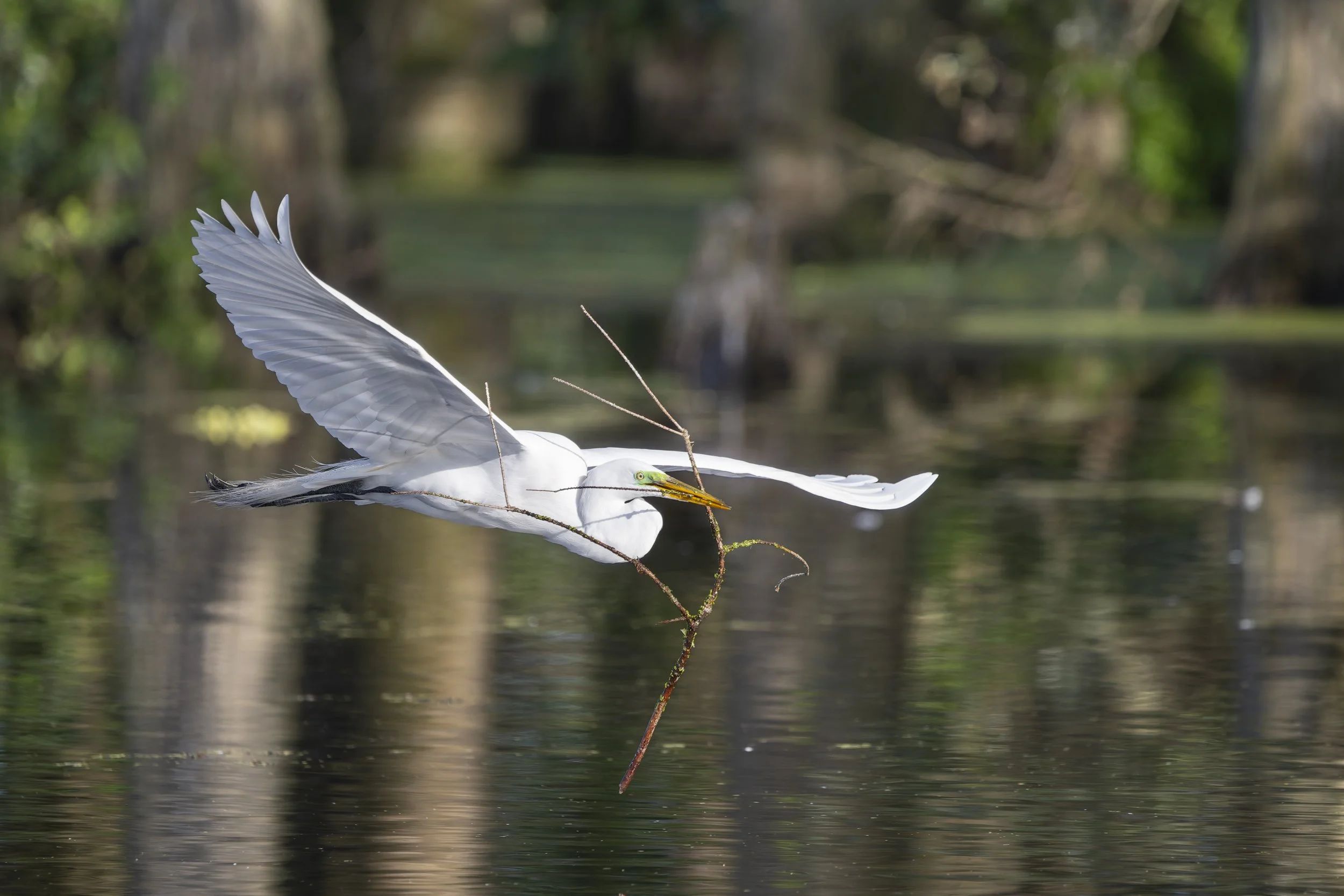
Great Egret. Here is an example of one of the many birds coming out of the woods with nesting material. They repeat this behavior, so it’s a great opportunity for BIF photos.
In addition to the gallinules, there were dozens of American Coot swimming in the marsh pond. Sprinkled in were Pied-billed Grebe. They are normally shy little birds, but here they didn’t seem to mind so much.
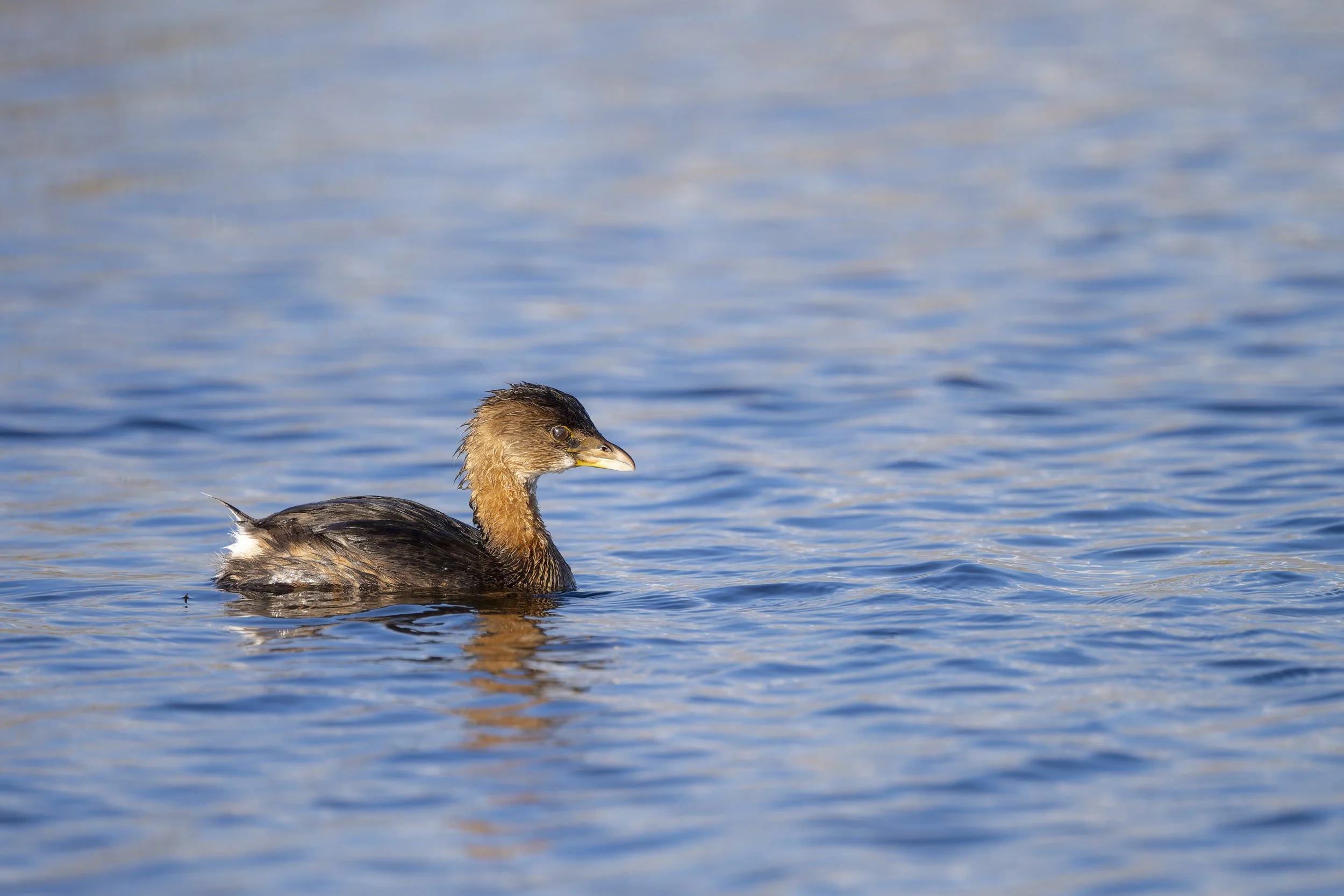
Pied-billed Grebe. Nikon Z8 with Nikkor Z 800mm f/6.3 VR S lens at f/6.3, 1/2500 sec, ISO 560.
Leaving the boardwalk, the first thing I noticed were the alligators along the edge of the trail sunning to keep warm. At this time of year the gators pose little threat, but soon that might change as the temperatures warm. Still, while on the trail I remained vigilant of my surroundings and moved by each gator with a little pep in my step. I stopped to take the photo below of this relatively small swamp puppy but didn’t dare when passing the bigger boys. As a reminder, do not bring your pets or even a service animal out here. The reason should be obvious.
Of note, I saw many more alligators off the edge of the trail on my afternoon walk. I returned the following morning and there were not that many on the trail. I could still see plenty of them swimming in the marsh lake though.
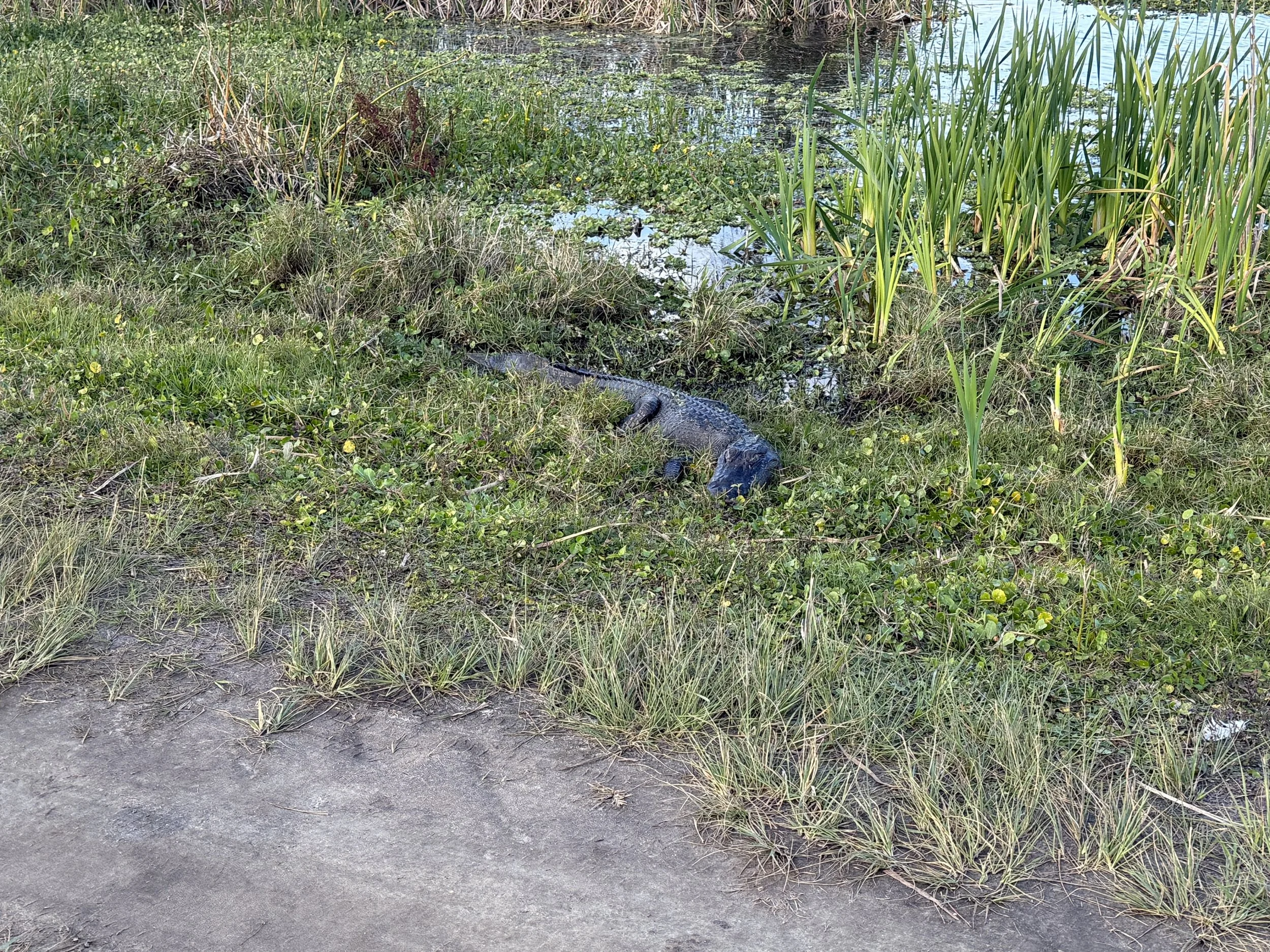
American Alligator. iPhone 14
On this section of the trail, aptly named Alligator Alley, I saw a single Glossy Ibis but it was not “glossy” in appearance, and the big Black Vultures lingering nearby weren’t that attractive. Lots of Palm Warblers and Savannah Sparrows were on the edge of the trail, but I would come back to them later. Instead, another photographer told me that a female Vermillion Flycatcher was nearby. So we went to go find her.
It didn’t take long. She was hunting from her favorite perch, a stand of cattails. To and fro she went, catching flies and returning to her perch. I tried to get a BIF photo but she was moving so fast.
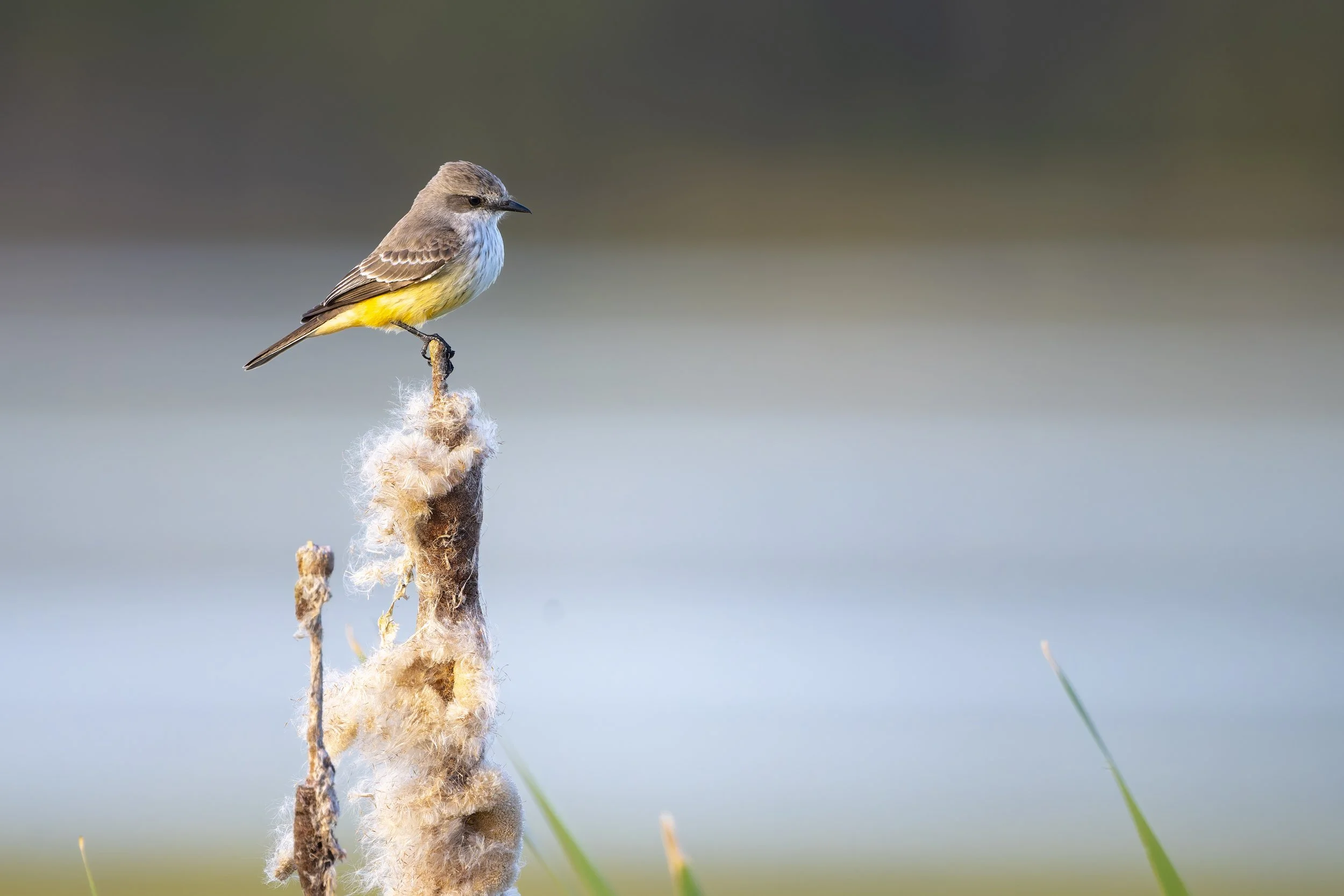
Vermilion Flycatcher. Lacking the characteristic red color that’s found in males, this female Vermilion Flycatcher is no less beautiful. Nikon Z8 with Nikkor Z 800mm f/6.3 VR S lens at f/6.3, 1/1600 sec, ISO 900.
As the sun was beginning to get low on the horizon I decided to turn back and return to the boardwalk. On my return I was astonished to see the trees were filled with hundreds of White Ibis and Wood Storks. I took a shot from afar, but I could have easily taken 3 more just like this in a row to create a 4-image panorama. It was a sight, and sound, to behold.
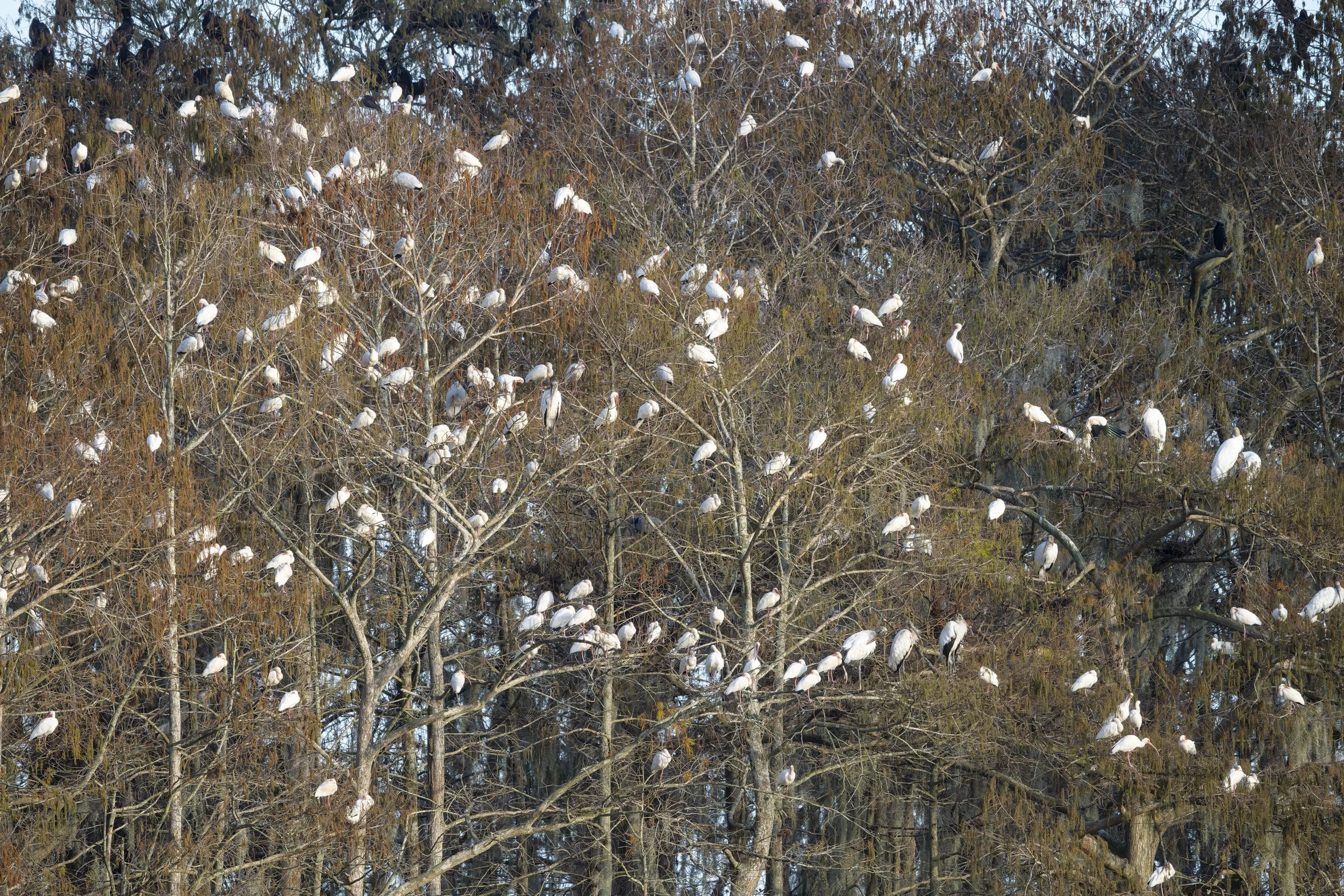
White Ibis and Wood Storks. The ibis and storks filled the trees for their evening slumber. Nikon Z8 with Nikkor Z 800mm f/6.3 VR S lens at f/11, 1/800 sec, ISO 1800.
Back on the boardwalk I spotted a single Great Blue Heron in the distant trees putting on a magnificent courtship display. He was ruffling out his neck feathers and shooting his head straight up stretching his neck all the way out. The setting sun gives the photo a warm tone.
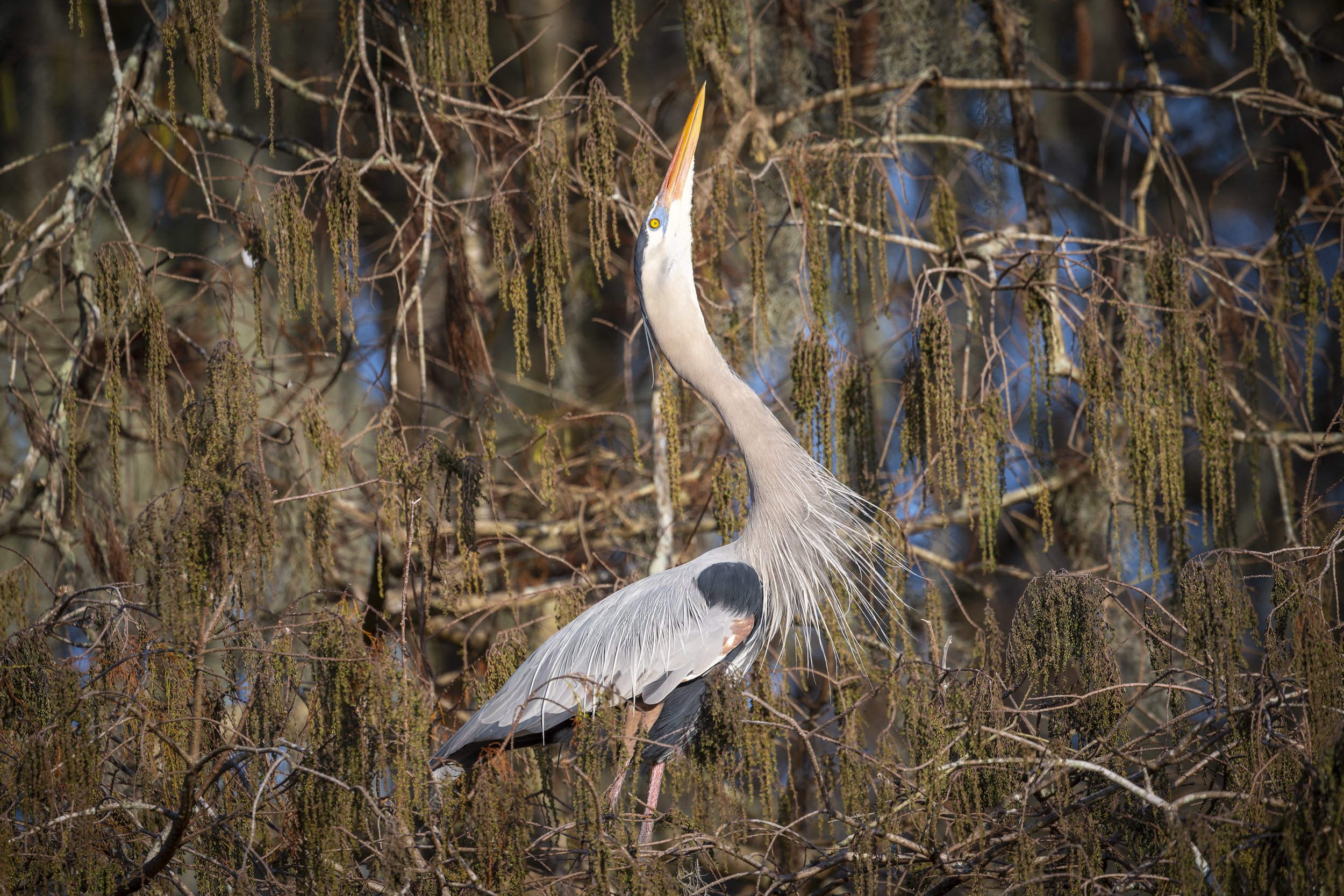
Great Blue Heron. Showing off with its characteristic display. Nikon Z8 with Nikkor Z 800mm f/6.3 VR S lens at f/6.3, 1/1000 sec, ISO 250.
An Anhinga in beautiful breeding plumage next caught my attention. This was again right off the boardwalk, not 10 feet earlier I photographed the Green Heron. The delicate head feathers and green lores were magnificent. If you see an Anhinga looking like this - even if Anhinga are not your cup of tea - stop and take its picture. You will not regret it.
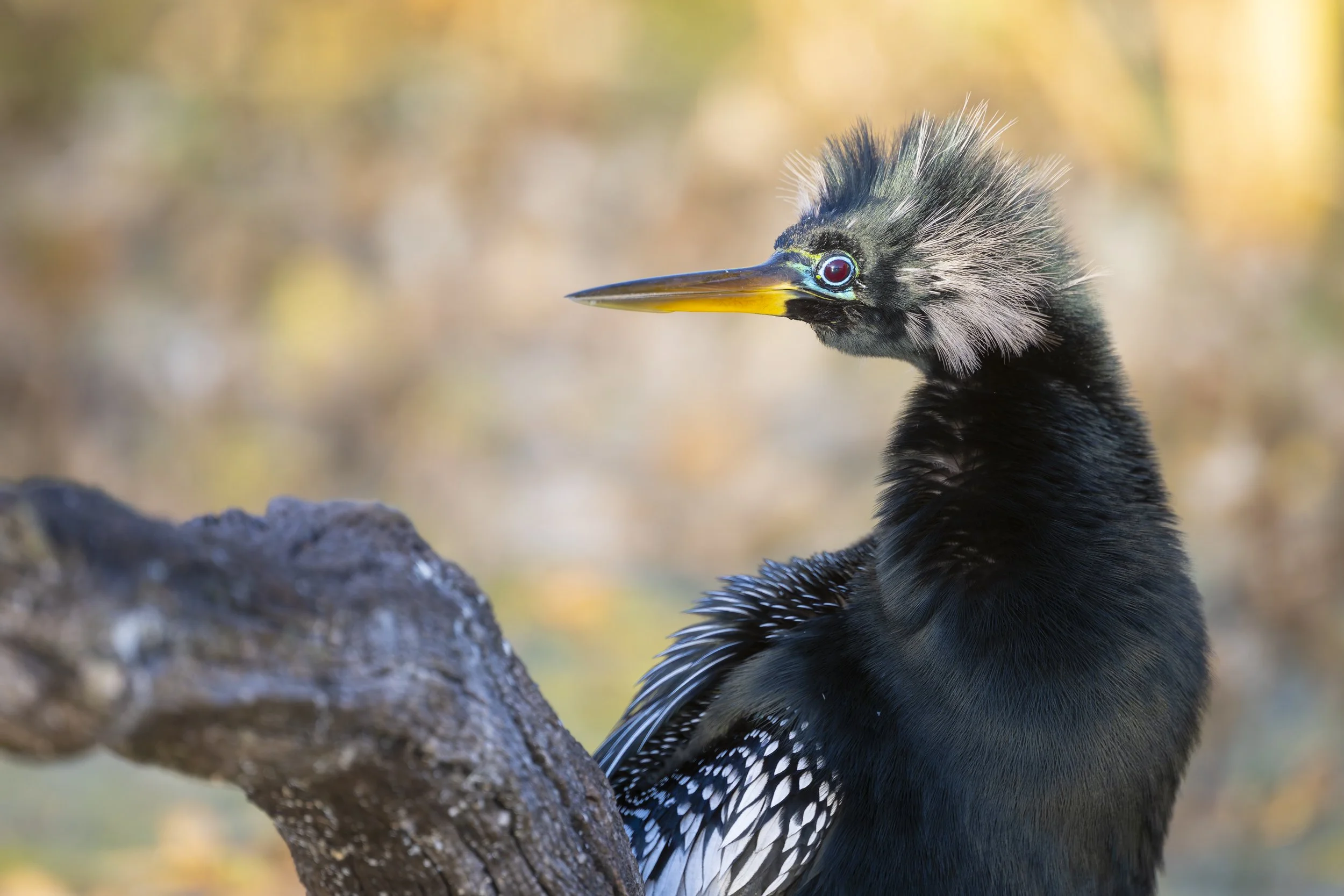
Anhinga. Nikon Z8 with Nikkor Z 800mm f/6.3 VR S lens at f/6.3, 1/800 sec, ISO 1250.
As the sun was setting, I took a few more departing photos of the spoonbills. I’d like to think this spoonbill was telling me goodbye with this “sky-gazing” pose.
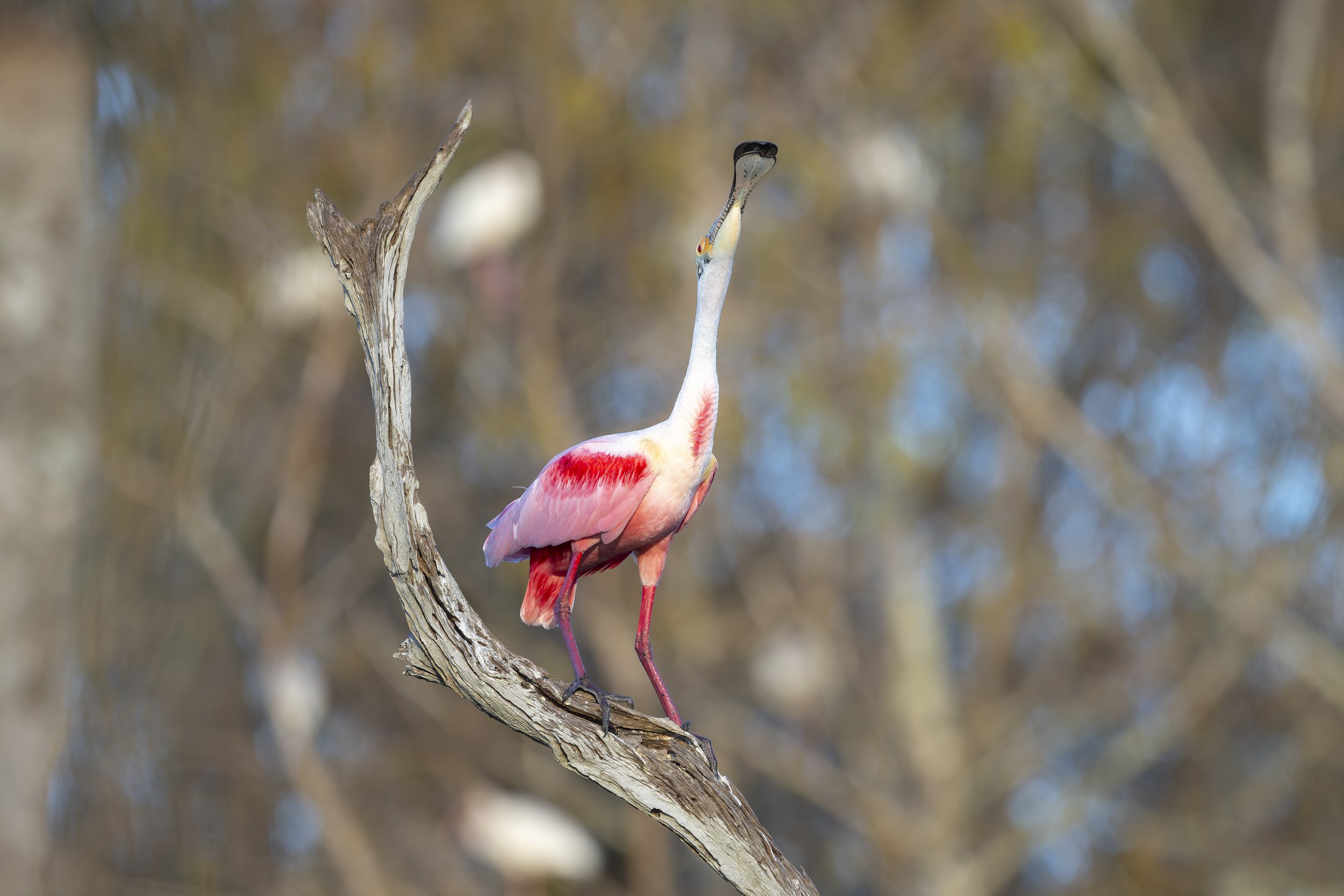
Roseate Spoonbill. Showing characteristic “sky-gazing” pose, a behavior unique to Roseate Spoonbills. Nikon Z8 with Nikkor Z 800mm f/6.3 VR S lens at f/6.3, 1/1000 sec, ISO 560.
My bird count for Saturday afternoon, 17 January:
8 Black-bellied Whistling Duck
2 Blue-winged Teal
100+ Common Gallinule
51 American Coot
25 Purple Gallinule
4 Limpkin
30 Wood Stork
100+ White Ibis
2 Glossy Ibis
100+ Roseate Spoonbill
4 Little Blue Heron
4 Green Heron
4 Black-crowned Night Heron
20 Great Egret
22 Great Blue Heron
100 Turkey Vulture
100+ Black Vulture
2 Belted Kingfisher
1 Peregrine Falcon
1 Vermilion Flycatcher
6 Blue-gray Gnatcatcher
12 Savannah Sparrow
6 Swamp Sparrow
1 Common Yellowthroat
15 Palm Warbler
That evening I drove 15 minutes to a Cracker Barrel in Titusville. There I took a shower in the camper van then went inside to have a homestyle meal of pot roast, mashed potatoes, and broccoli. It was quiet all night and I slept well. The following morning I returned to Orlando Wetlands at sunrise. This time I chose a different lens, the Nikkor Z 180-600mm f/5.6-6.3 VR lens.
All the White Ibis and Wood Storks had already left the trees, and to my disappointment there were relatively few Roseate Spoonbills. Most were far out with branches and palm fronds blocking the view. So while waiting for the spoonies to show, I decided to photograph other birds.
One such bird was this Eastern Phoebe in the grass off the boardwalk.
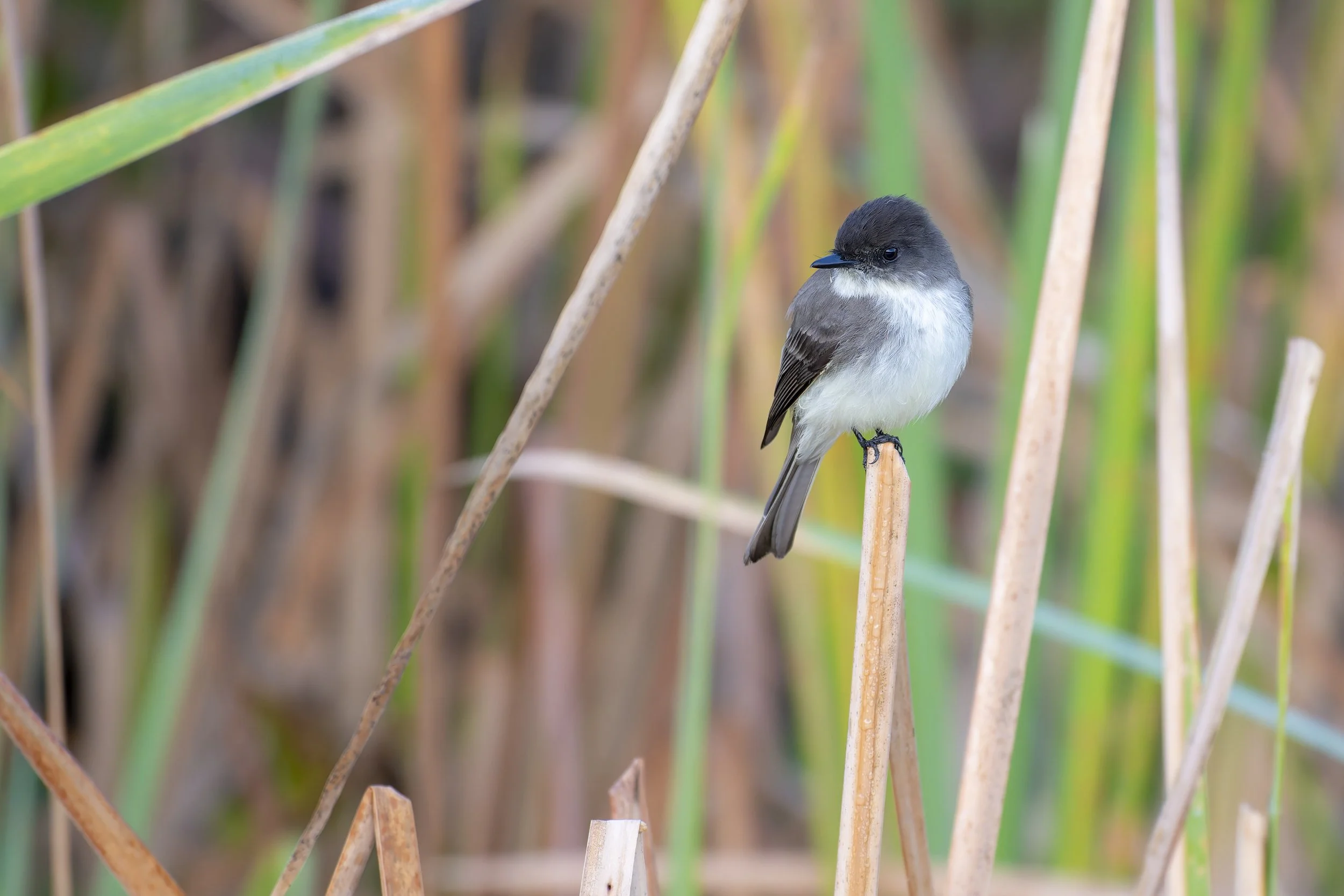
Eastern Phoebe. Nikon Z8 with Nikkor Z 180-600mm f/5.6-6.3 VR lens at 600mm, f/6.3, 1/640 sec, ISO 2500.
Soon the spoonbills started coming in and this created a great opportunity for BIF photography. My success rate in BIF is generally low, but has significantly improved over the years, largely in part to ongoing practice and the improvements in autofocus technology. I think this banking shot, showing the whole of the top of the wingspan, was my best of the weekend. Most Roseate Spoonbill flight photos lack the yellow tail feathers, so I was happy to have caught that little detail.
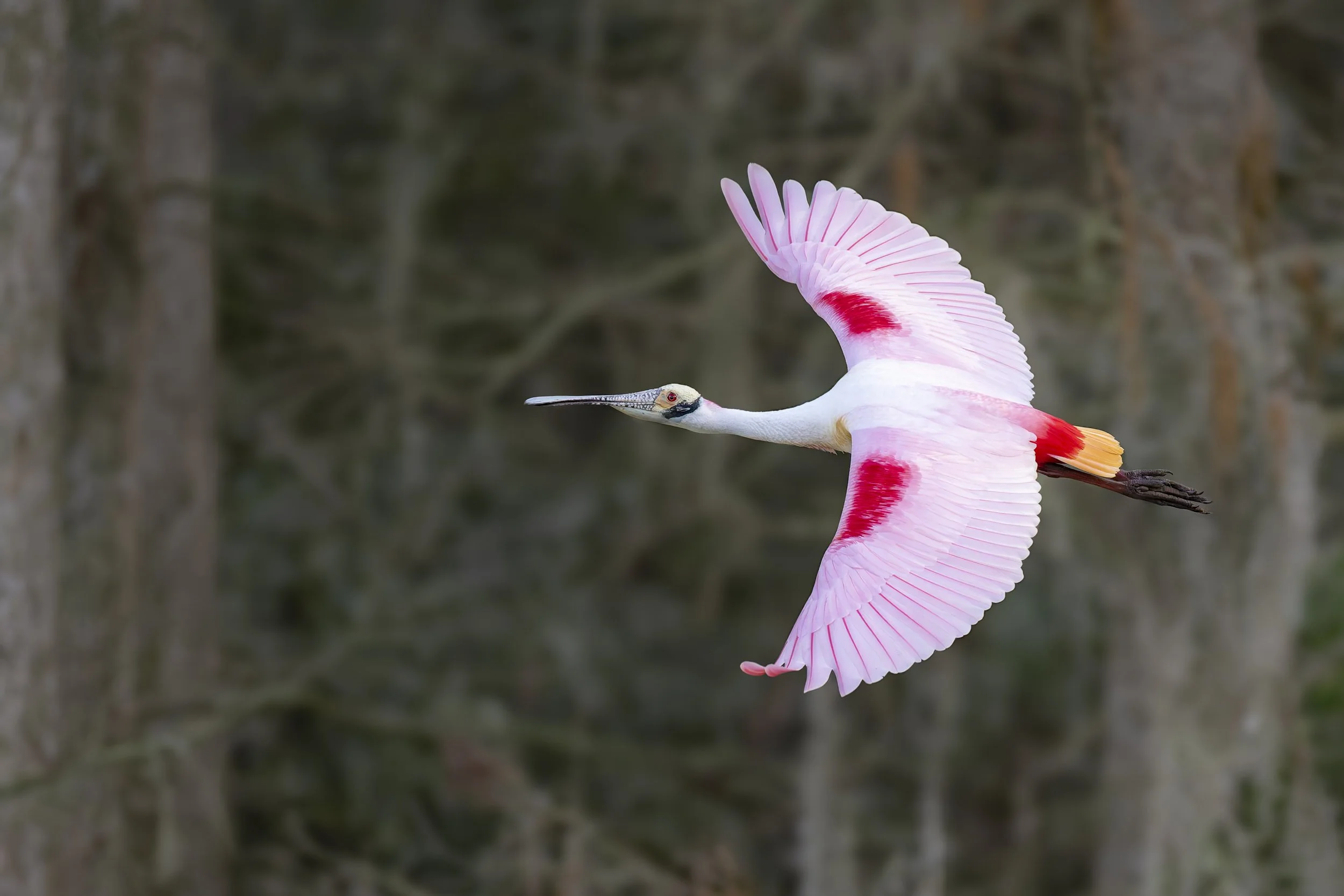
Roseate Spoonbill. Nikon Z8 with Nikkor Z 180-600mm f5.6-/6.3 VR lens at 550mm f/6.3, 1/3200 sec, ISO 11400.
Not seeing many good shots on the boardwalk, I headed down to Alligator Alley where my attention was again drawn to small bird photography. Common Yellowthroat were in abundance, but as is typical with this species, they stayed low to the ground and rarely came out in the open. It takes a lot of patience to get a clean shot. Here is one of my better ones for the day.
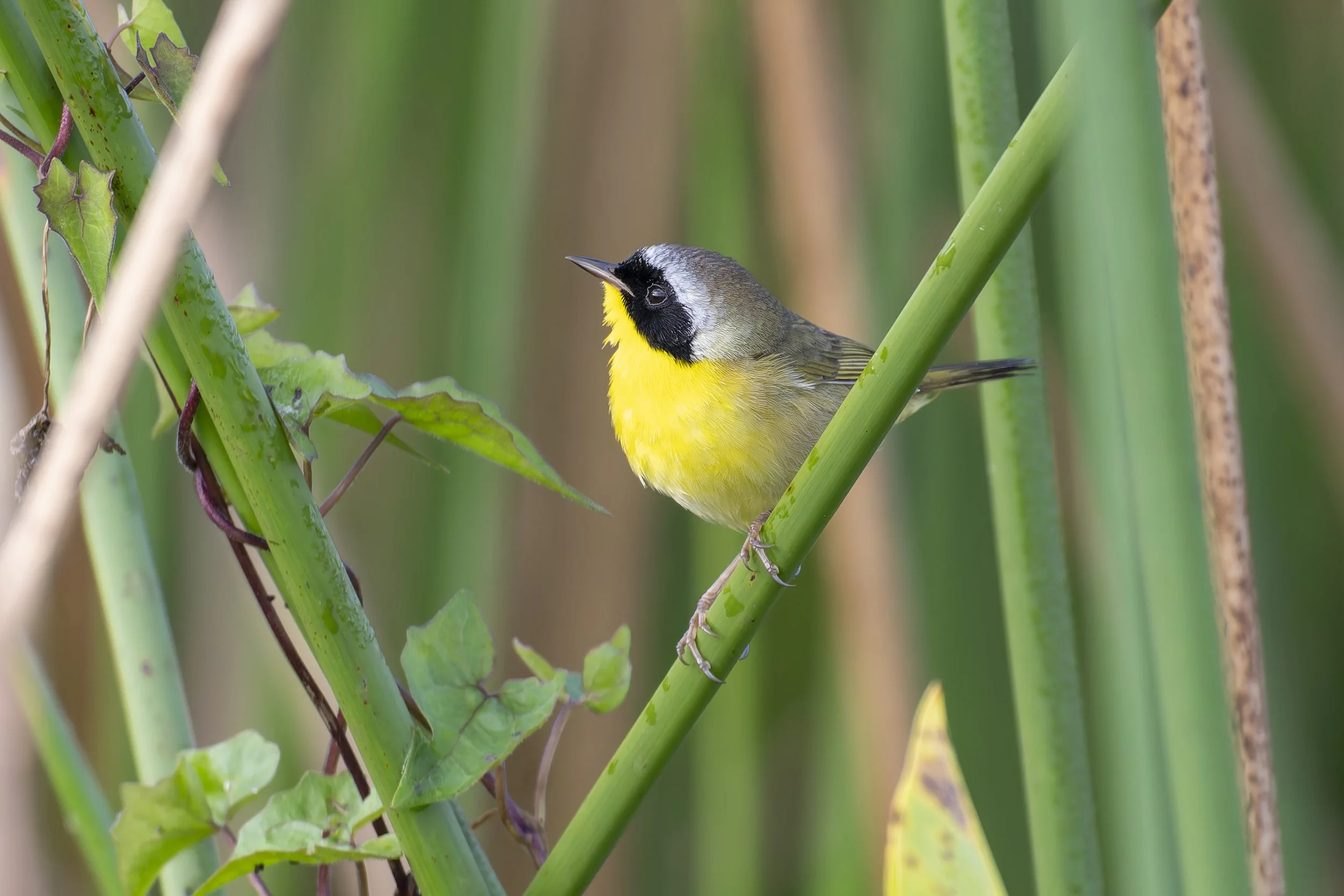
Common Yellowthroat. Nikon Z8 with Nikkor Z 180-600mm f/5.6-6.3 VR lens at 600mm, f/6.3, 1/800 sec, ISO 1250.
The Savannah Sparrows were feeding in the grass right off the trail and were completely comfortable with my presence. I sat down and took way too many pictures. Here are two of my favorites.
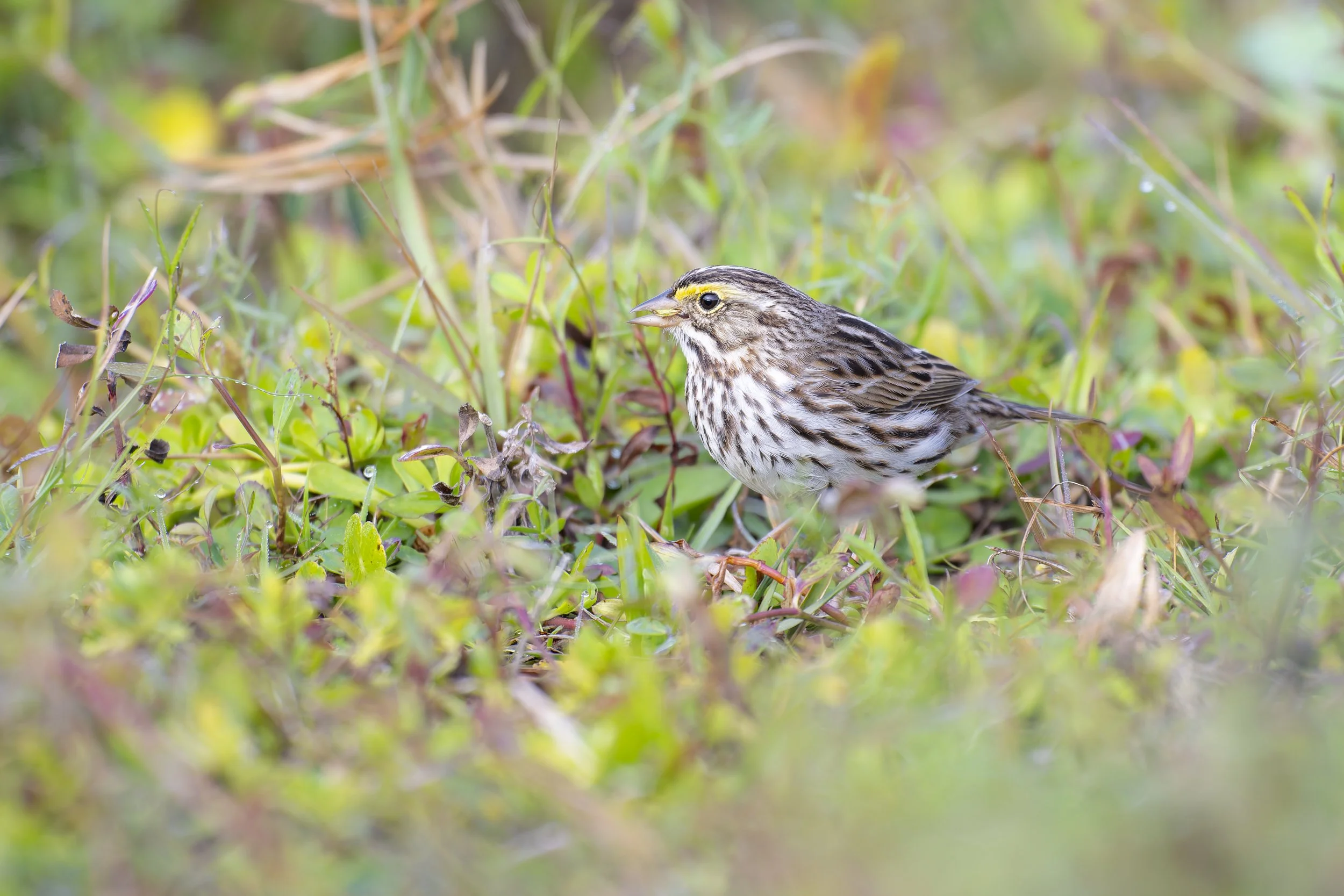
Savannah Sparrow. Nibbling on a seed found in the grass. Nikon Z8 with Nikkor Z 180-600mm f/5.6-6.3 VR lens at 600mm, f/6.3, 1/1000 sec, ISO 1250.
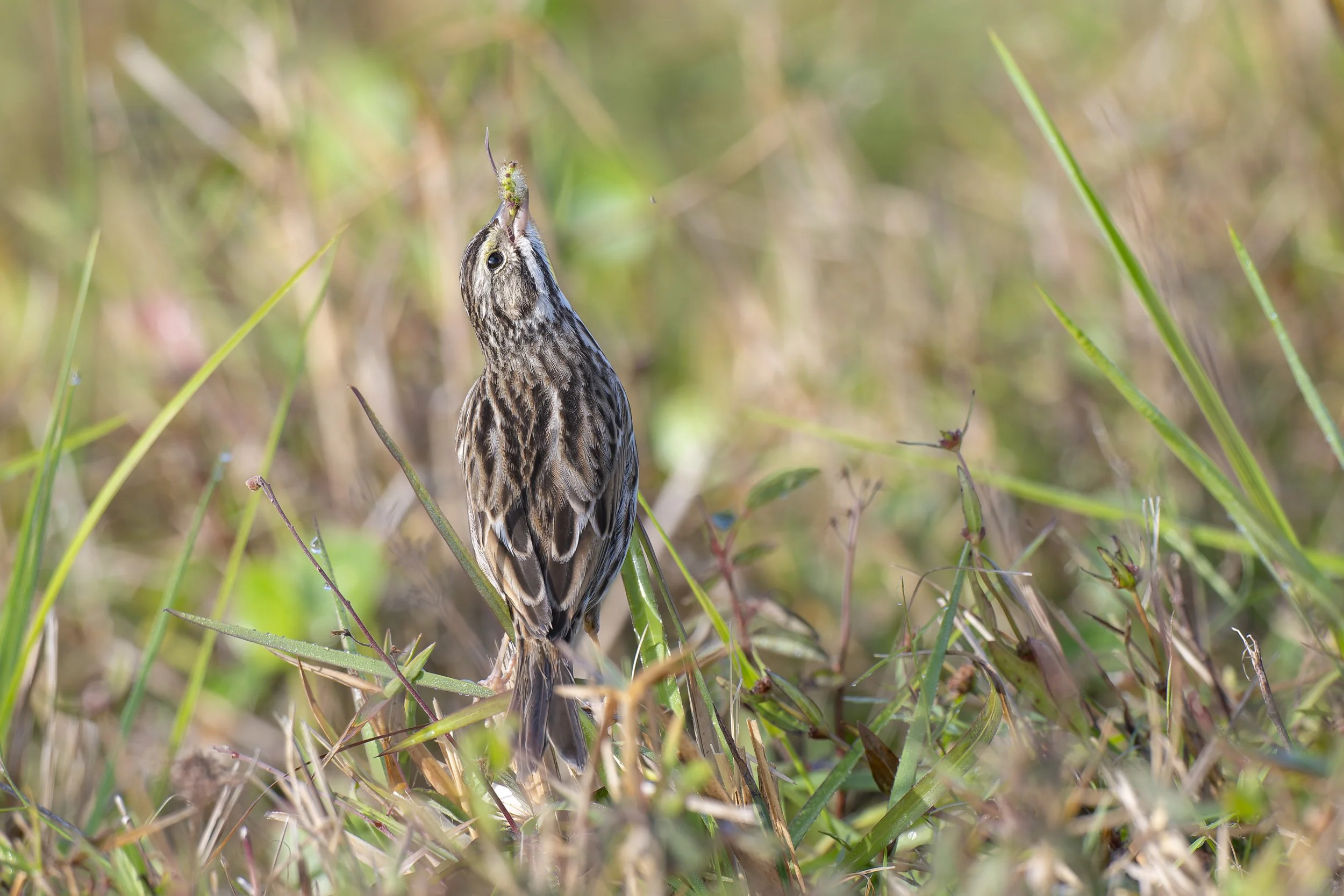
Savannah Sparrow. Nikon Z8 with Nikkor Z 180-600mm f/5.6-6.3 VR lens at 460mm, f/6.3, 1/800 sec, ISO 280.
The 2026 Audubon Photography Awards just recently opened for entries, and ever since I read the rules I’ve been thinking about the different categories and how my photographs fit in those categories. Most don’t, and I generally don’t take photographs for photo contests. Still, having just photographed the Savannah’s feeding in the grass I was thinking “those photos can go in the Plants for Birds category.” The same is true for the next photo.
I came across a group of about six Purple Gallinule and they were all feeding on the marsh plants. They use their big feet to turn the plants over so they can feed on the tender roots. For better or worse, the whole time I was thinking, “yeah, Plants for Birds!”
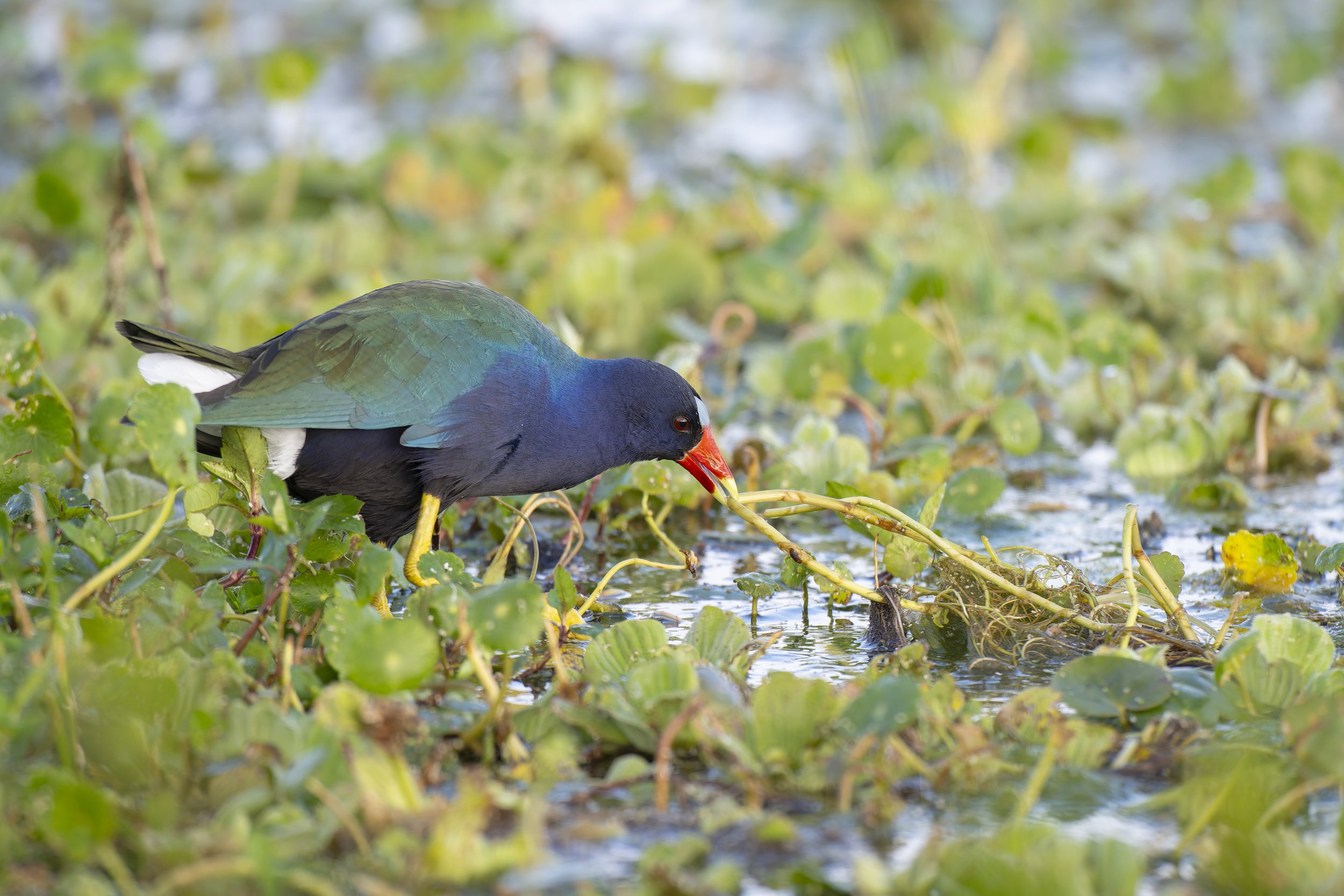
Purple Gallinule. Nikon Z8 with Nikkor Z 180-600mm f/5.6-6.3 VR lens at 520mm, f/6.3, 1/1250 sec, ISO 1800.
Continuing down the trail I came across this sole Limpkin standing in the middle of the trail. I stopped about 30 feet away, sat down, and started taking pictures. His behavior didn’t change and seemed perfectly fine with me there. I took a series of shots as it continued to preen, then I started looking around to see if there was anything else to photograph - and to double check no gators were creeping in on me. That’s when this bird decided to start calling - and if you’ve ever heard a Limpkin call you know it’s quite loud. After I nearly jumped out of my skin, I regained my composure and took this shot. When he was done calling he preened for a few more minutes then sauntered off like nothing was going on. I think he scared me on purpose.
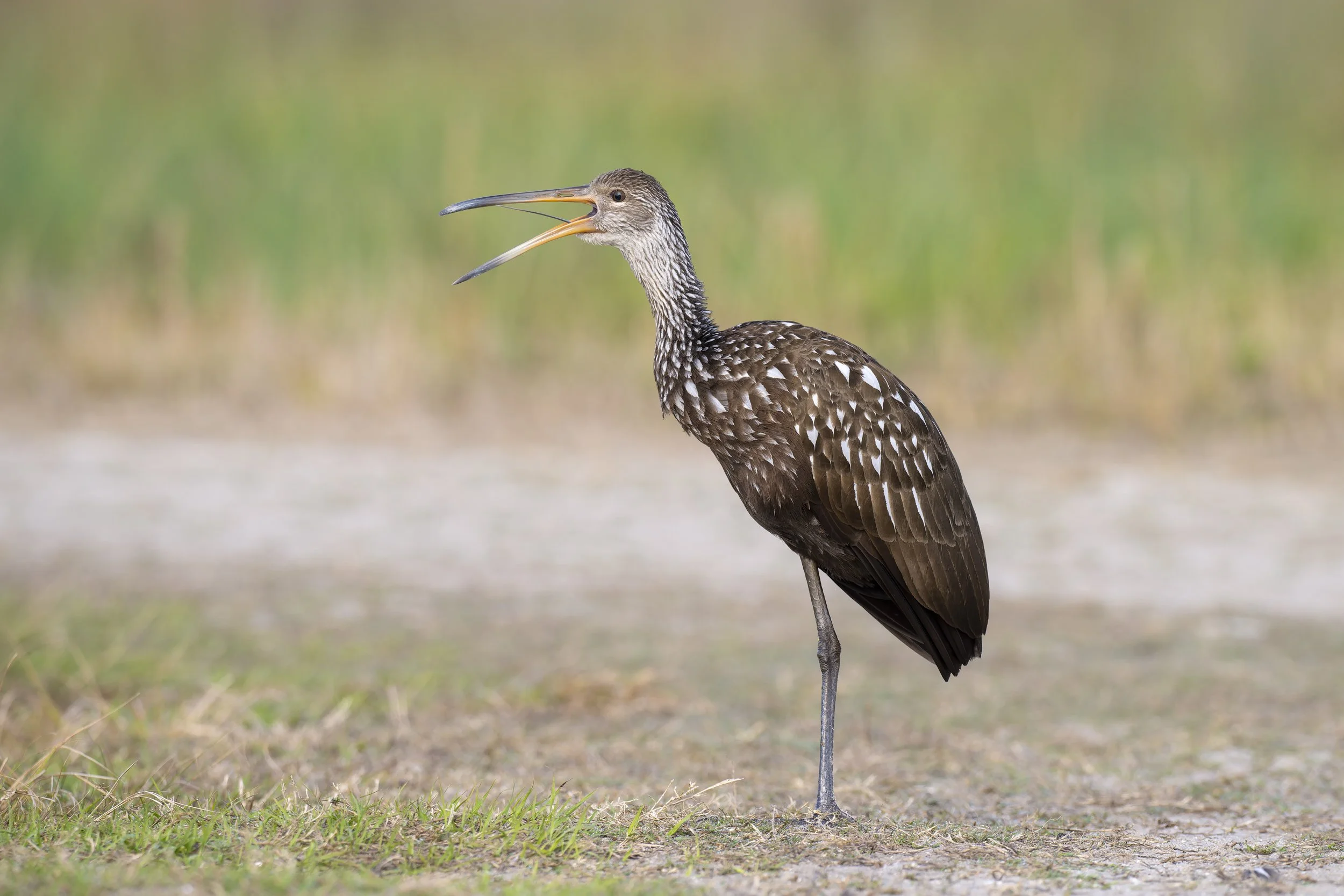
Limpkin. Nikon Z8 with Nikkor Z 180-600mm f/5.6-6.3 VR lens at 360mm, f/6.3, 1/1000 sec, ISO 800.
With this Limpkin photo I had completed one loop of the trail (2.5 miles). I wasn’t ready to pack it in so I decided to go back around.
I returned to the boardwalk where I found this Roseate Spoonbill feeding in the water. This was a nice change in composition from the “bird in a tree” shot.
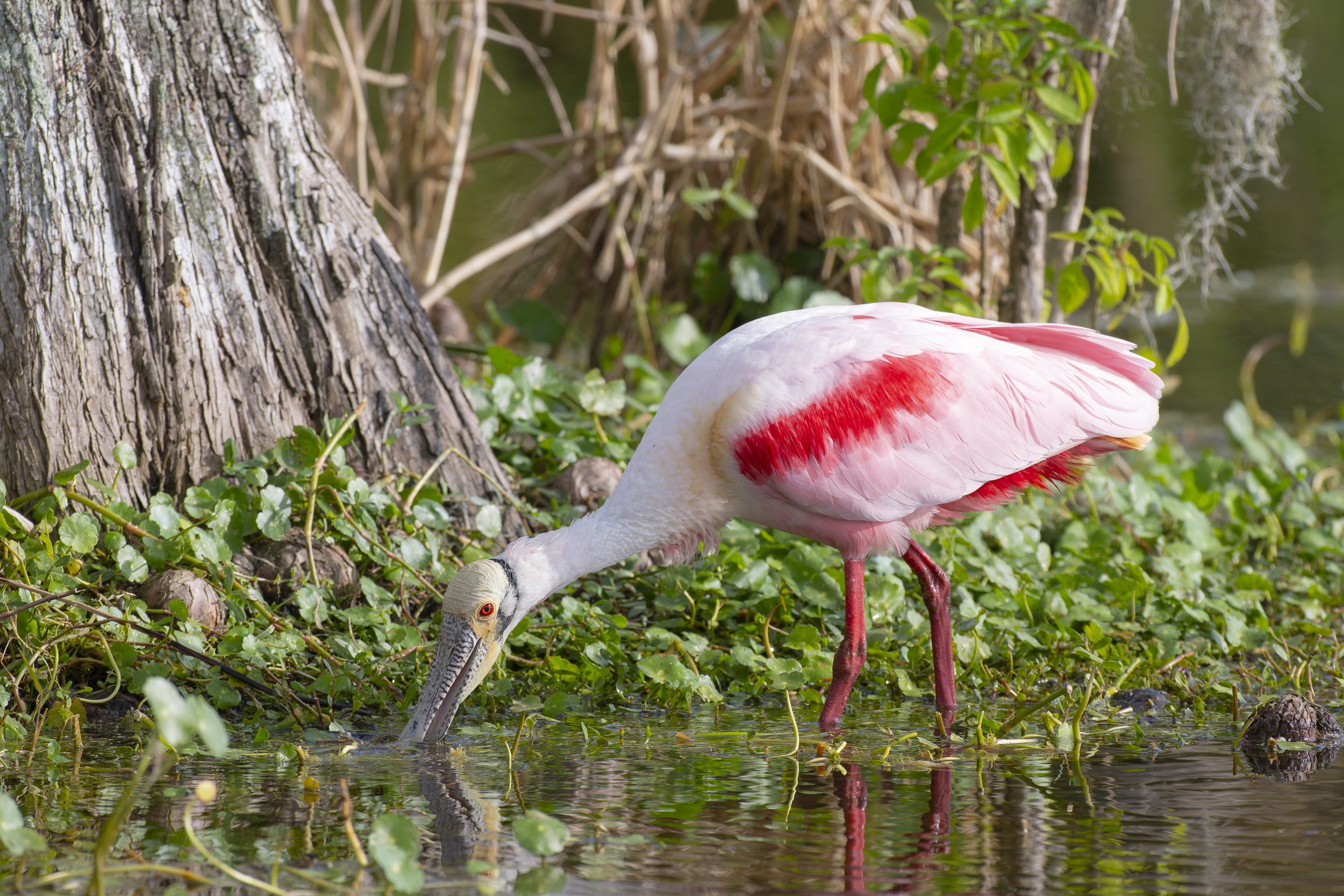
Roseate Spoonbill. Nikon Z8 with Nikkor Z 180-600mm f/5.6-6.3 VR lens at 560mm, f/8, 1/800 sec, ISO 280.
I also saw a few Red-winged Blackbirds throughout the park. Like most birds this time of year, they looked beautiful and it was an easy shot to make.
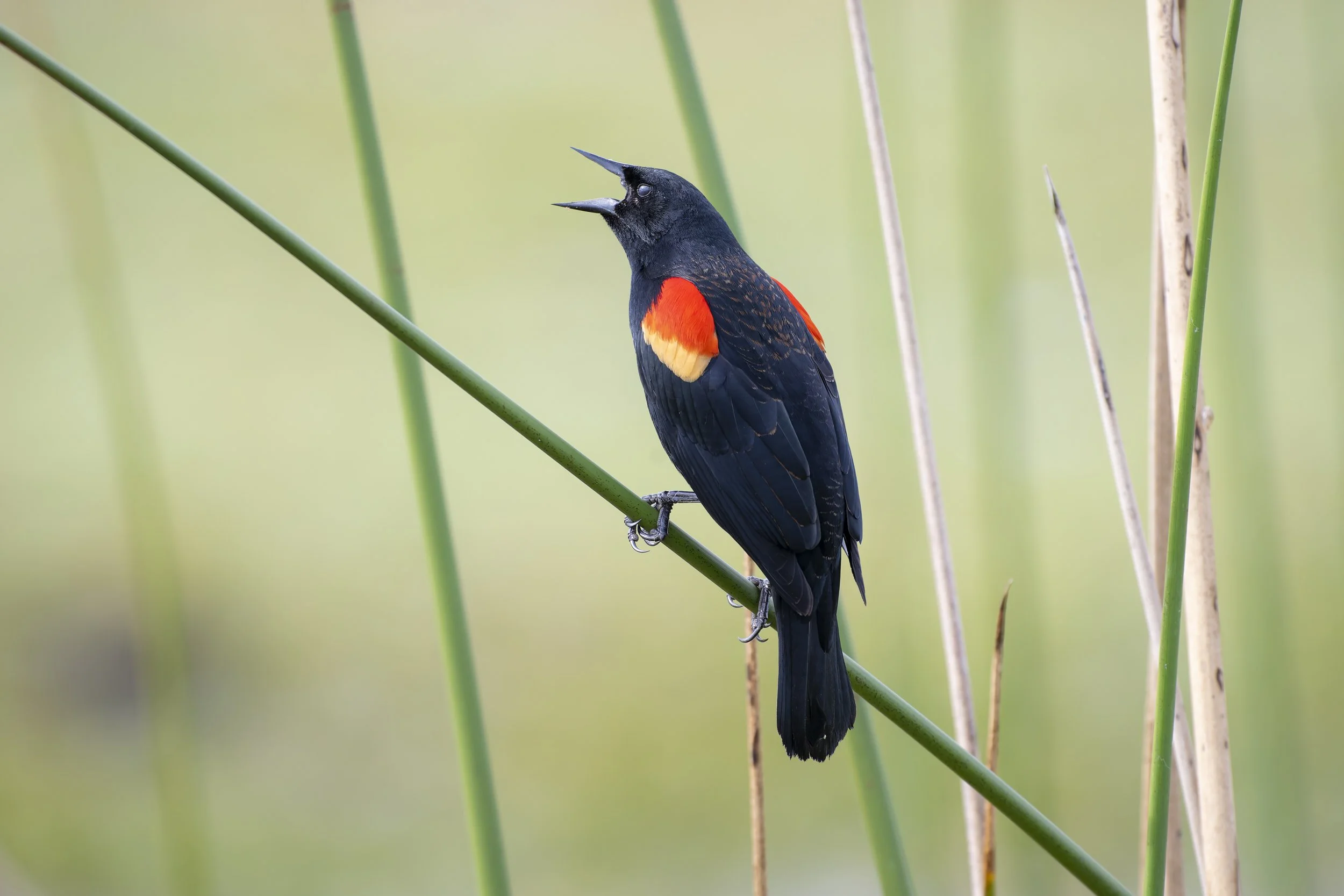
Red-winged Blackbird. Nikon Z8 with Nikkor Z 180-600mm f/5.6-6.3 VR lens at 600mm, f/6.3, 1/1000 sec, ISO 1000.
Finally, I came across this American Bittern. Normally quite difficult to see due to its secretive nature and excellent camouflage, I was surprised to see this bird. I was looking to re-find the Vermilion Flycatcher (which I did), so seeing this bird was icing on the cake.
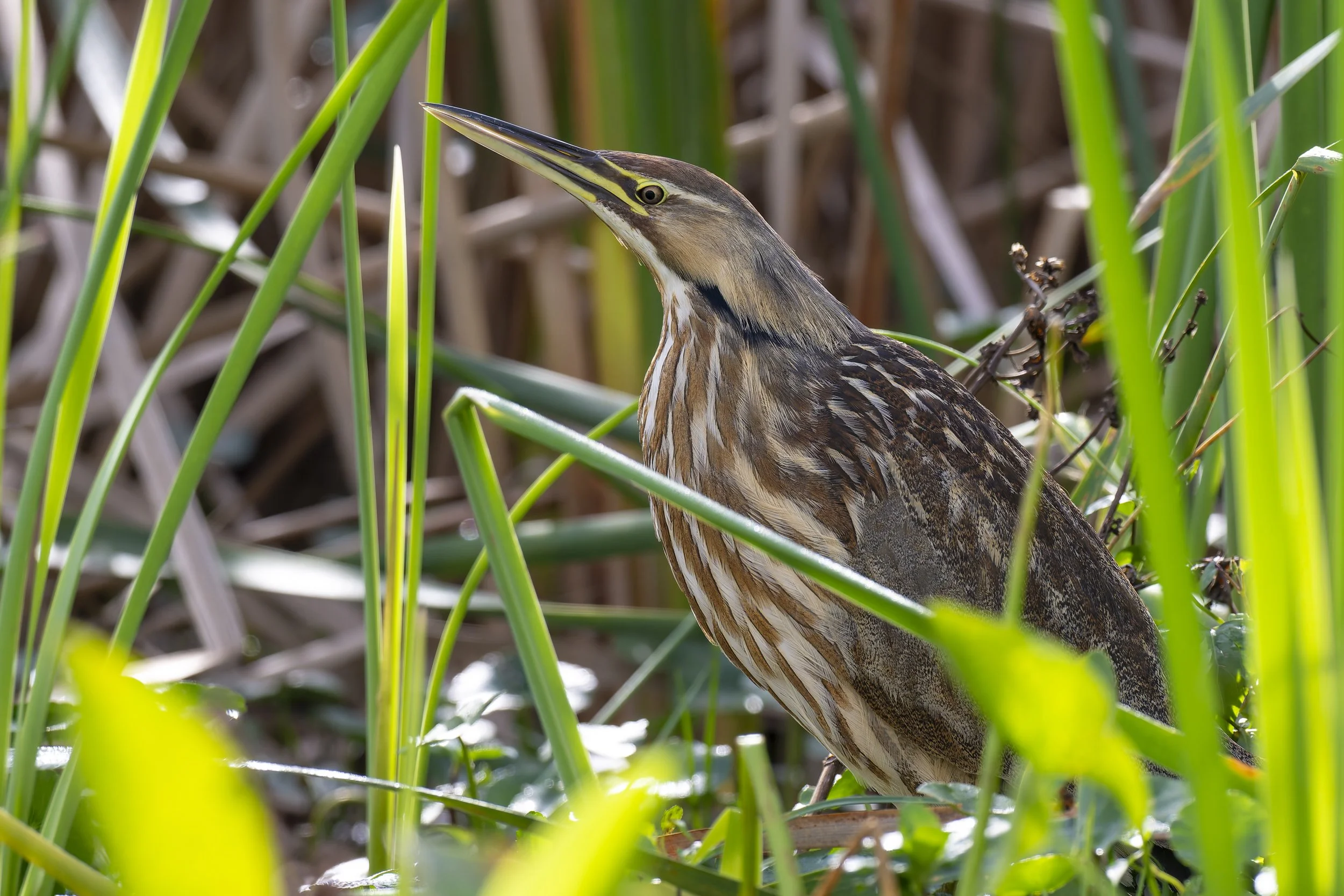
American Bittern. Nikon Z8 with Nikkor Z 180-600mm f/5.6-6.3 VR lens at 440mm, f/6.0, 1/1000 sec, ISO 400.
My bird list for Sunday morning, 18 Jan 2026:
Same as above with the following exceptions
Fewer Roseate Spoonbills, maybe 25 off the boardwalk, mostly distant
More Common Yellowthroat along Alligator Alley, 6 to 8 seen
Closing Thoughts and Photography Recommendations
After spending a Saturday afternoon and a Sunday morning at Orlando Wetlands, I walked away absolutely amazed by the diversity and number of birds present. Most were also very close and habituated to the presence of people which made photography very easy.
Most birders are there for one or two birds - the Roseate Spoonbill and the Purple Gallinule. Timing of your visit to see these birds in their breeding plumage is important. As you’ve seen in this report, birds are in their full breeding plumage in January and are starting to mate. Egg laying will happen soon and chicks will be visible towards the end of February and March/April.
The terrain is completely flat and the difficulty of the walk is easy. Wear comfortable shoes though. I put in 3 miles Saturday and 5 miles Sunday. With lots of good photography, I didn’t mind at all.
I normally recommend birding in the morning, but for Orlando Wetlands I recommend visiting in the afternoon. From the boardwalk, the setting sun will be at your back as you photograph the birds. If you go in the morning, you’ll likely be shooting into the sun and have backlit photos. On this visit, I also saw more birds in the afternoon. If unsure, go twice, once in the morning then again in the afternoon. Or stay all day. Whatever you like. You do you.
Equipment choices:
I recommend the versatility of a zoom lens. I think my Nikkor 180-600mm lens worked perfectly. If you prefer a prime lens and plan on photographing larger birds like the spoonbills or egrets, I recommend the 400mm. Have a teleconverter on hand, or better yet have the nice lenses with built-in teleconverters.
Hand hold your lens or, if you need lens support, use a monopod. A tripod is too much hassle and is completely in the way on a busy boardwalk.
I always find the birders and bird photographers on the boardwalk to be friendly and quite helpful. Getting a good shot is sometimes limited to a specific spot on the boardwalk and folks are generally considerate and will move out of the way once they get their shots.
If you have an RV, the Cracker Barrel in Titusville is a good overnight spot. The RV parking lot area is not very even, but I had no trouble finding an available spot there on a Saturday night. I don’t have a recommendation for a campground in the area; most will be full in January thru March anyways.
If you have any questions, please don’t hesitate to reach out. I hope to see you there soon!
Until then, be safe and happy birding!