My Top 20 Photos of 2025
It’s always tough deciding which photos are your “best” of the year, but I’ve picked out 20 from 2025.
Let’s dive in - in the order they were taken.
1. Black-crowned Night Heron
This first photo was taken at Lettuce Lake Park in Tampa on 11 Jan 2025. It’s a Black-crowned Night Heron that was perched feet away from the boardwalk. I struggled to take this photograph because of a poor lens choice. You see, I absent-mindedly threw on the 800mm lens when I hopped out of the car. This lens has a 16 foot minimum focusing distance, which means you have to be at least 16 feet away from your subject for it to be in focus. To get this shot I had to back down the boardwalk and focus on just the head. I focused on the eye, stopped the aperture down to f/8 to increase depth of field while minding the increasing ISO, and took this shot.
Herons like this Black-crown are in breeding plumage in Florida’s winter and this bird had absolutely beautiful tones of blue in its feathers. The blue and gray tones also fit the mood for this time of year.
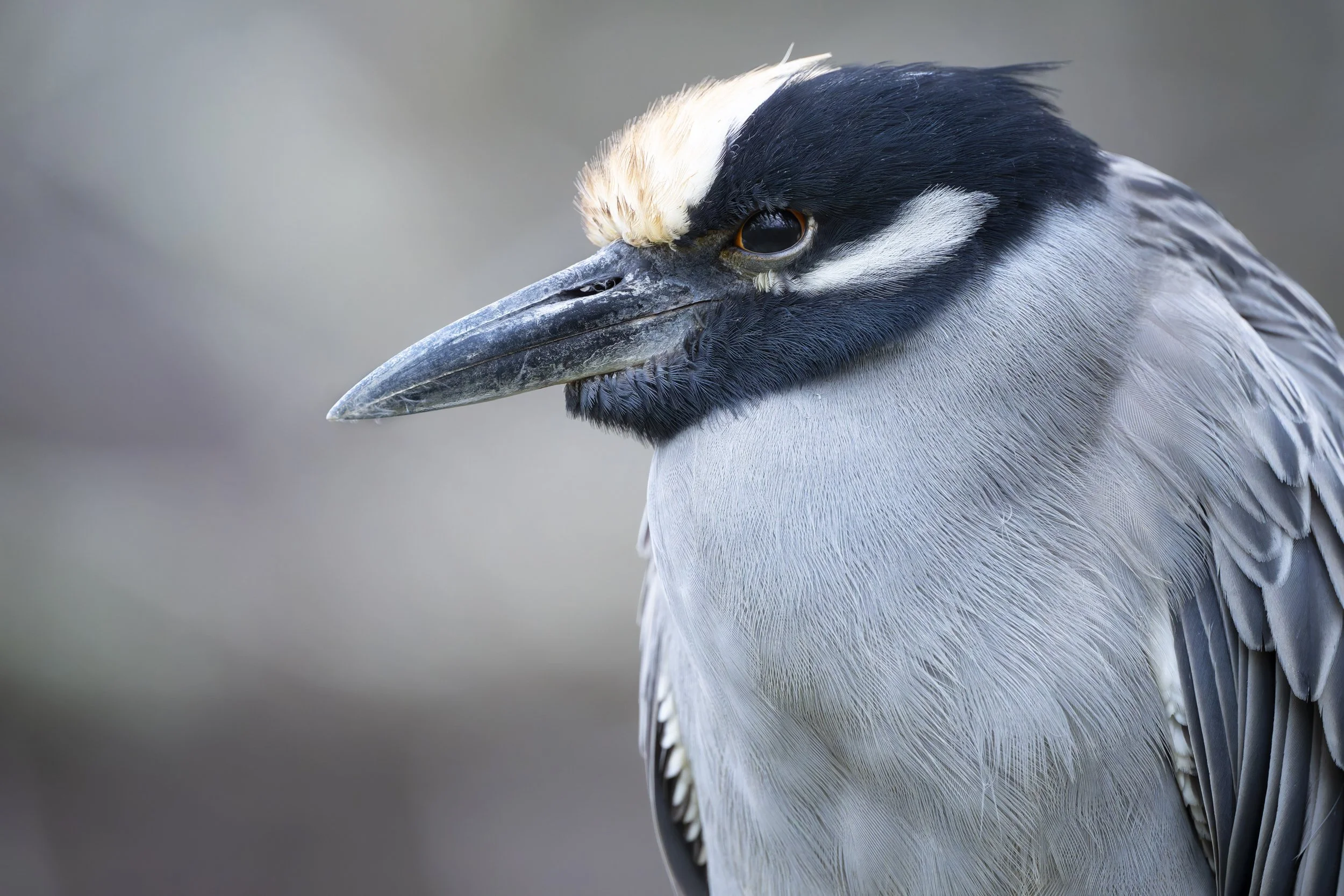
Black-crowned Night Heron. Lettuce Lake Park, Tampa, Florida, 11 Jan 2025. Nikon Z8 with Nikkor Z 800mm f/6.3 lens at f/8, 1/800 sec, ISO 9000.
2. Northern Harrier
The Celery Fields, located on the West coast of Florida in Sarasota, is a popular destination for birders. Painted Buntings are predictably at the millet feeders maintained by the Sarasota Audubon Society and Crested Caracara hunt in the open nearby farmlands. Northern Harriers also call the park home. They glide silently over open grassland of the marsh looking for prey. The Northern Harriers only come out briefly, so photographers stay on constant vigil, waiting for a glimpse of an amazing bird.
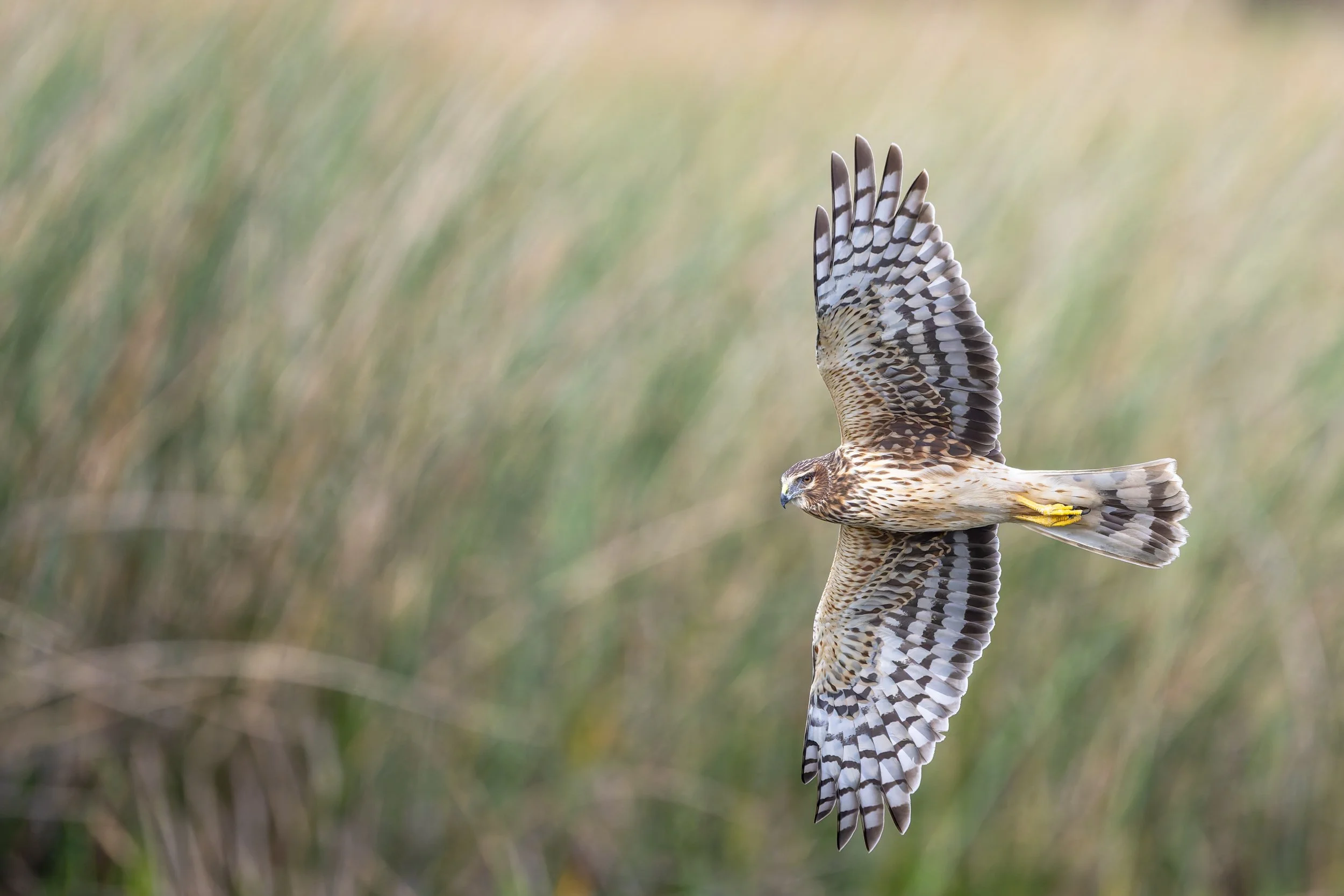
Northern Harrier. The Celery Fields, Sarasota, Florida, 19 Jan 2025. Nikon Z8 with Nikkor Z 800mm f/6.3 lens at f/6.3, 1/4000 sec, ISO 2800.
3. Boat-tailed Grackle
Three of my top 20 images were taken on the same day at the Celery Fields. The first was the Northern Harrier shown above; the second is this photo of a Boat-tailed Grackle. While waiting patiently in the native plant garden gazebo for the Painted Bunting to show at the millet feeders, it started to rain. The only birds around were Boat-tailed Grackles devouring seeds at the other feeders. Killing time, I decided to practice on some portraits.
Like the photo of the Black-crowned Night Heron above, this “head and shoulders” portrait was taken out of necessity. I was again shooting with the 800mm lens and the bird was very close on the feeder. While I couldn’t get the whole bird, the advantage of being so close is getting amazing detail. The detail, the colors, and the wonderful pose just clicked for me.
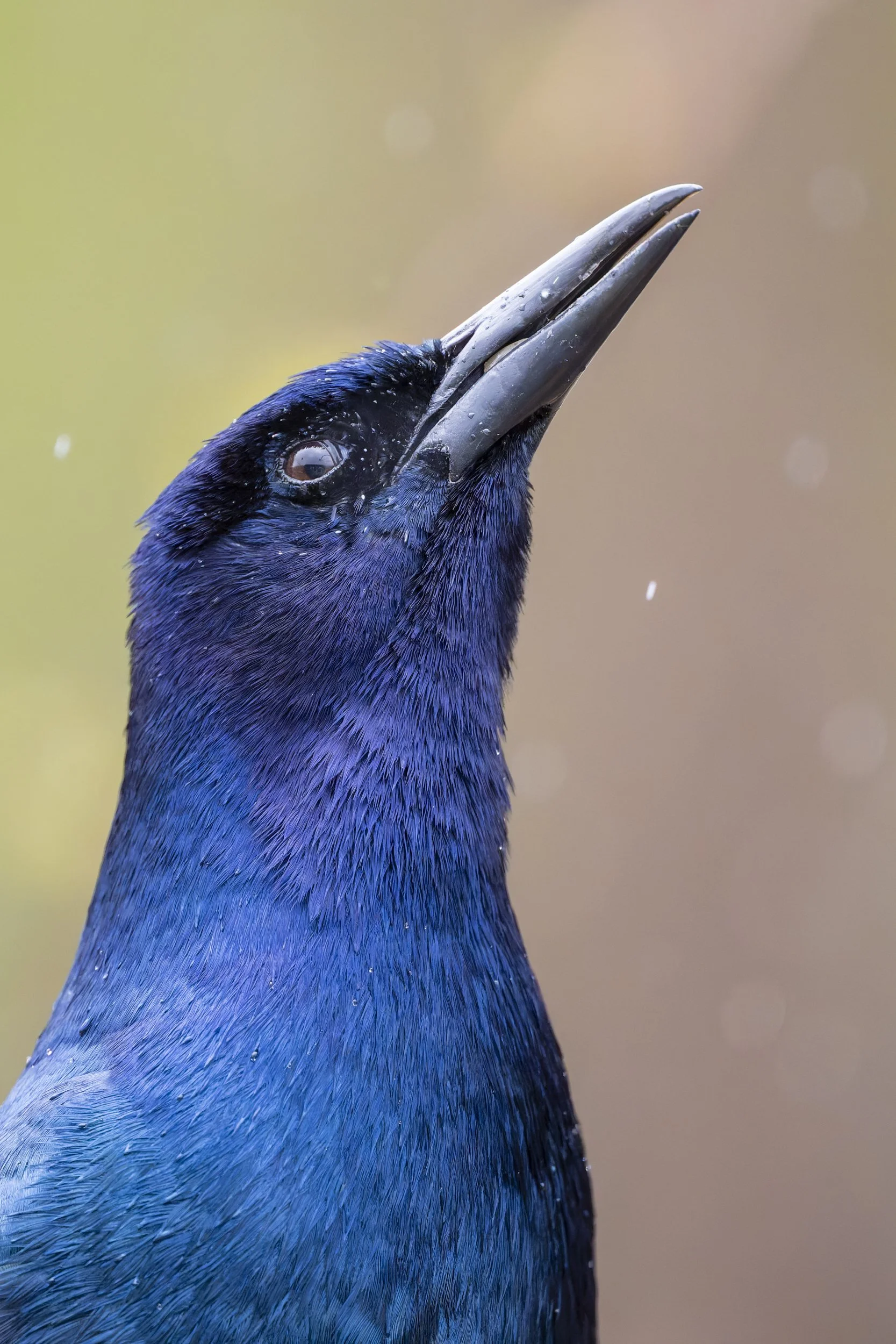
Boat-tailed Grackle. The Celery Fields, Sarasota, Florida, 19 Jan 2025. Nikon Z8 with Nikkor Z 800mm f/6.3 lens at f/6.3, 1/1250 sec, ISO 11,400.
4. Painted Bunting
The last image from this outing at the Celery Fields was of the Painted Bunting. The rain stopped, no one was around, and this beautiful male flew in to the feeders. He ate for a bit, then flew out to a nearby branch to preen. Here he is, a little fluffed up after preening, looking absolutely resplendent. It’s my best image of a Painted Bunting and has been my cell phone background all year long.
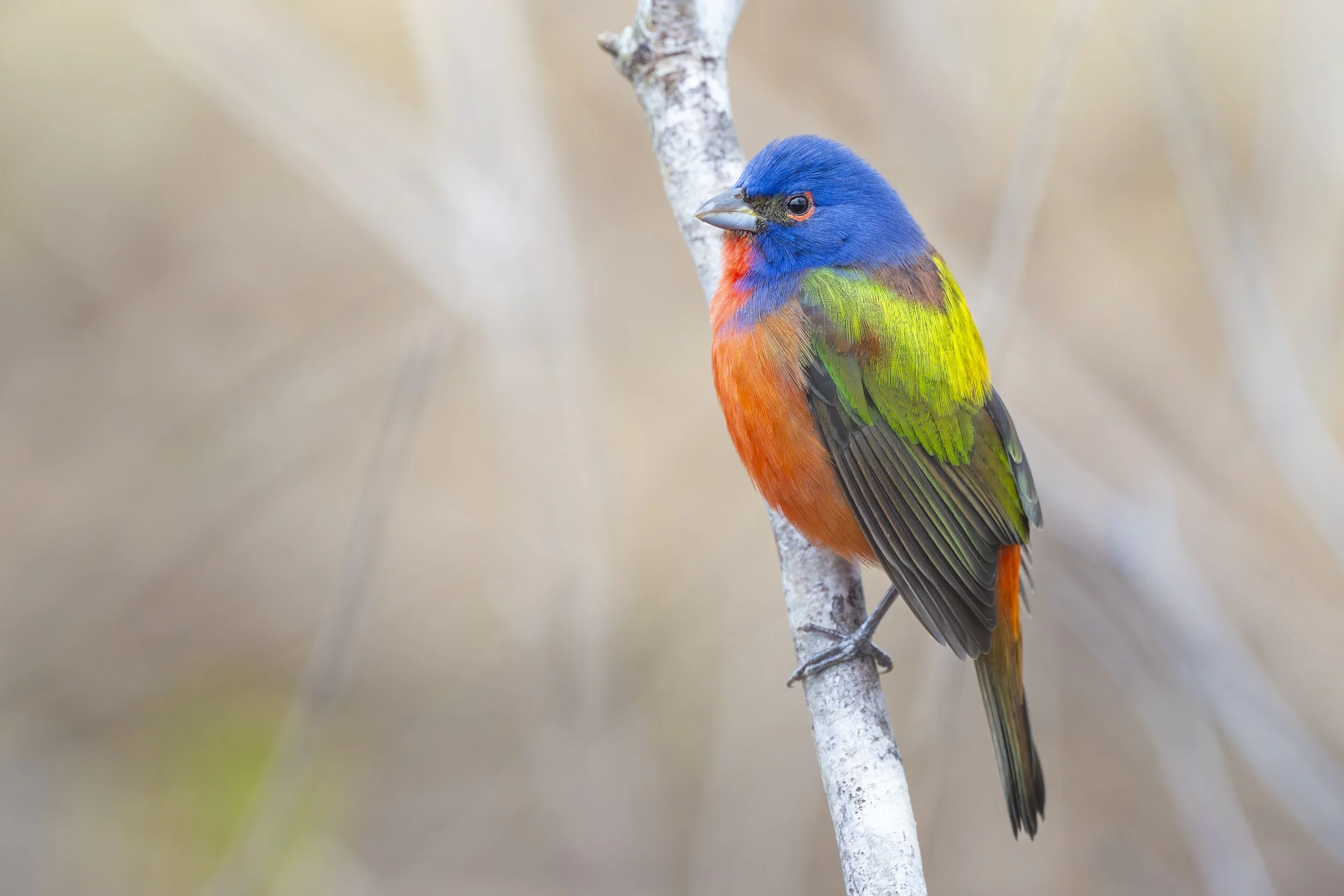
Painted Bunting. The Celery Fields, Sarasota, Florida, 19 Jan 2025. Nikon Z8 with Nikkor Z 800mm f/6.3 lens at f/6.3, 1/1000 sec, ISO 1600.
5. Northern Cardinal
My next image is the first I have ever taken of a leucistic bird. I had seen reports of this leucistic Northern Cardinal at Leu Gardens in Orlando, so I decided to make a stop there while returning from Orlando Wetlands.
Leu Gardens is a beautiful, and busy, botanical garden in Orlando. Even with a general idea of where the bird might be, finding a specific individual was quite difficult. After several hours I was about to give up, when bam, there he was perched on a low branch. I actually gasped when I saw this bird and had to remind myself not to make any sudden movements to avoid scaring it off. I slowly raised my camera and got a few shots before he flew off. What an amazing and unforgettable sight.
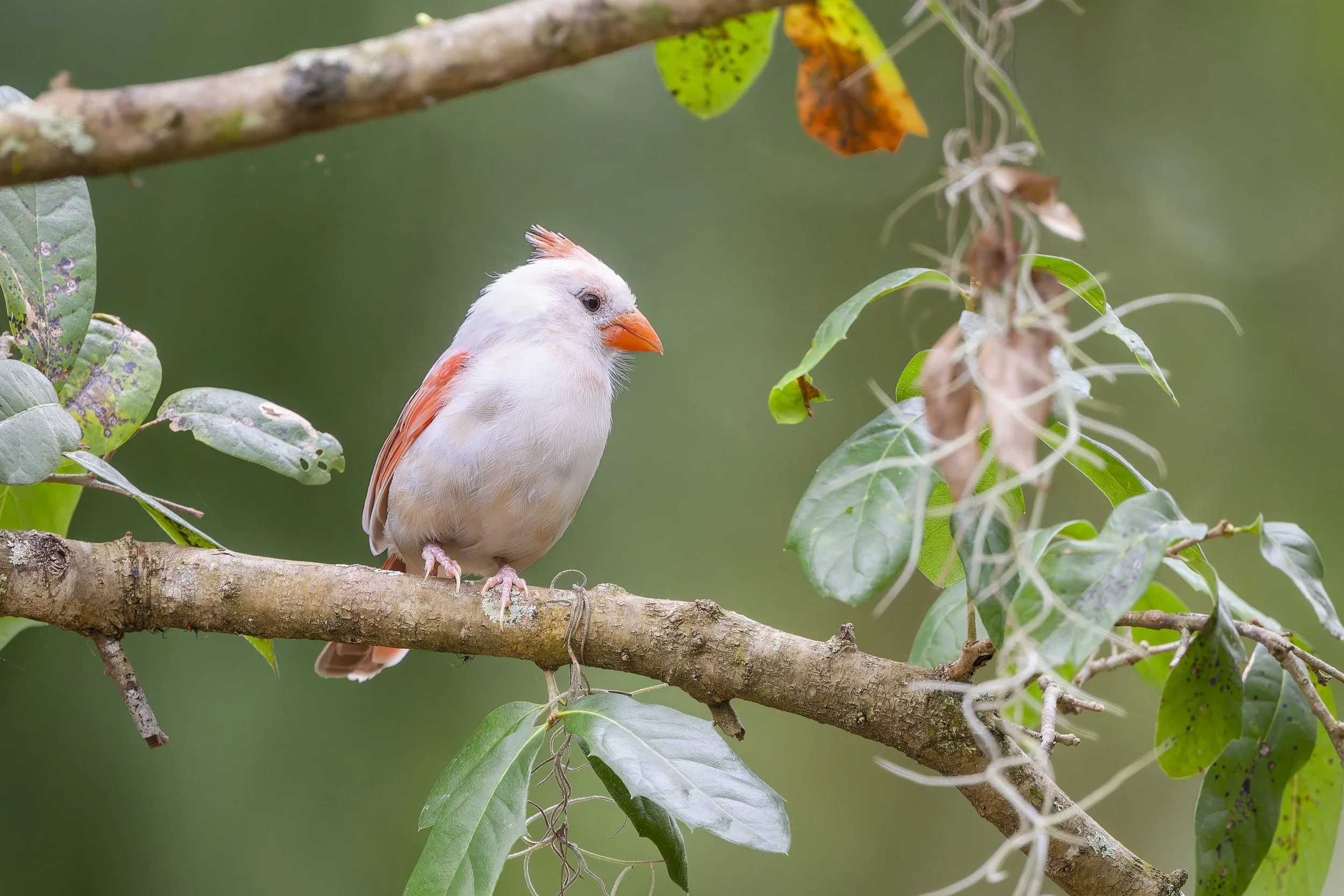
Northern Cardinal. Leu Gardens, Orlando, Florida, 15 Feb 2025. Nikon Z8 with Nikkor Z 800mm f/6.3 lens at f/6.3, 1/800 sec, ISO 1,800.
6. Great-horned Owls
Circle B Bar Reserve is one of the best winter birding parks in all of Florida. They have everything - wading birds, songbirds, ducks, cranes, warblers, and plenty of raptors. Owls are also very popular, and one Great-horned Owl in particular likes to nest in the same tree every year. And this nest is right in a parking lot for loads of birders and photographers to gather around and observe. The bird doesn’t seem to mind all the fuss and, this past year, successfully fledged two offspring. I look forward to seeing if she returns this spring.
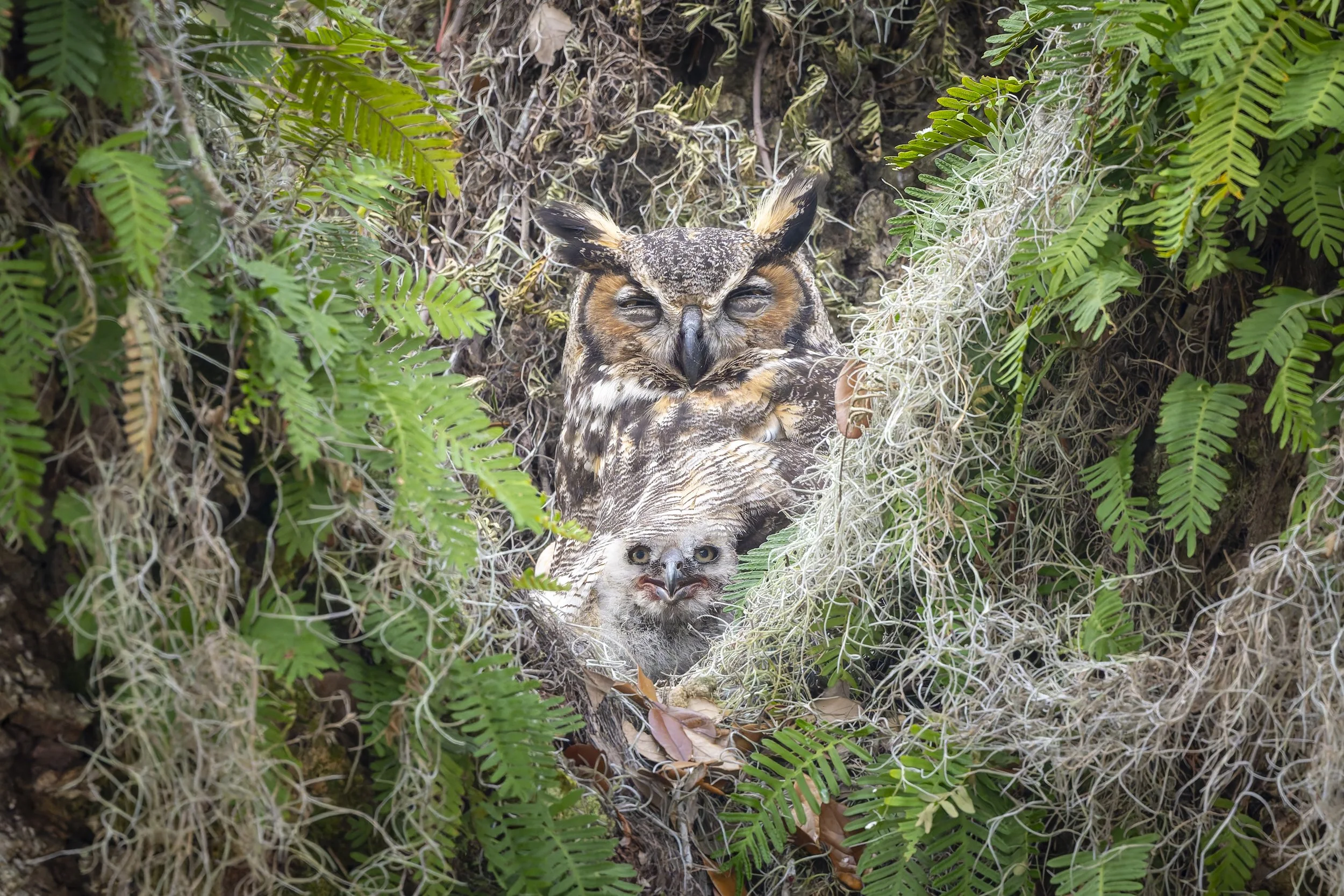
Great-horned Owl. Circle B Bar Reserve, Lakeland, Florida, 02 Mar 2025. Nikon Z8 with Nikkor Z 800mm f/6.3 lens at f/8, 1/320 sec, ISO 3,600.
7. Palm Warbler
The rock stars of the Florida birding world - birds like the Roseate Spoonbill, Purple Gallinule, and Limpkin - are big draws at Orlando Wetlands. However, there are many other birds there, many of whom would be worthy subjects at any other place, but when rock stars are in your presence, these “lesser” birds are not paid much attention.
Except by me. While I am certainly drawn to the cool birds, what interests me more is having the bird photography holy trinity: good subject, good light, and behavior. If you have all three, then that’s what I’m going to point my camera at.
This Palm Warbler had all three going for it. It was in great breeding plumage, hanging out in an area with nice perching material and backgrounds, and was so busy hunting and habituated to people that he paid no attention to me. I sat there for half an hour photographing this bird while many birders walked by probably thinking I was crazy phtographing a Palm Warbler when there were Roseate Spoonbills nearby. C’est la vie.
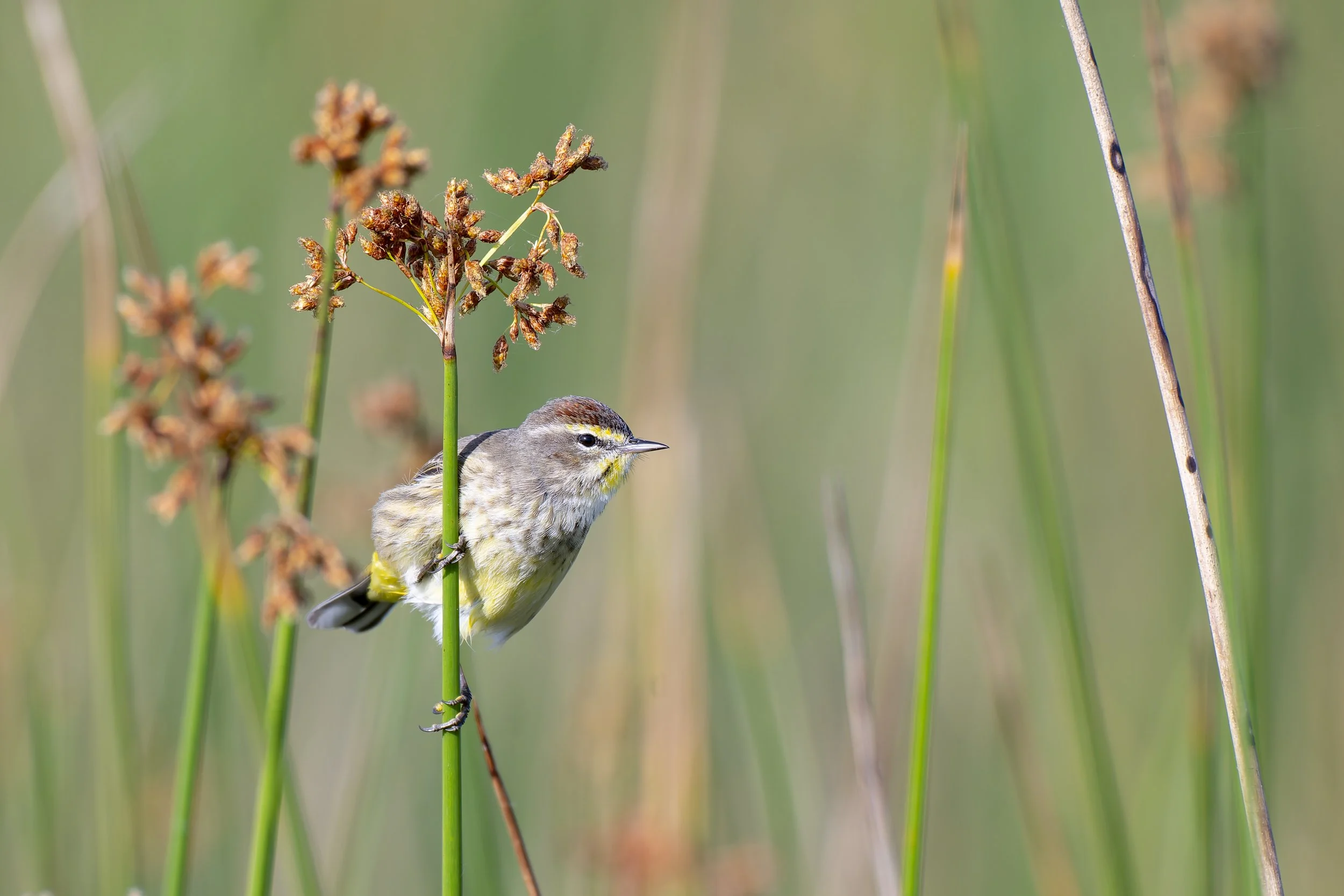
Palm Warbler. Orlando Wetlands, Christmas, Florida, 08 Mar 2025. Nikon Z8 with Nikkor Z 180-600mm f/5.6-6.3 lens at 600mm, f/6.3, 1/1250 sec, ISO 400.
8. Roseate Spoonbill
You didn’t think I spent all my time photographing the Palm Warblers, did you? Of course not! I took a bazillion photos of the Roseate Spoonbills and their new offspring. Always alot of fun.
Roseate Spoonbills begin setting up their nests at Orlando Wetlands in January and by the end of February and early March the chicks are hatching. Chicks rub their bills on their parent’s bill to encourage them to regurgitate food. The bill rubbing phase looks very adorable and it looks like they are in so much love. The regurgitation part isn’t so great.
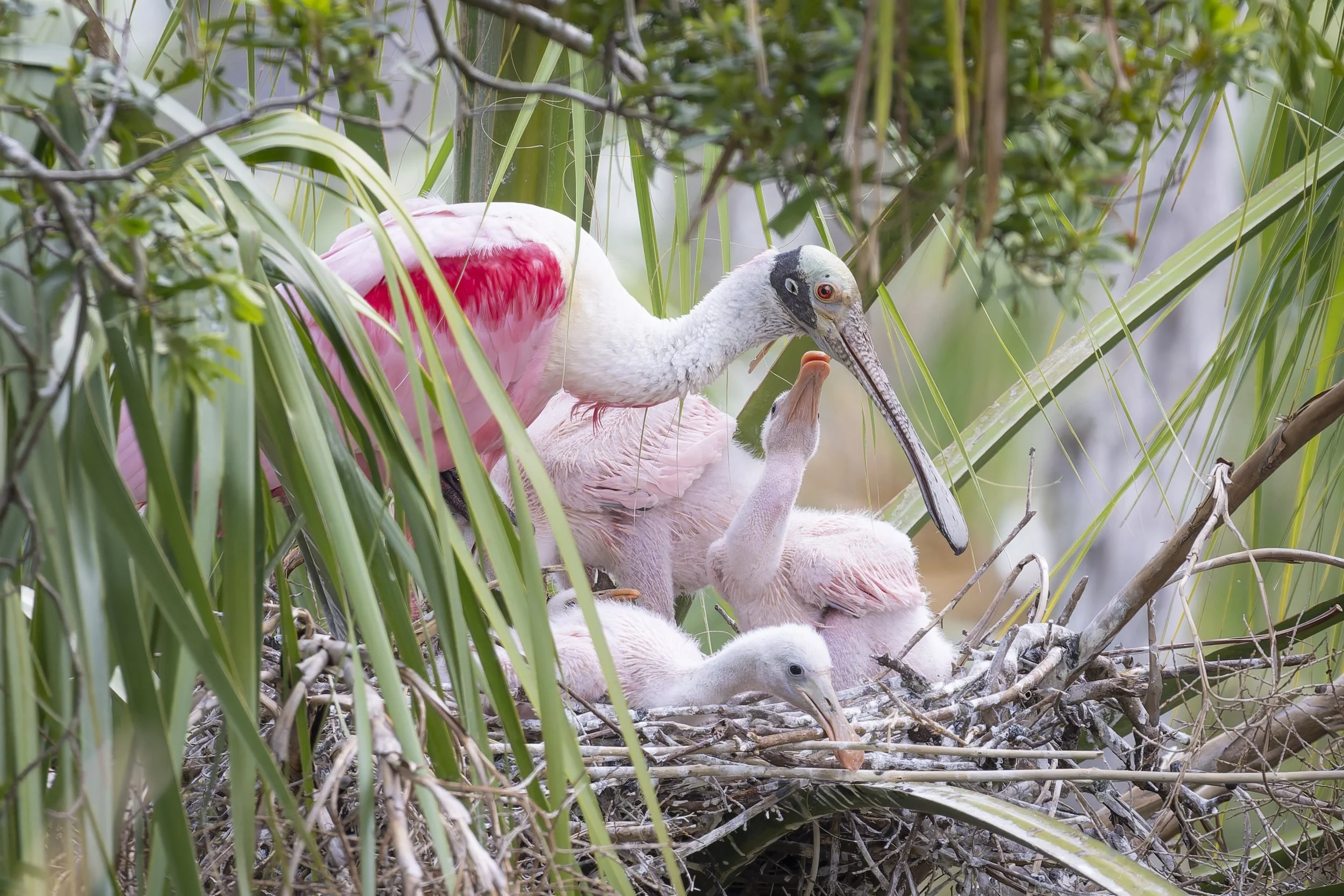
Roseate Spoonbill. Orlando Wetlands, Christmas, Florida, 08 Mar 2025. Nikon Z8 with Nikkor Z 180-600mm f/5.6-6.3 lens at 600mm, f/8, 1/1600 sec, ISO 2800.
9. Reddish Egret
I think the Reddish Egret should be the official mascot of Tampa Bay, or certainly that of Fort De Soto. Need a Reddish Egret photo - go to Fort De Soto. Very rarely do I go there and not run into the Reddish Egret.
The timing is important though. You want to get the Reddish in its breeding plumage, highlighted by the two-toned beak and blush legs. I think the “mane” on the neck is a little longer and had a deeper cinnamon color too.
Then you have to get the “wings overhead” pose. I think it’s required.
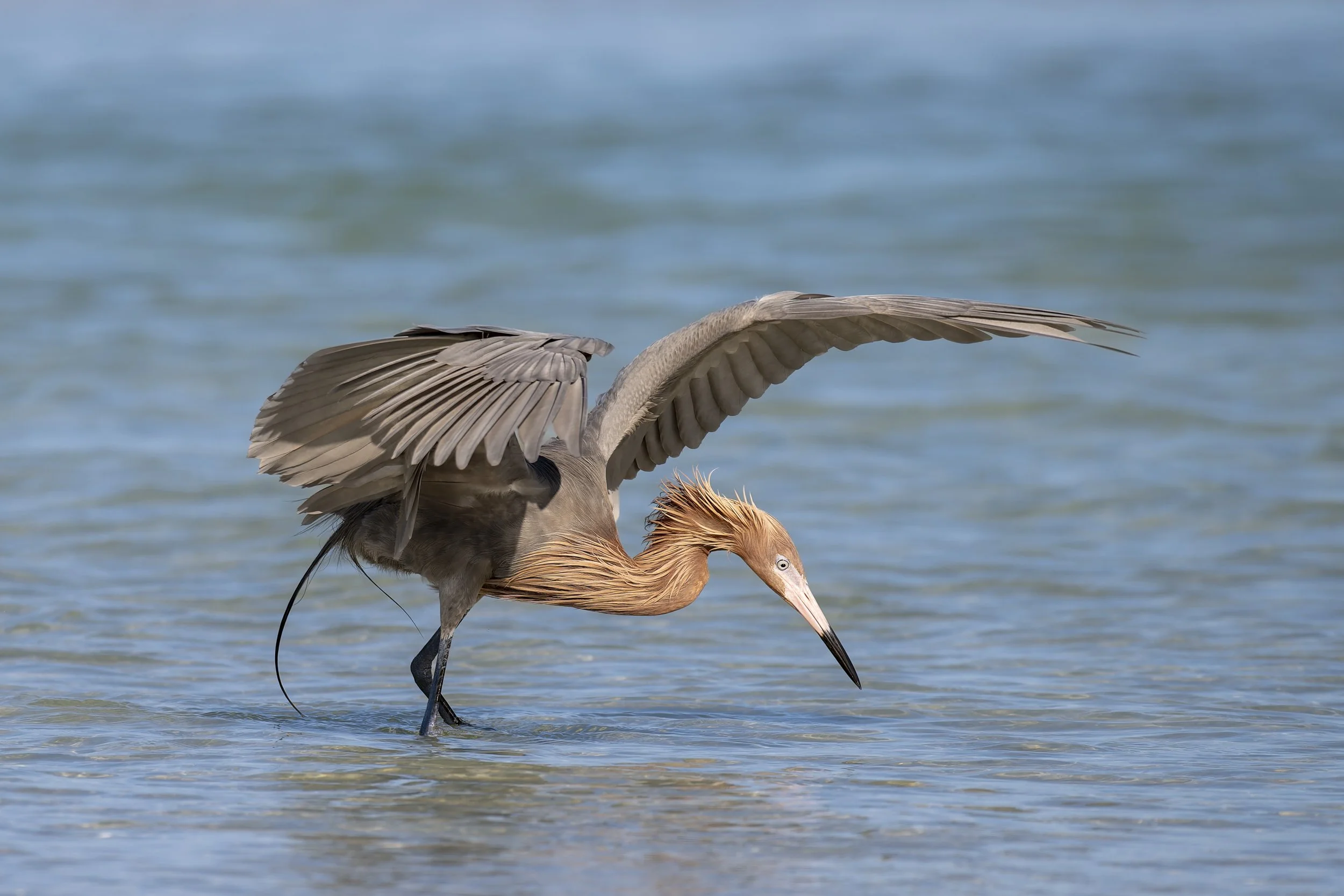
Reddish Egret. Fort De Soto Park, Tierra Verde, Florida, 15 Mar 2025. Nikon Z8 with Nikkor Z 180-600mm f/5.6-6.3 lens at 500mm, f/6.3, 1/1250 sec, ISO 180.
10. Monk Parakeet
Parakeets, parrots really, are a thing here in Florida. There are several varieties, but the two you’ll most likely come across are Nanday Parakeets (they have a black head) and Monk Parakeets, like the one below.
This photo was taken in Cape Coral while I was looking for Burrowing Owls. I was admiring a tree in someone’s yard because they had these beautiful pink flowers. I was thinking, it would be nice if a bird flew in there, and then bam, in goes two Monk Parakeets. The birding gods were listening.
To make it even better the Monk Parakeet started to EAT the flower! You gotta be kidding me!
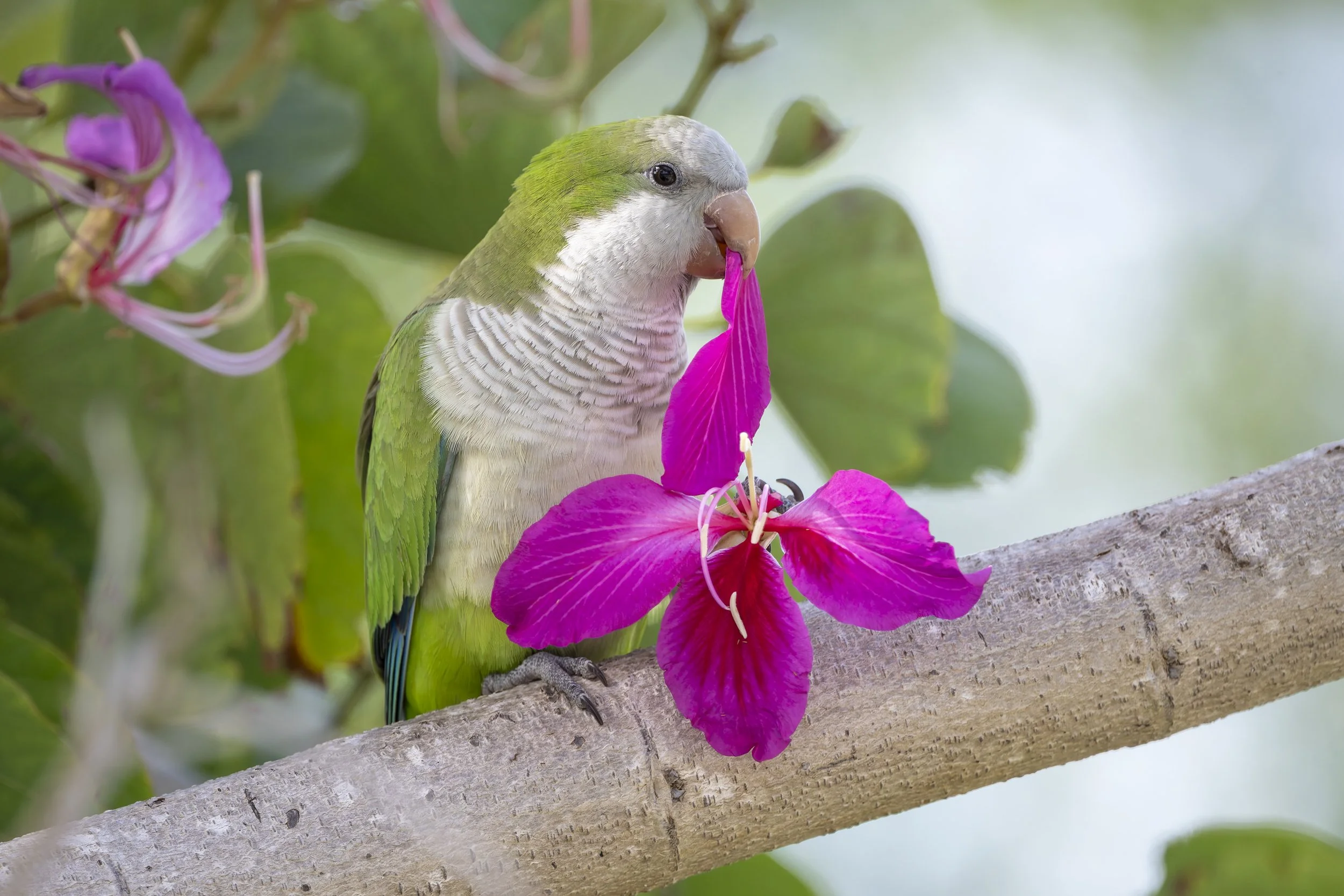
Monk Parakeet. Cape Coral, Florida, 22 Mar 2025. Nikon Z8 with Nikkor Z 800mm f/6.3 lens at f/6.3, 1/1,400 sec, ISO 2,000.
11. Burrowing Owl
I think everyone who sees a Burrowing Owl falls in love with them. They are small, expressive, and gosh, they live in a hole in the ground! How cute is that?
These guys face overwhelming odds though. In Cape Coral they live in the city, living in holes in the ground in people’s yards, in city parks, vacant lots, and even in the street median. Development, bird flu, and a host of other challenges have placed alot of pressure on these birds. However, many good people in Cape Coral are dedicated to preserving these birds and the habitat that they live, so any support we can give is definitely appreciated.
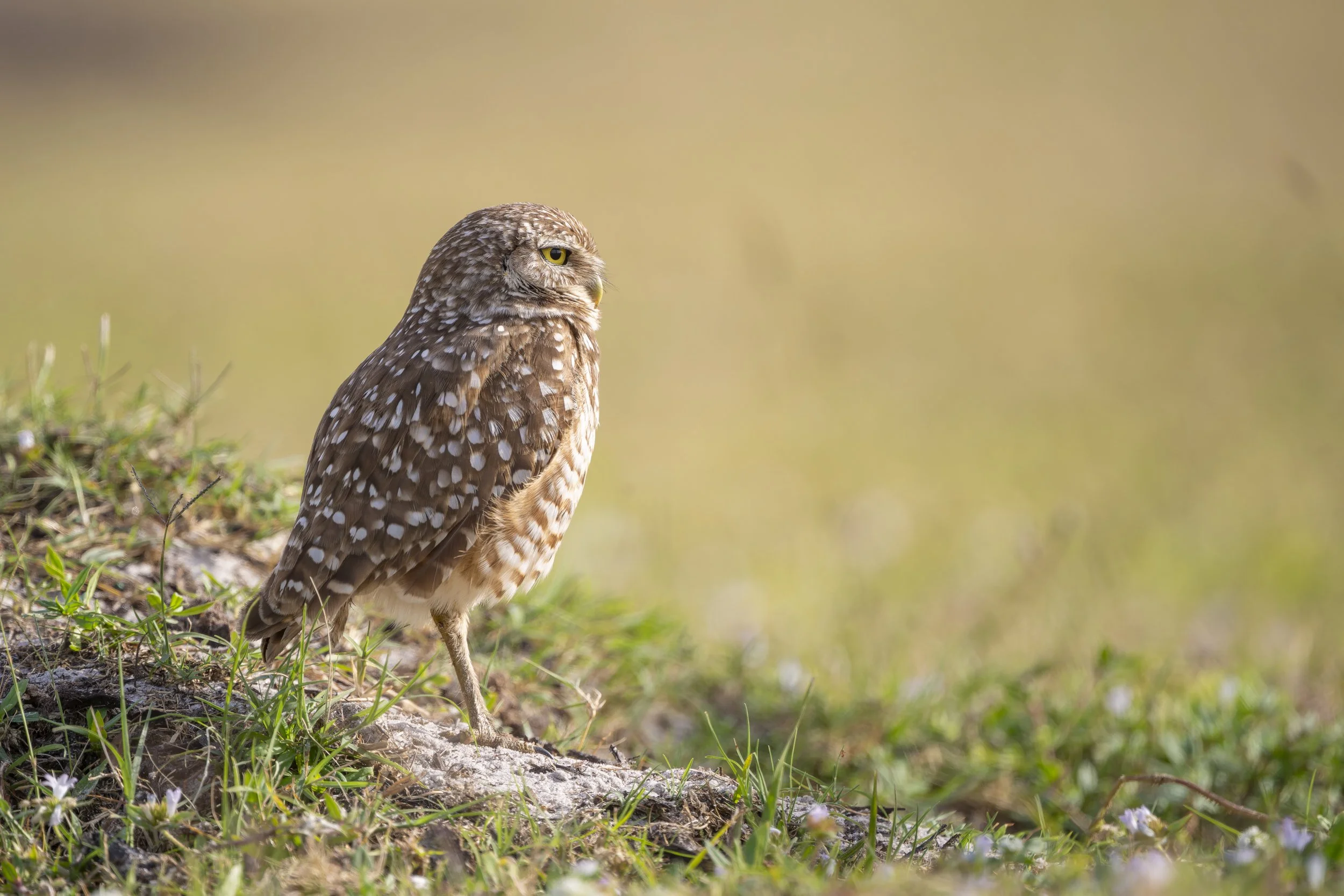
Burrowing Owl. Cape Coral, Florida, 22 Mar 2025. Nikon Z8 with Nikkor Z 800mm f/6.3 lens at f/6.3, 1/3,200 sec, ISO 1,000.
12. Anhinga
I can remember the first time I saw an Anhinga. It was in my hometown of Daphne, Alabama on the waterfront of Mobile Bay. At the time I didn’t know what an Anhinga was, so seeing one for the first time was wondrous, but at the same time thinking “that’s one weird looking bird.” That particular bird was a female as indicated by brown feathers on her long neck. Characteristically, she was in constant motion stretching her neck in and out and moving her head forwards and back.
Today I still love to see Anhingas. They can be some of the wackiest looking birds you’ll ever come across, and this one I photographed at Circle B Bar Reserve did not disappoint.
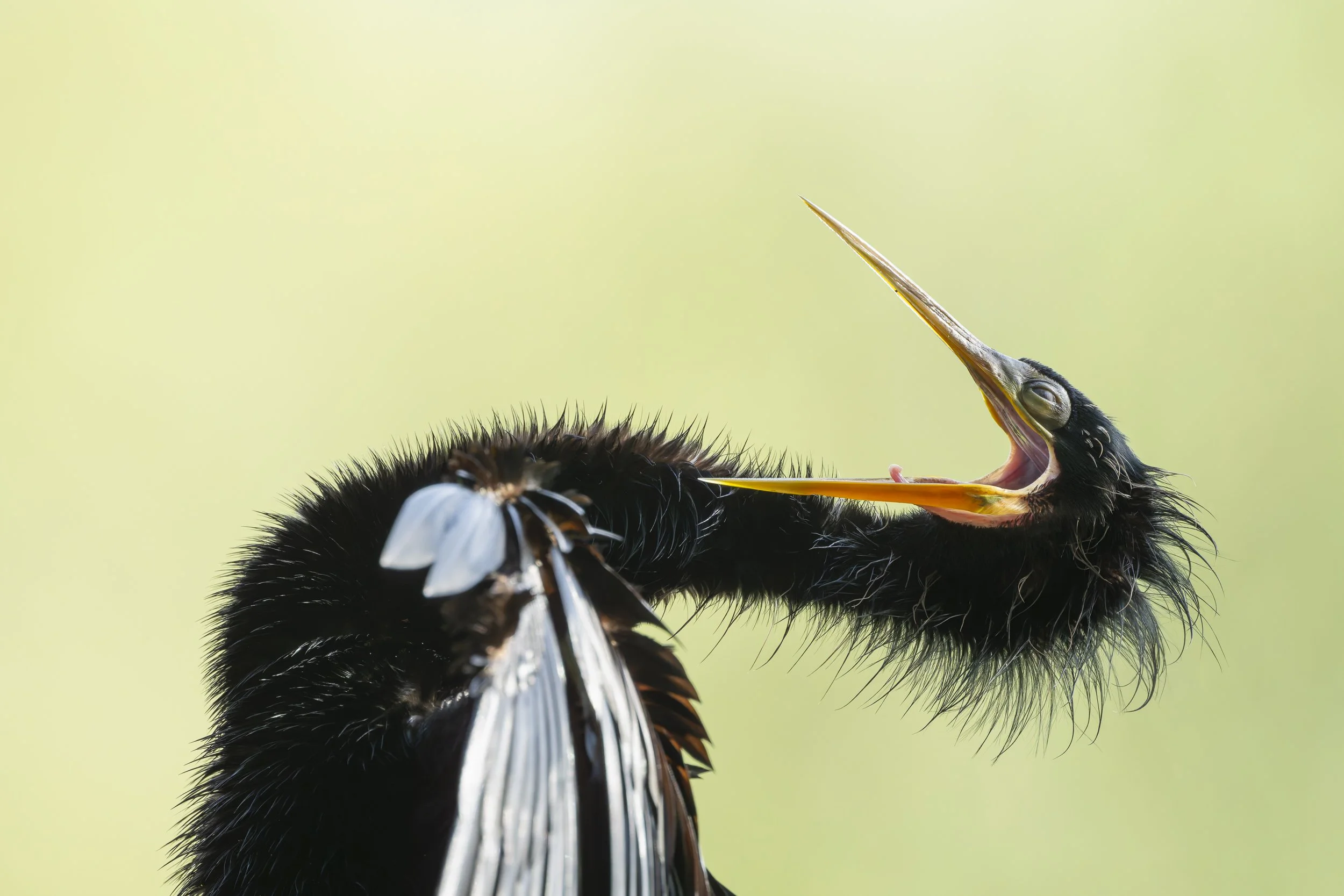
Anhinga. Circle B Bar Reserve, Lakeland, Florida, 30 Mar 2025. Nikon Z8 with Nikkor Z 800mm f/6.3 lens at f/8, 1/1600 sec, ISO 1,100.
13. Golden-winged Warbler
Each spring brings new lifers, and the spring of 2025 didn’t disappoint. The warblers were at Fort De Soto for only a brief moment in time, two weeks tops, so I count myself lucky to have been able to photograph this bird. He was flitting through the sea grapes at incredible speeds, and just out of sheer luck I was able to get this shot when for that split second he popped out and gave me this majestic pose.
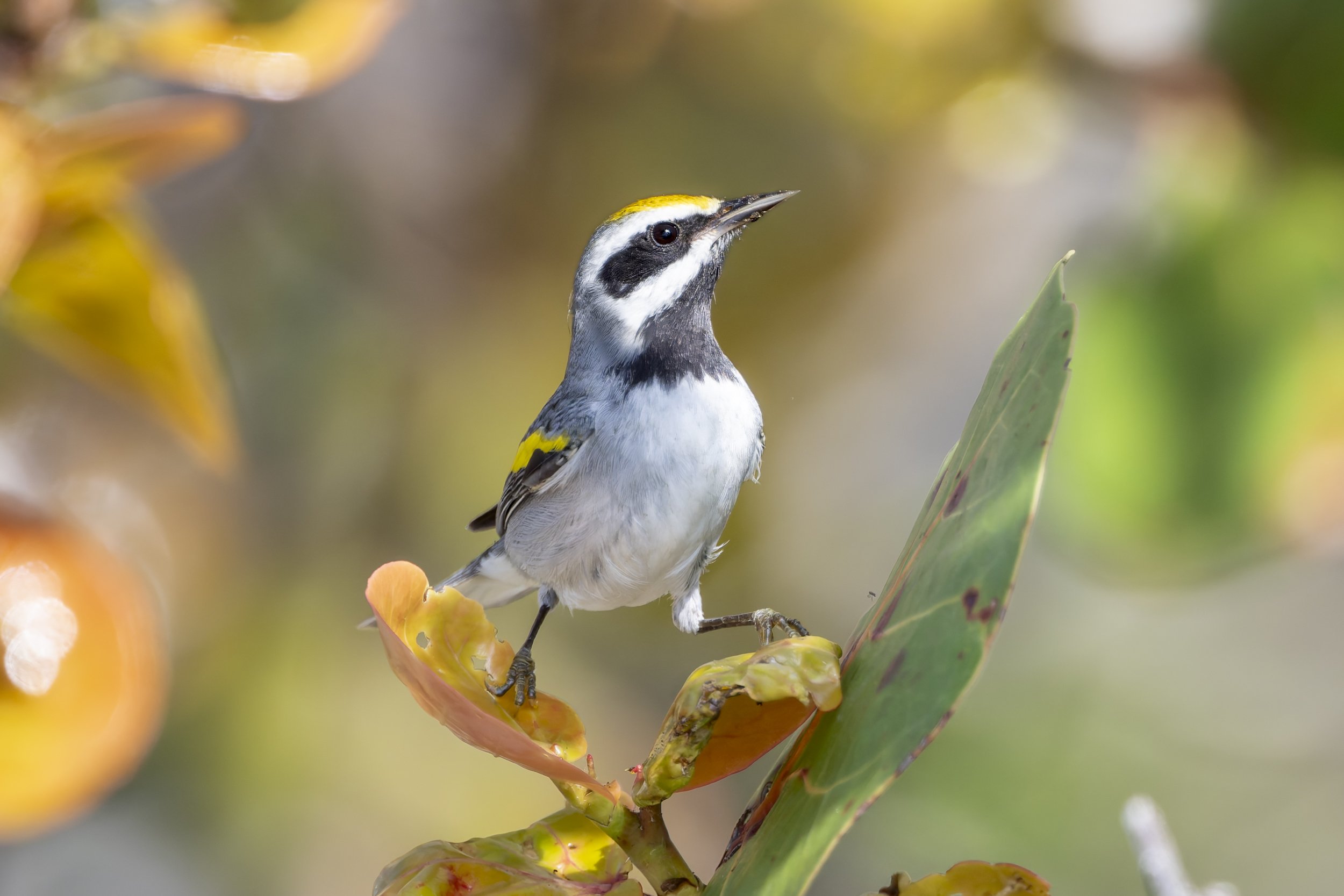
Golden-winged Warbler. Fort De Soto Park, Tierra Verde, Florida, 11 Apr 2025. Nikon Z8 with Nikkor Z 800mm f/6.3 lens at f/6.3, 1/2000 sec, ISO 800.
14. Worm-eating Warbler
That same weekend I was able to photograph another lifer at Fort De Soto. This is the Worm-eating Warbler, an unfortunate name for a beautiful bird (all warblers eat worms, right?). Like the Golden-winged warbler above, he was moving frantically through the sea grapes eating spiders and other insects. Occasionally he would stick his head out of the shadows and for the most part I didn’t get the shot. I particularly like the color leaves in this photo.
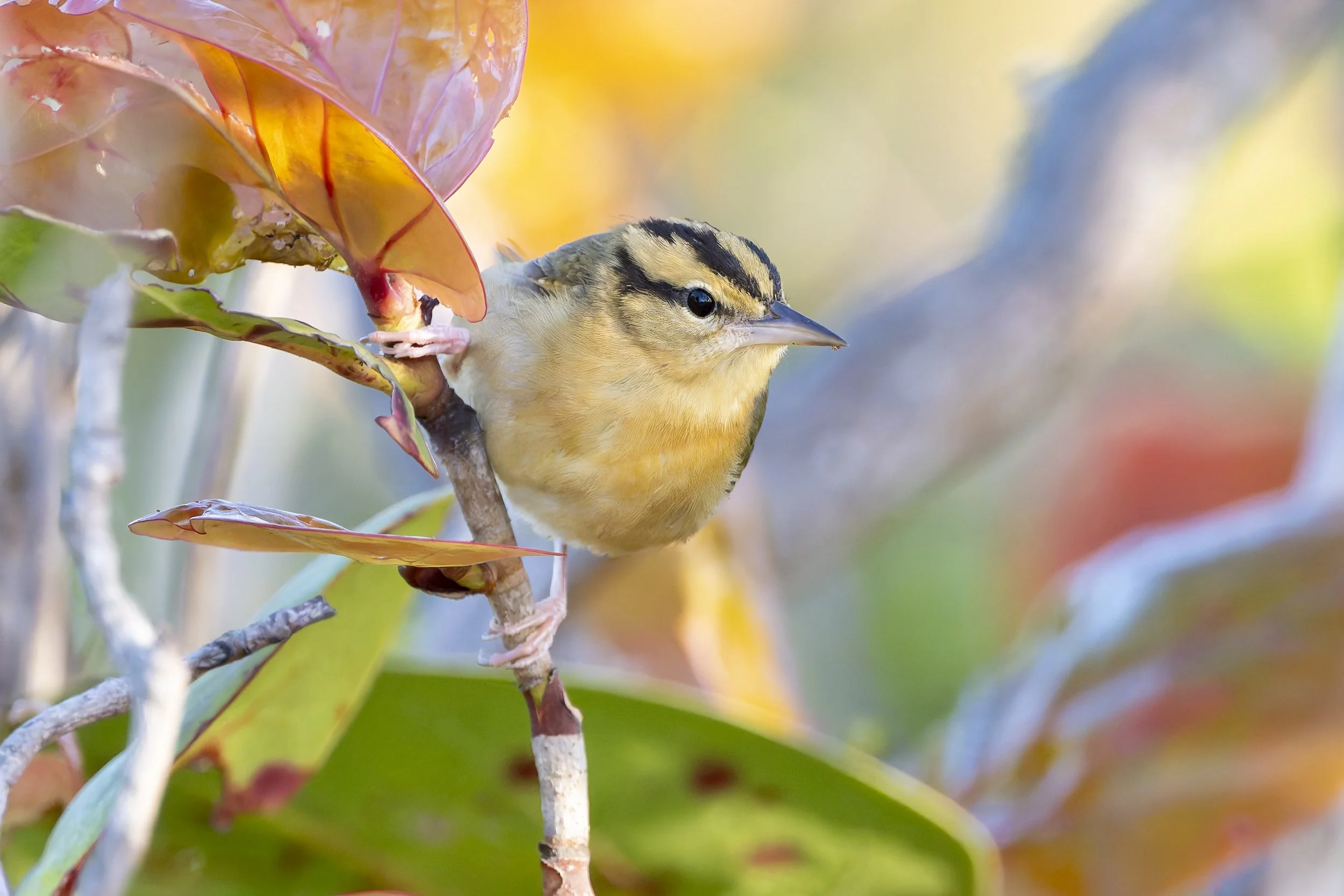
Worm-eating Warbler. Fort De Soto Park, Tierra Verde, Florida, 12 Apr 2025. Nikon Z8 with Nikkor Z 800mm f/6.3 lens at f/6.3, 1/2500 sec, ISO 3600.
15. Great-crested Flycatcher
This spring was the year for Summer Tanagers and Great-crested Flycatchers. It seems like they were everywhere. I saw (or heard) them in nearly every park I visited and even in the trees around my home. This particular Great-crested Flycatcher was photographed at Lettuce Lake Park in Tampa. While I’ll probably never stop complaining about the masses of obnoxious people at Lettuce Lake, it still remains a great place to go birding, particularly in the spring to see warblers.
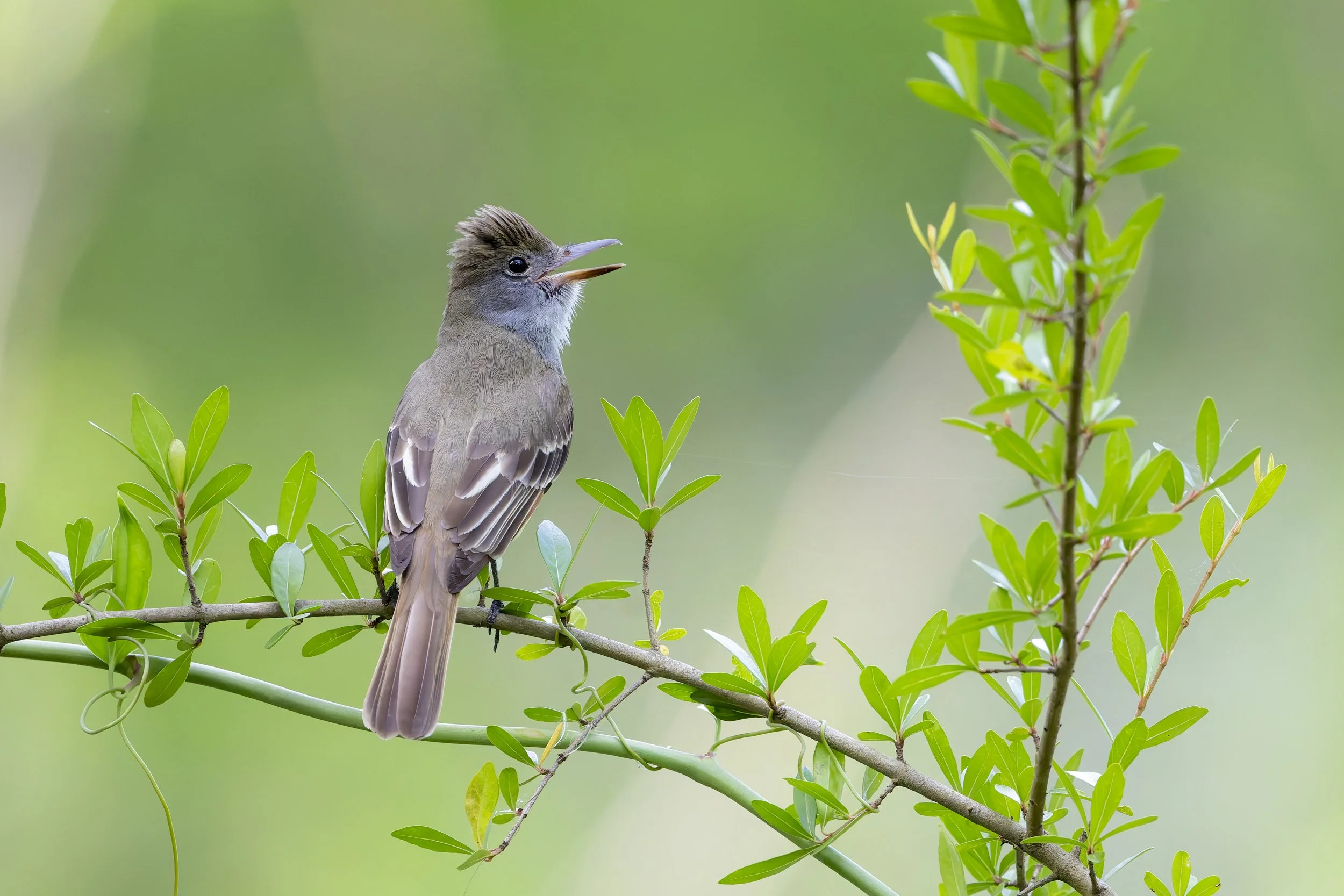
Great-crested Flycatcher. Lettuce Lake Park, Tampa, Florida, 24 Apr 2025. Nikon Z8 with Nikkor Z 800mm f/6.3 lens at f/6.3, 1/1250 sec, ISO 4500.
16. Blackpoll Warbler
Yet another lifer for me this spring was this Blackpoll Warbler. He was photographed in the backyard of the abandoned ranger’s house at Fort De Soto Park. The house suffered irreparable damage following 2024’s hurricanes and the overgrown backyard became an oasis for migrating birds. Here we found Cape May Warbler, Rose-breasted Grosbeak, Summer and Scarlet Tanager, Indigo Bunting, Ovenbird, Black-throated Blue Warbler, Prairie Warbler, and this Blackpoll Warbler. Here we can see the Blackpoll in a backlit stand of dandelions where I think he was picking off some spiders or other small insects.
When taking this photograph I was alone and I didn't know what this bird was. Finding a new lifer is always exciting, and only later was I able to identify it by referencing allaboutbirds.org and the Merlin app.
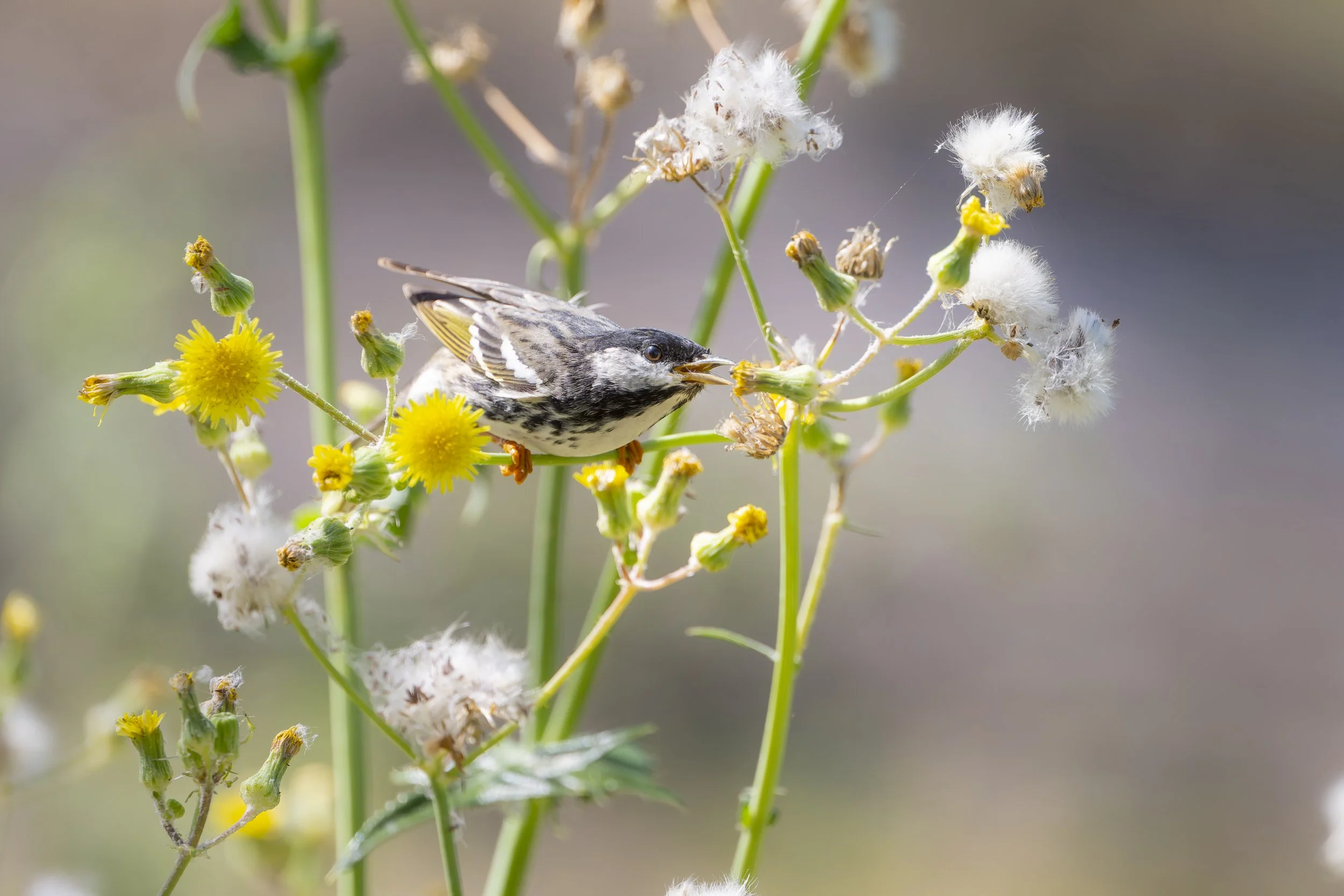
Blackpoll Warbler. Fort De Soto Park, Tierra Verde, Florida, 25 Apr 2025. Nikon Z8 with Nikkor Z 800mm f/6.3 lens at f/6.3, 1/2000 sec, ISO 900.
17. American Redstart
My spring nemesis bird. It seemed that no matter how hard I worked, how many photos I took, or how many hours I put in, I could not get a good photo of an American Redstart. And the more I couldn’t get a good photo, the stronger my resolve grew to stick with it until I got a clean American Redstart photo. And that is what this photo is - the result of hours of photography for one-clean-shot.
All that time with one species isn’t for naught though. It gives you the wonderful opportunity to learn about the bird’s behavior, to watch how it moves, and hear any vocalizations. I learned that when this bird hunts, it like to perch high in thick foliage, fly down almost vertically, then fly back up. This up and down movement in thickly forested habitat is what made it difficult to photograph.
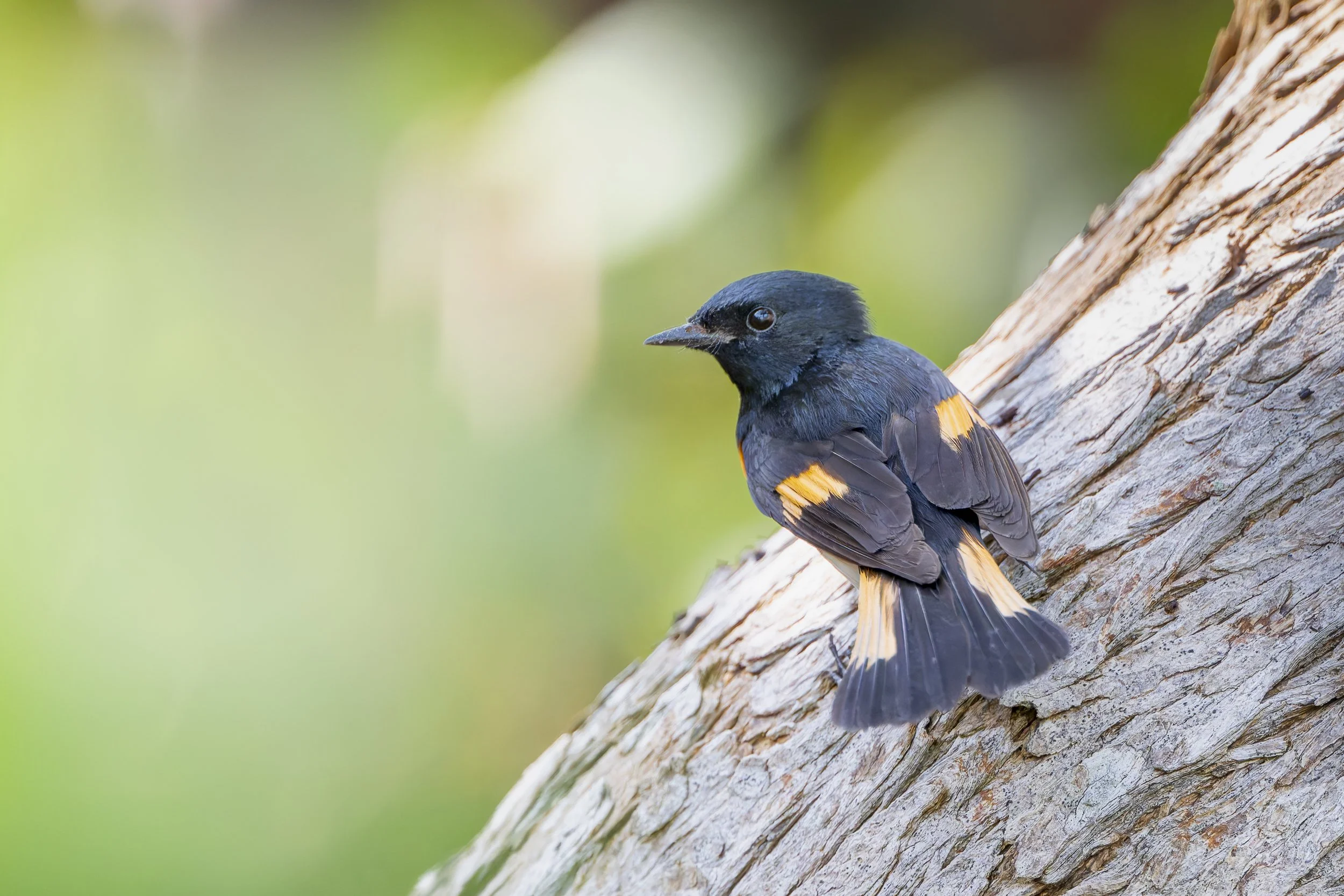
American Redstart. Fort De Soto Park, Tierra Verde, Florida, 03 May 2025. Nikon Z8 with Nikkor Z 800mm f/6.3 lens at f/6.3, 1/1250 sec, ISO 2500.
18. Ruby-throated Hummingbird
If I were to specialize on one type of bird to photograph, it would undoubtedly be the hummingbird. They just make me smile. I’ve seen the work of other photographers who specialize in hummingbird photography. They create amazing and elaborate hummingbird gardens with feeders, perches, and backgrounds that make it easy to create fantastic hummingbird photographs. The hummingbirds almost become models in their backyard studios.
Maybe one day I’ll be able to do that, but for now I like to visit my local park and get what I can in their native plant garden.
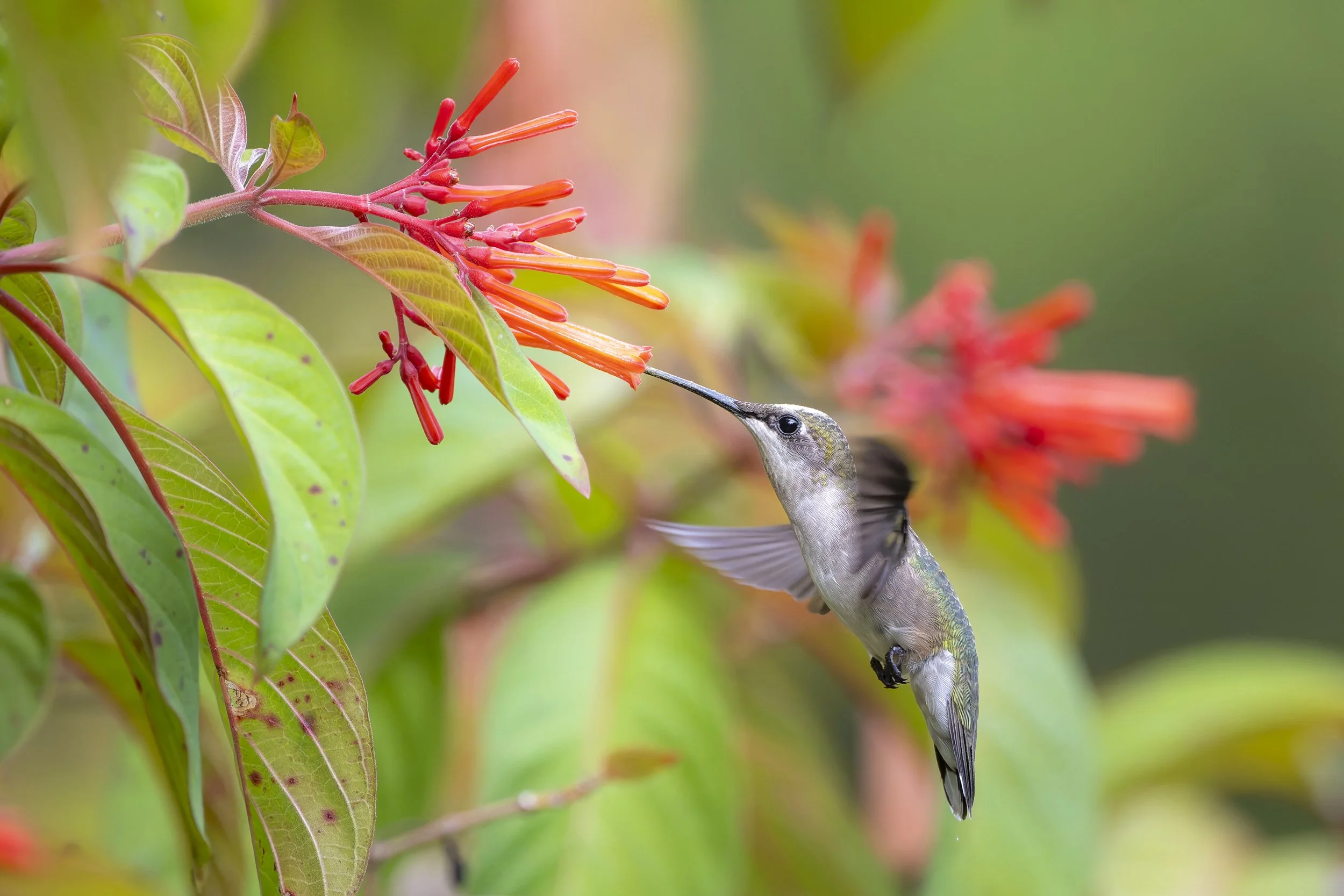
Ruby-throated Hummingbird. Lettuce Lake Park, Tampa, Florida, 31 May 2025. Nikon Z8 with Nikkor Z 800mm f/6.3 lens at f/6.3, 1/2000 sec, ISO 3600.
19. Sandwich Tern
For those who have followed me for a while you know I like a good black-and-white (B&W) photograph. Most bird photographs don’t lend themselves to B&W photography, but white birds against a plain or dark background works really well. This means gulls and terns against the sky or a dark background work beautifully. I am particularly drawn to B&W photographs because it allows our eye to focus more on the form of the subject - and flying gulls and terns have fantastic form.
This particular bird was just off the beach nearly hovering in the air. He would hover there for a few seconds, pick out a fish, then dive on it. Most of the time he missed, so he kept repeating this behavior. A little cloud in the lower left helps balance the composition while not being a distraction.
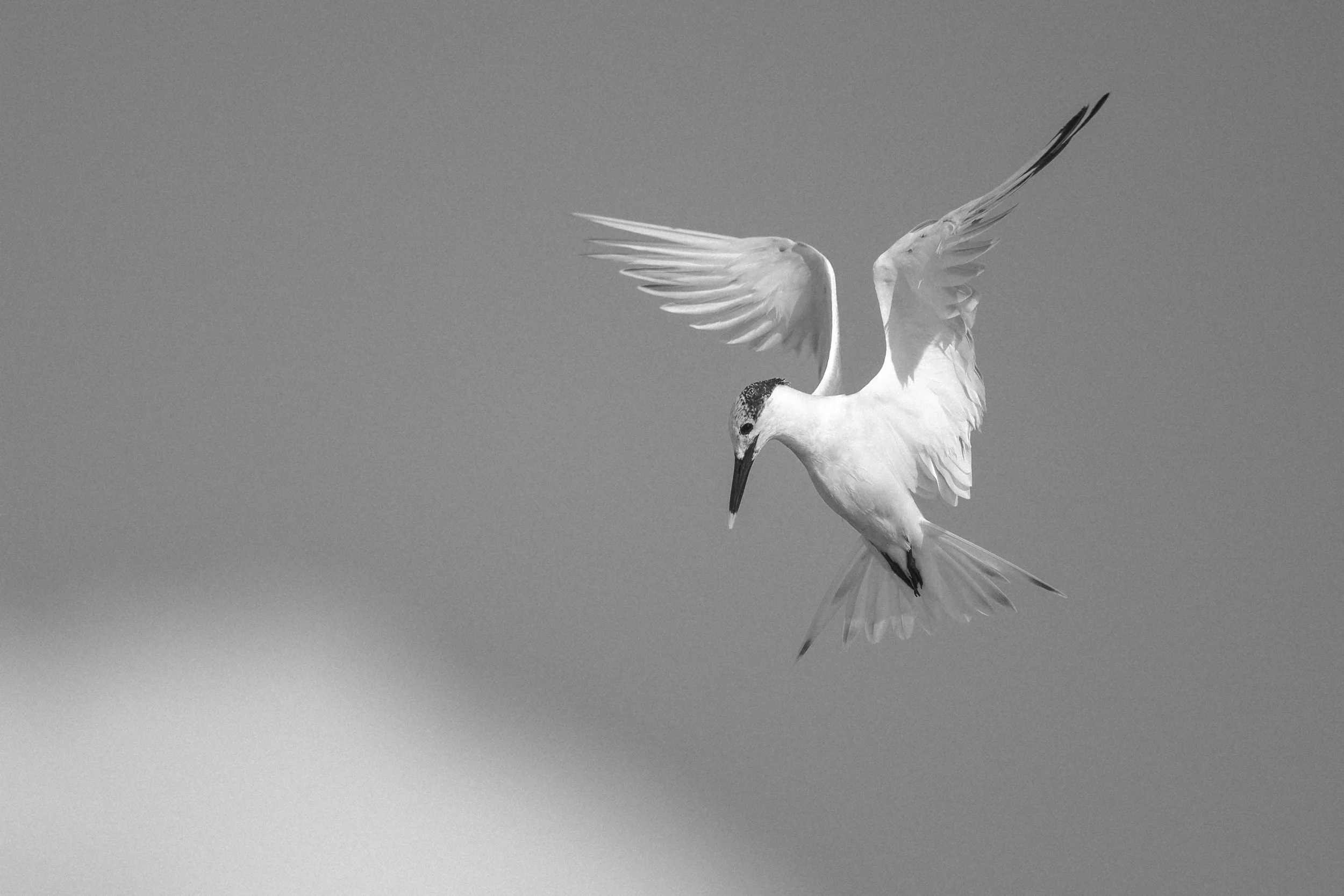
Sandwich Tern. Fort De Soto Park, Tierra Verde, Florida, 05 October 2025. Nikon Z8 with Nikkor Z 800mm f/6.3 lens at f/6.3, 1/4000 sec, ISO 250.
20. Blue-gray Gnatcatcher
I’ve selected a photo of a Blue-gray Gnatchatcher, one of the most common birds in Florida, as my final pick. It was the last picture I took on a 2.5 mile hike at Circle B Bar Reserve while I was leading a field trip for the Tampa Audubon Society. This bird, and a few of his friends, were busy flitting about in these brushy trees. At the time, I was getting tired from the walk and didn’t think I really got anything good. It wasn’t until I brought the photos into Lightroom that I saw that this was a decently nice photo.
The soft texture of the plant combined with the soft tones of green and blue really make this photo. Not to mention this tiny gnatcatcher looks so delicate looking curiously towards the camera. Just lovely.
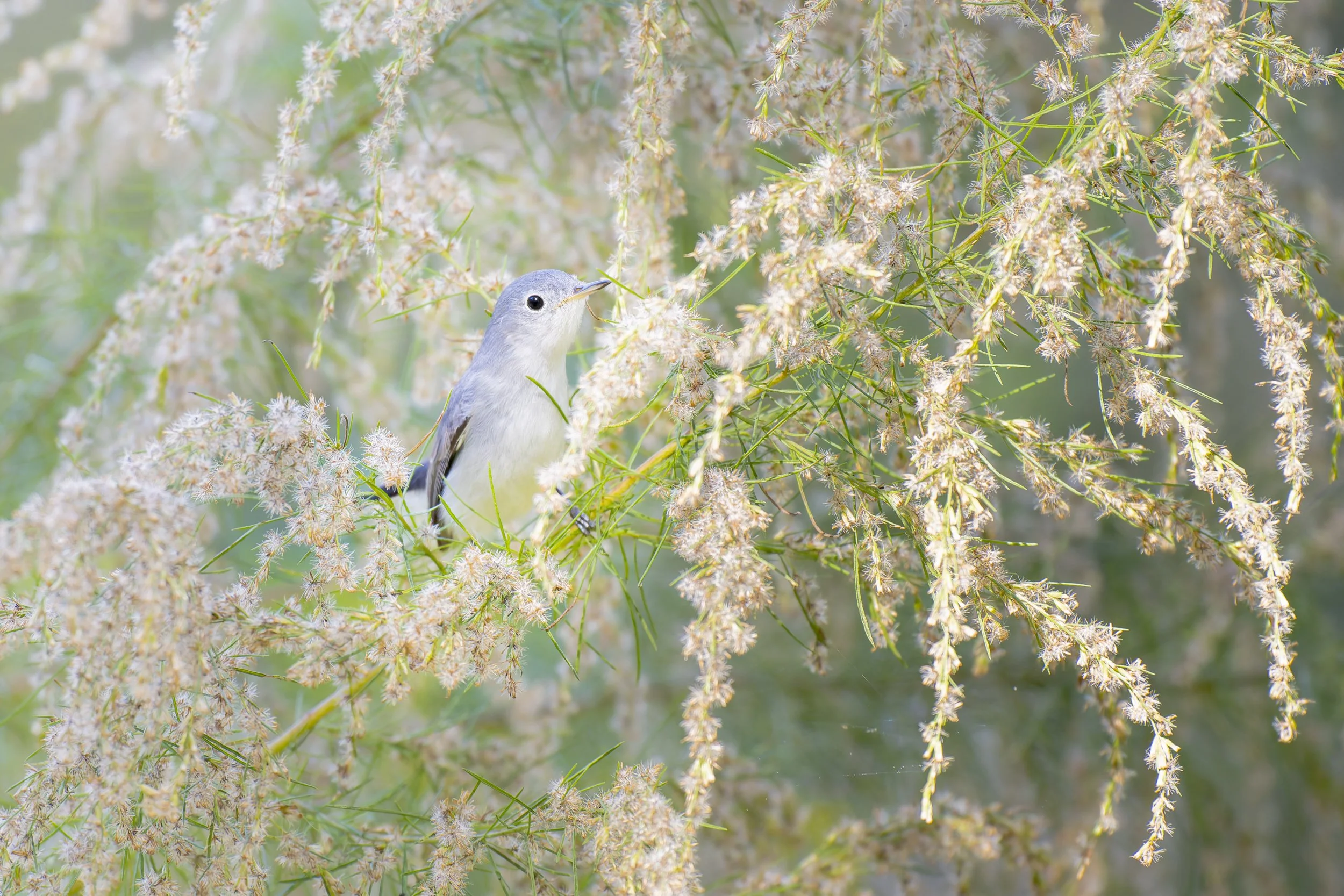
Blue-gray Gnatcatcher. Circle B Bar Reserve, Lakeland, Florida, 13 Dec 2025. Nikon Z8 with Nikkor Z 180-600mm f/5.6-6.3 lens at 600mm, f/6.3, 1/800 sec, ISO 1000.
So there’s 20 of my best photos from 2025. It was a light year from me as I took some time off, but I’m really looking forward to a great 2026. So far I’ve had a strong start. I just came back from a magnificent trip to Orlando Wetlands, so be looking for that post in the coming days.
Stay safe, and happy birding!