An Afternoon of Birding at Lettuce Lake Park
In the past I have made the mistake of visiting Lettuce Lake Conservation Park (LLP) on the weekends only to find the boardwalk jammed with loud shrieking kids, people yelling into their mobile phones on speaker, folks walking their dogs (which is against park rules), and other such tomfoolery (I should add that I do like people, just not when I’m birding. Ha!).
So this past Sunday I had no plans of going to to LLP. However, an afternoon rain shower changed things a bit. People tend to avoid the outdoors when it rains, so I suspected that the boardwalks at LLP would be emptied of all the raucous crowds. For a bonus, we all know that birds like to come out after a rain shower. So, as soon as the rain was over, I made a bee-line for the park.
My intuition was right. Most of the people had left the park and the birds were coming out.
The first birds I came across were a small group of Blue-gray Gnatcatchers and a Ruby-crowned Kinglet. They were busy flitting about chasing after gnats, so I knew it would be tough to get a photo. I only had a few minutes with the kinglet before he flew off but I managed to get this nice perch shot which show some of his ruby crown feathers.
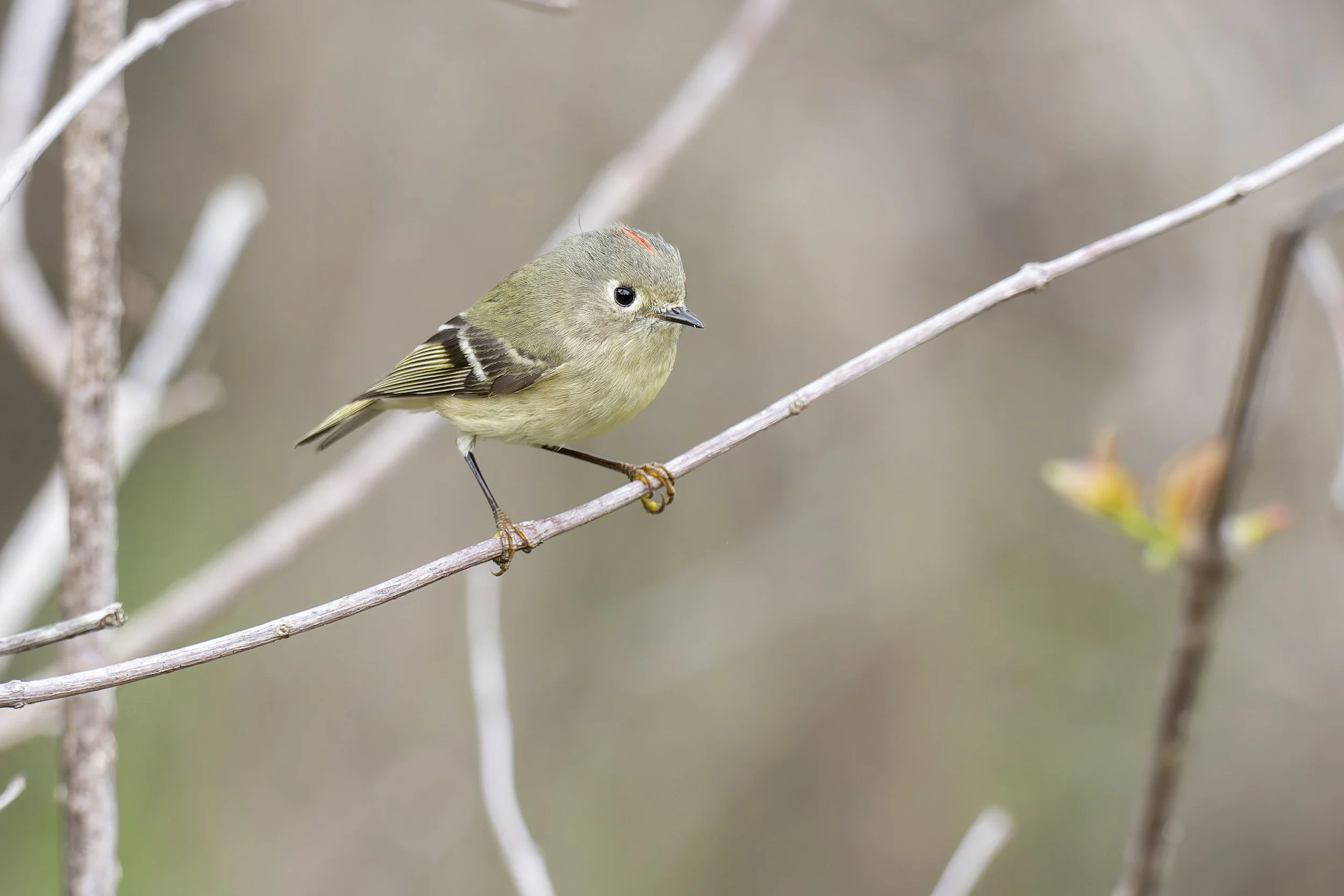
Ruby-crowned Kinglet. Nikon Z8 with Nikkor Z 180-600 f/5.6-6.3 VR lens at 350mm, 1/800 sec, f/6.0, ISO 3600.
The gnatcatchers are always in ample supply at LLP, so I normally don’t pay them much attention. However, one was in a tree that was starting to put on buds. It was still a bit messy with dying leaves and Spanish moss, but I think this one turned out nicely. Whenever I can get them, I always like bright backgrounds.
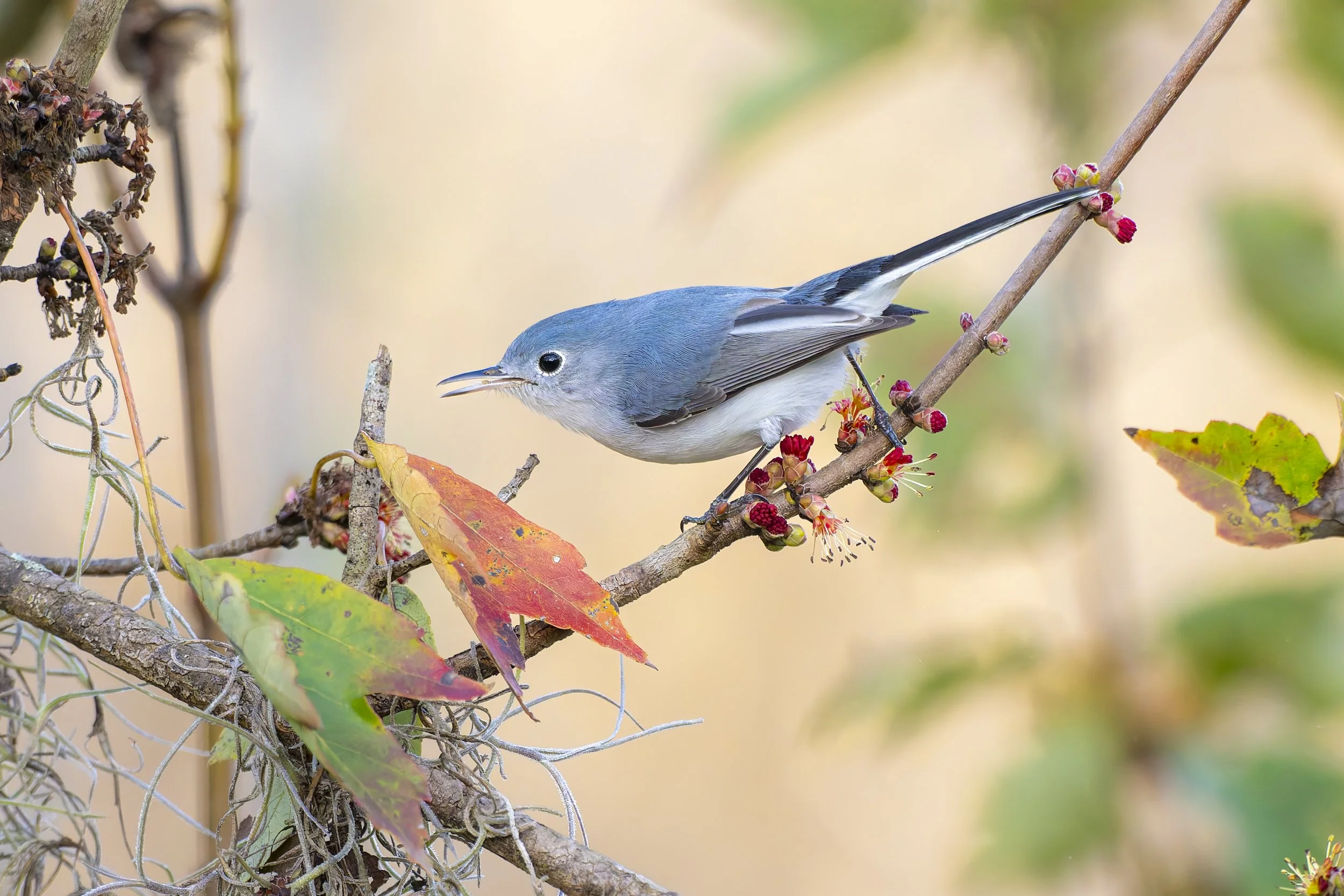
Blue-gray Gnatcatcher. Nikon Z8 with Nikkor Z 180-600 f/5.6-6.3 VR lens at 420mm, 1/1250 sec, f/6.3, ISO 3600.
One thing I’ve noticed recently is that birds are definitely coming out in their breeding plumage. In fact, herons, cranes, and other large birds should be nesting right now. On this walk, I was able to spot this Black-crowned Night Heron back in the brush in nice breeding plumage. He was perched on a branch preening. Some hanging Spanish moss partially blocked my view, but a beautiful bird nonetheless.
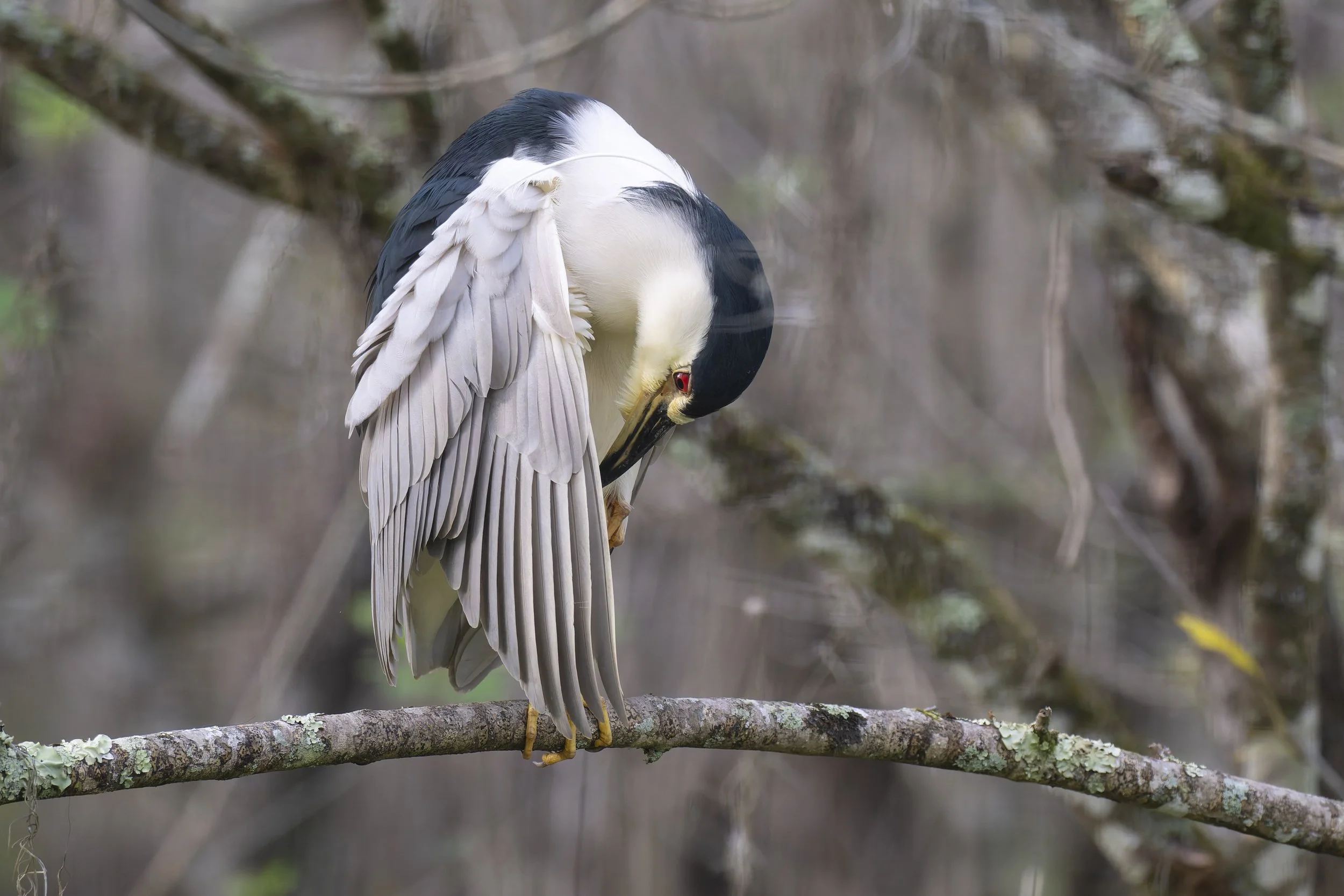
Black-crowned Night Heron. Nikon Z8 with Nikkor Z 180-600 f/5.6-6.3 VR lens at 390mm, 1/1000 sec, f/6.0, ISO 2800.
The last photo I took was of an Anhinga drying off with a full wing spread. He was slowly beating his wing and the feathers seemed to shine. Lately I have really been drawn to Anhingas as I find them to be particularly dramatic subjects. To my eye they are not the most beautiful birds, but they are so unusual looking and never stop giving amazing poses. I guess they are kinda like supermodels - not aways super attractive, but they always photograph well.
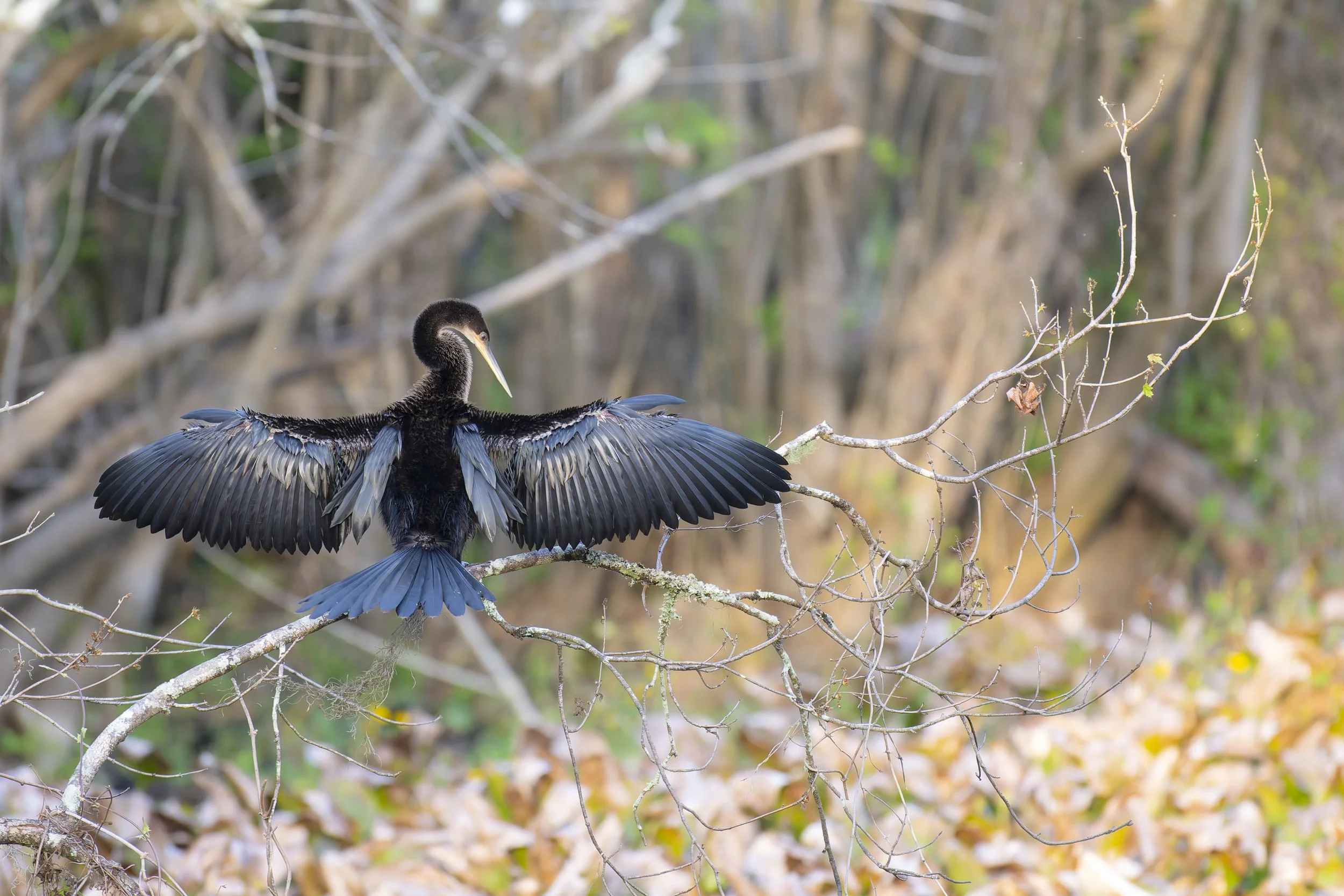
Anhinga. Nikon Z8 with Nikkor Z 180-600 f/5.6-6.3 VR lens at 600mm, 1/800 sec, f/6.3, ISO 3200.
LLP can be hit or a miss, and I’ve experienced my fair share of both over the years. Maybe I should stick with the formula of coming after rain showers. This time of year is also good. With the trees mostly bare of foliage it is much easier to get a clean shot of the birds.,
Hope you all have a nice time out birding. We have a 3-day weekend coming up and I think a trip to either Orlando Wetlands or Corkscrew Swamp are on the docket.
Until then, good health and happy birding!