Photo Club Field Trip to the Celery Fields
Saturday I had the pleasure of leading the Photo Club for the Tampa Audubon Society out to the Celery Fields in Sarasota. The Celery Fields is a popular recreational destination and is the home of the Sarasota Audubon Society.
Our small group of four photographers met at the nature center at 8am. Weather was very comfortable, but there was extremely dense fog.
We started at the gazebo in the garden adjacent to the nature center. There were already four birders/photographers sitting quietly in the gazebo, all waiting for the arrival of the Painted Bunting. A millet feeder is the lure that brings in the Painted Buntings. There are other feeders in the area as well and these brought in hordes of Grackles, Brown-headed Cowbirds, and Red-winged Blackbirds.
But no Painted Bunting. Not yet anyway.
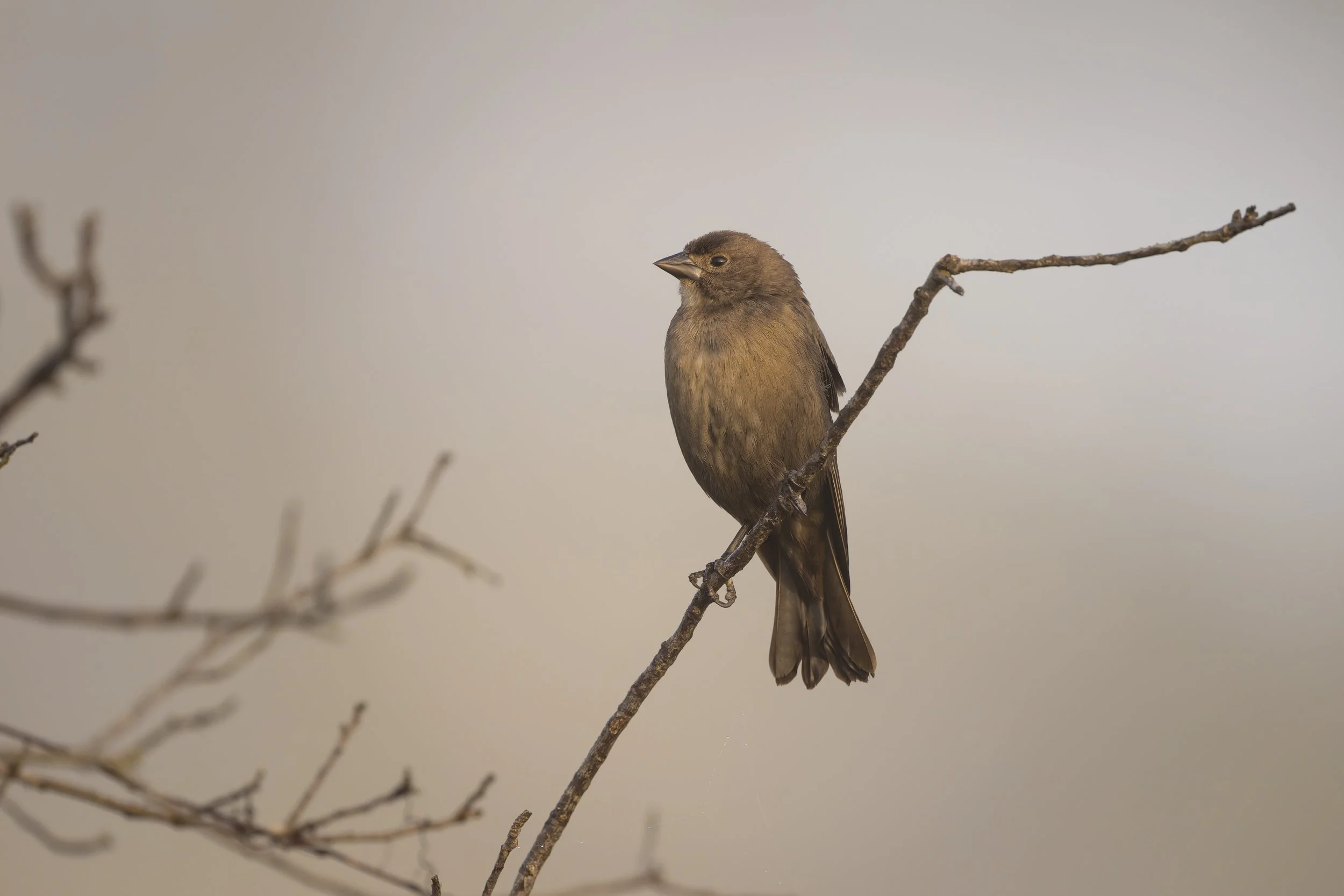
Brown-headed Cowbird (female). Dense fog softened the warm glow of the rising sun for this Brown-headed Cowbird waiting for her turn at the feeders. Nikon Z8 with Nikkor Z 800mm f/6.3 VR S lens at 1/1000 sec, f/6.3, ISO 720.
After about 20 minutes, we decided to leave the gazebo and walk over to a nature trail opposite the parking lot. This area has lots of small trees and bushes, perfect habitat for small songbirds searching for spiders and other insects.
We didn’t have much luck here. The only birds we saw were Palm Warblers, and even these kept their distance. One bird stopped long enough for me to snap this photo, then took off.
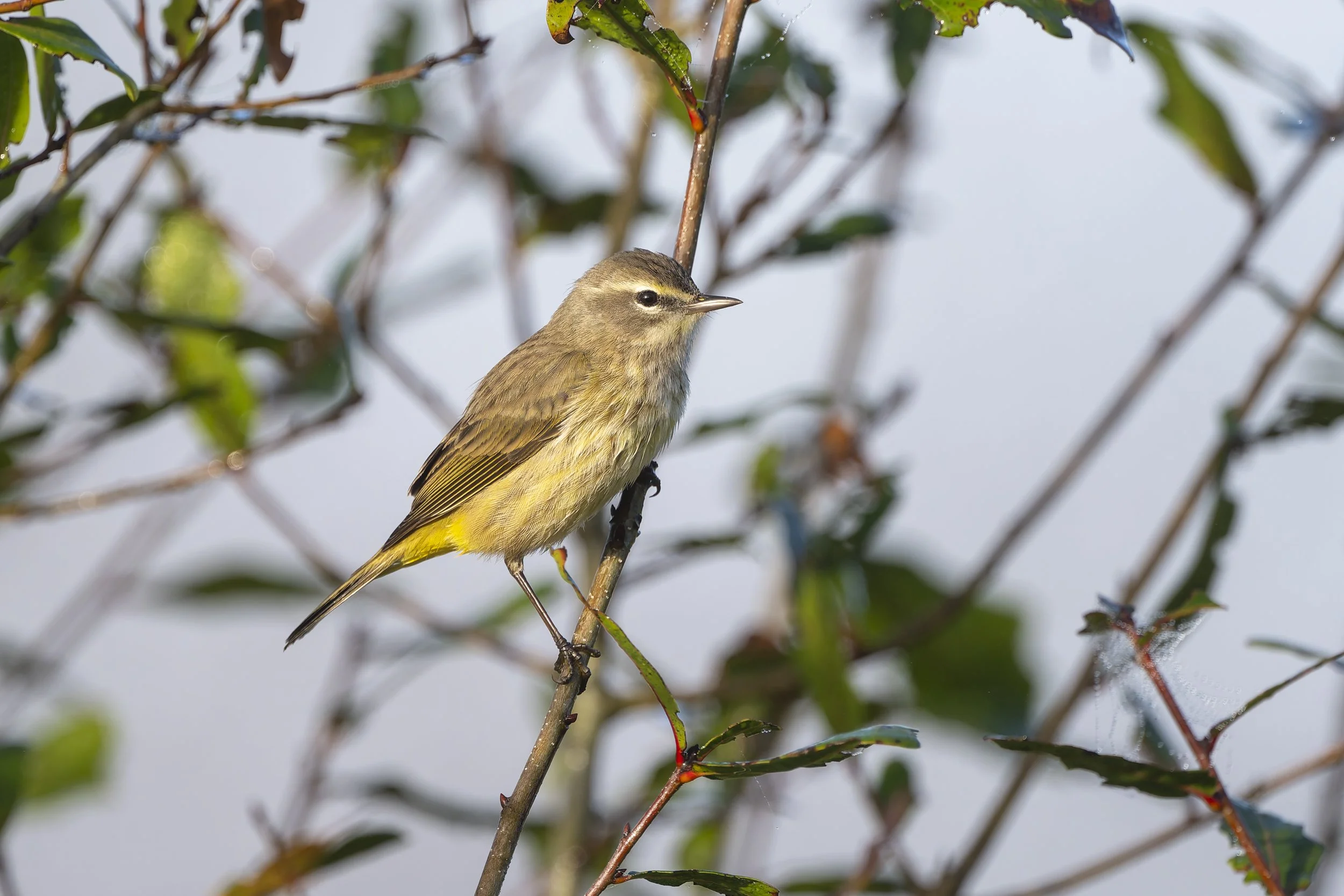
Palm Warbler. So common is the Palm Warbler throughout Florida in the winter that many photographers ignore this beautiful bird, myself included. But when they pose like this, you have to take the photo. Nikon Z8 with Nikkor Z 800mm f/6.3 VR S lens at 1/1000 sec, f/6.3, ISO 450.
By the time we walked across the street to the Palmer road boardwalk, the fog had nearly dissipated. The water level in the impoundment was extremely low which is not surprising given how dry it’s been in this part of Florida for the past six (or more) months.
Near the entrance of the boardwalk were a few Gray-headed Swamphen (often confused by those unfamiliar with the species as Purple Gallinule), a Great Blue Heron, and a couple of Tricolored Heron.
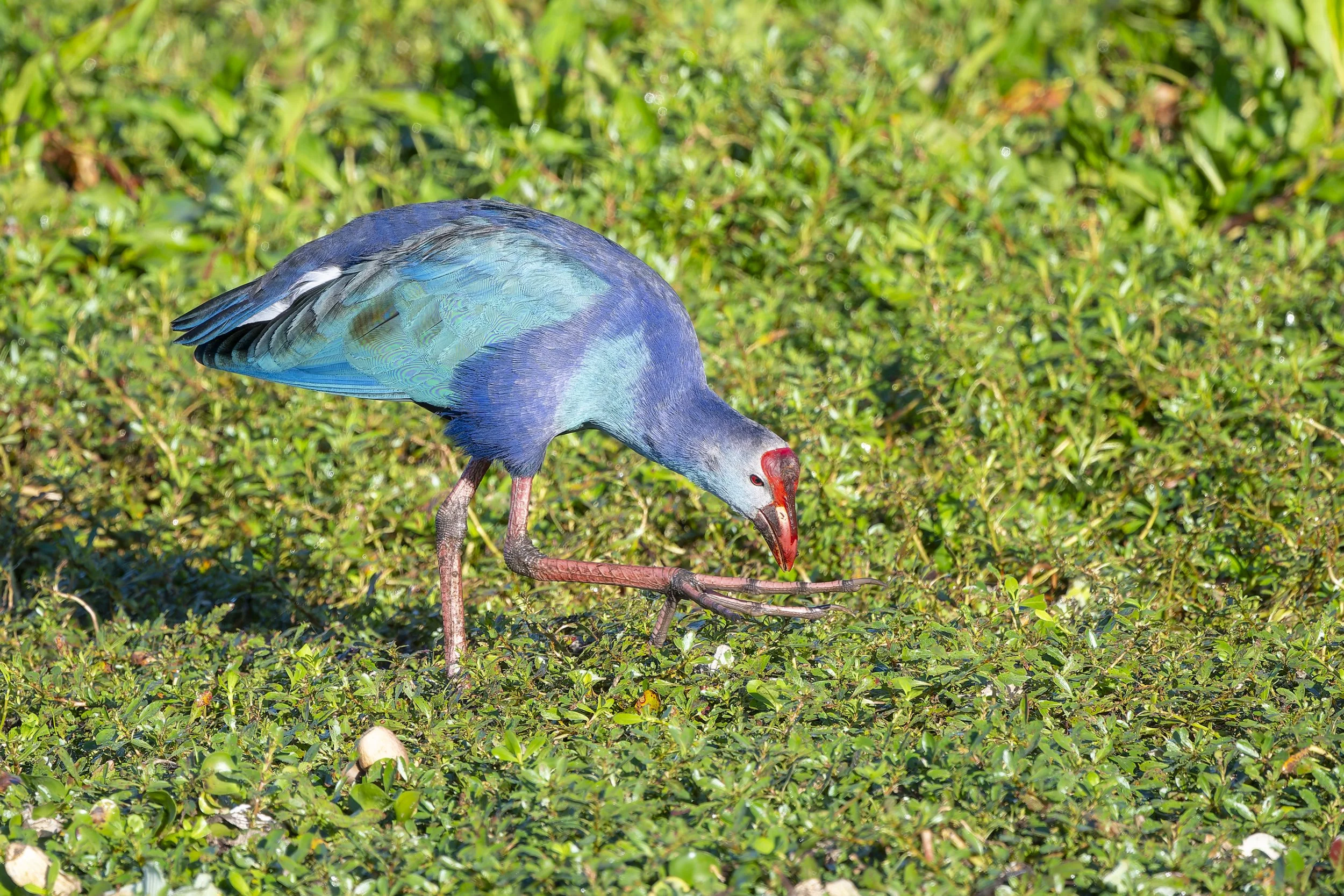
Gray-headed Swamphen. This non-native species is often confused with the native Purple Gallinule. While they look very similar, there are some easy ways to tell them apart. First, the Gray-headed Swamphen is bigger than a Purple Gallinule. It also has red legs while the Purple Gallinule’s are yellow; it’s beak is all red, while the Purple Gallinule’s is red with a yellow tip; and the Swamphen’s head shield is all red, while the Purple Gallinule’s is blue. Nikon Z8 with Nikkor Z 800mm f/6.3 VR S lens at 1/1000 sec, f/6.3, ISO 360.
Further out in the water was a flock of about 25 Glossy Ibis with American Coot and Common Gallinule mixed in. It was morning preening time and, when the Ibis turned a certain way the light lit up their iridescent feathers, showing why the Glossy Ibis deserves its name. What a stunner.
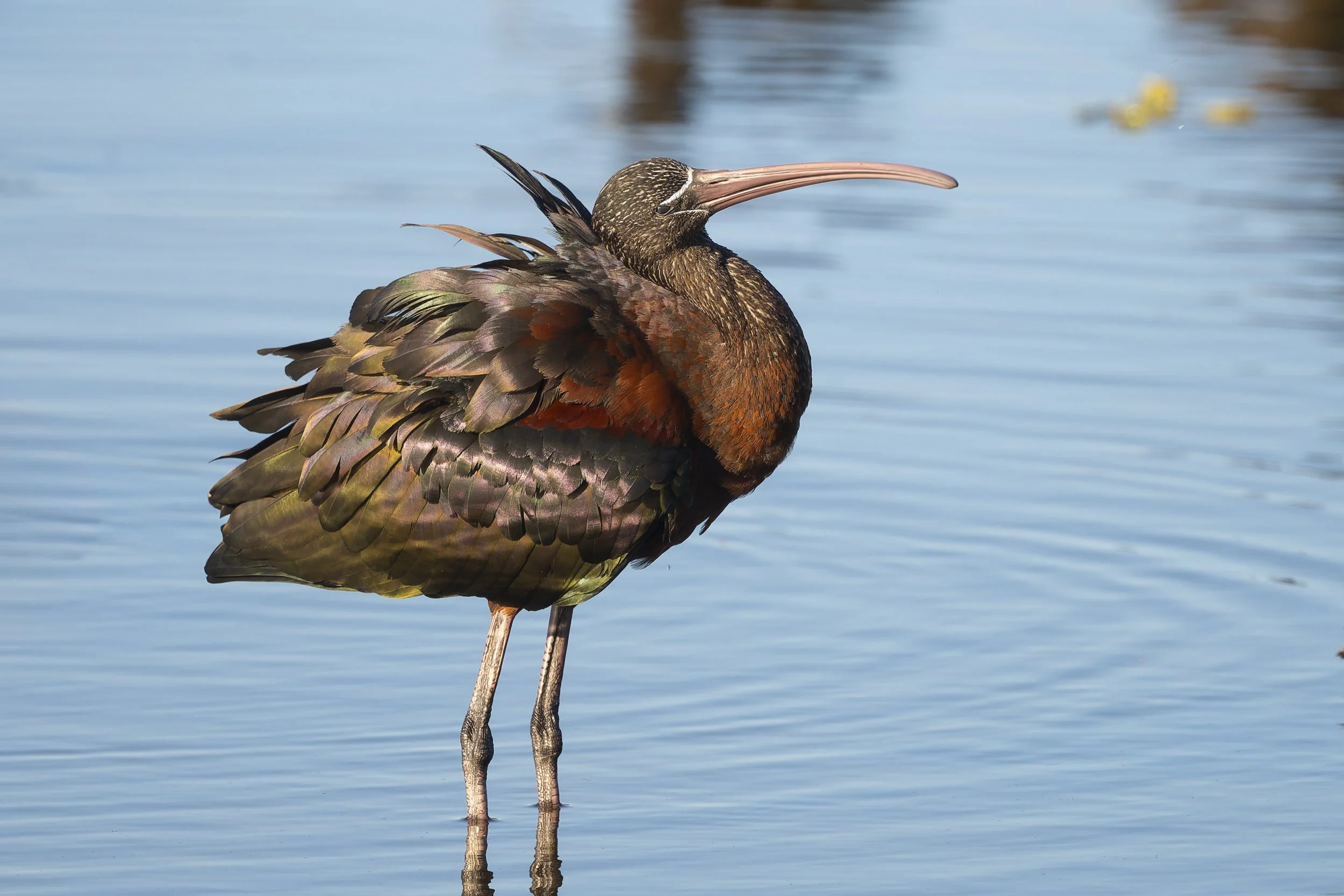
Glossy Ibis. Puffed up while preening, showing off like a runway model. Nikon Z8 with Nikkor Z 800mm f/6.3 VR/S lens at 1/1000 sec, f/6.3, ISO 250.
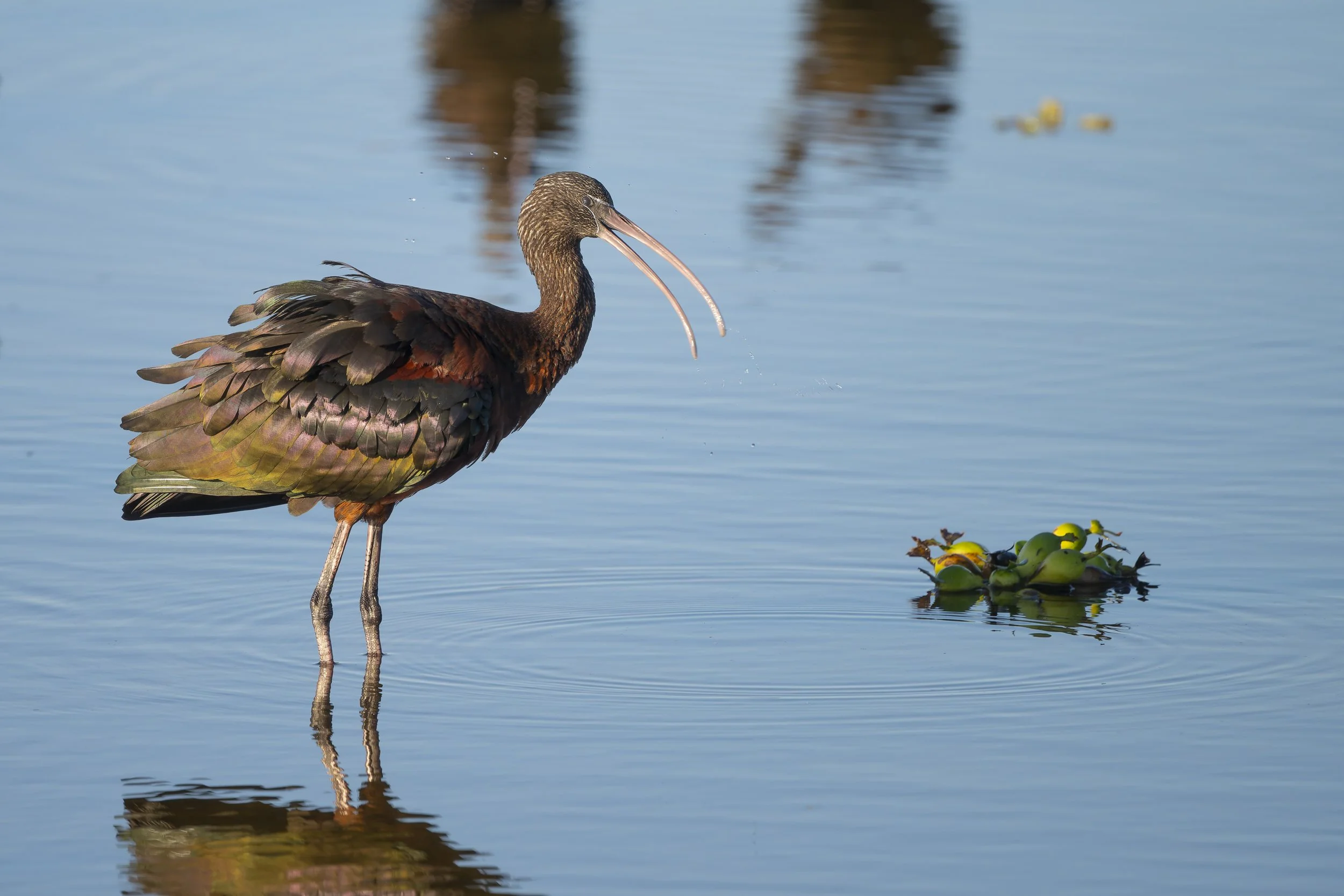
Glossy Ibis. Nikon Z8 with Nikkor Z 800mm f/6.3 VR/S lens at 1/1000 sec, f/6.3, ISO 220.
Our group then decided to head over to the Raymond Road Boardwalk. There we hoped to see two birds - the Northern Harrier and the Crested Caracara. The Northern Harrier routinely flies low over the tall grass of this impoundment, but we didn’t see it. Other photographers confirmed it was there earlier.
We did see an unusual sighting of four Wilson’s Snipes hanging out together. I’ve never seen that many Snipes in one place so it was interesting to see. They were in a direction which was directly into the light, and they were hanging out in some dead gray/brown marsh foliage. Many people aimed their cameras at the birds, but no one got a good shot. I didn’t even bother.
We did spot a Least Bittern. Unsurprisingly it was in the reeds along the water’s edge - far, far away. Again no shot.
Leaving the boardwalk, we spotted a Crested Caracara atop a power pole. Again, far, far away and no shot.
We decided to return to the gazebo and give the Painted Bunting a second chance. We settled in the gazebo, and while the group waited I walked around to check out a second feeder closer to the nature center. Along the way I spotted a female Ruby-throated Hummingbird. I quickly scooted back to the group and we took the Hummingbird’s photo for a while, mostly when she perched in a nearby tree.
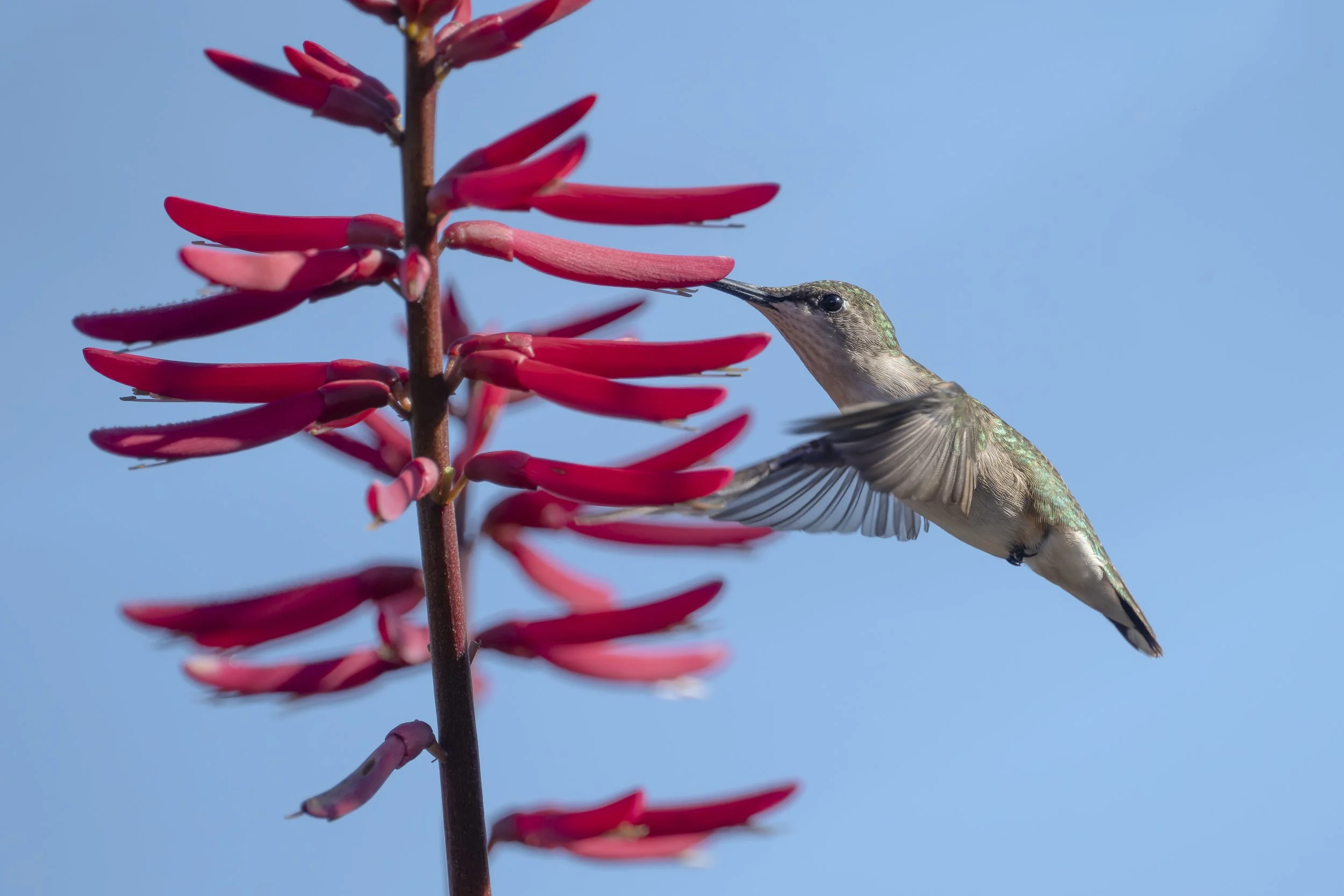
Ruby-throated Hummingbird. Nikon Z8 with Nikkor Z 800mm f/6.3 VR/S lens at 1/2500 sec, f/6.3, ISO 450.
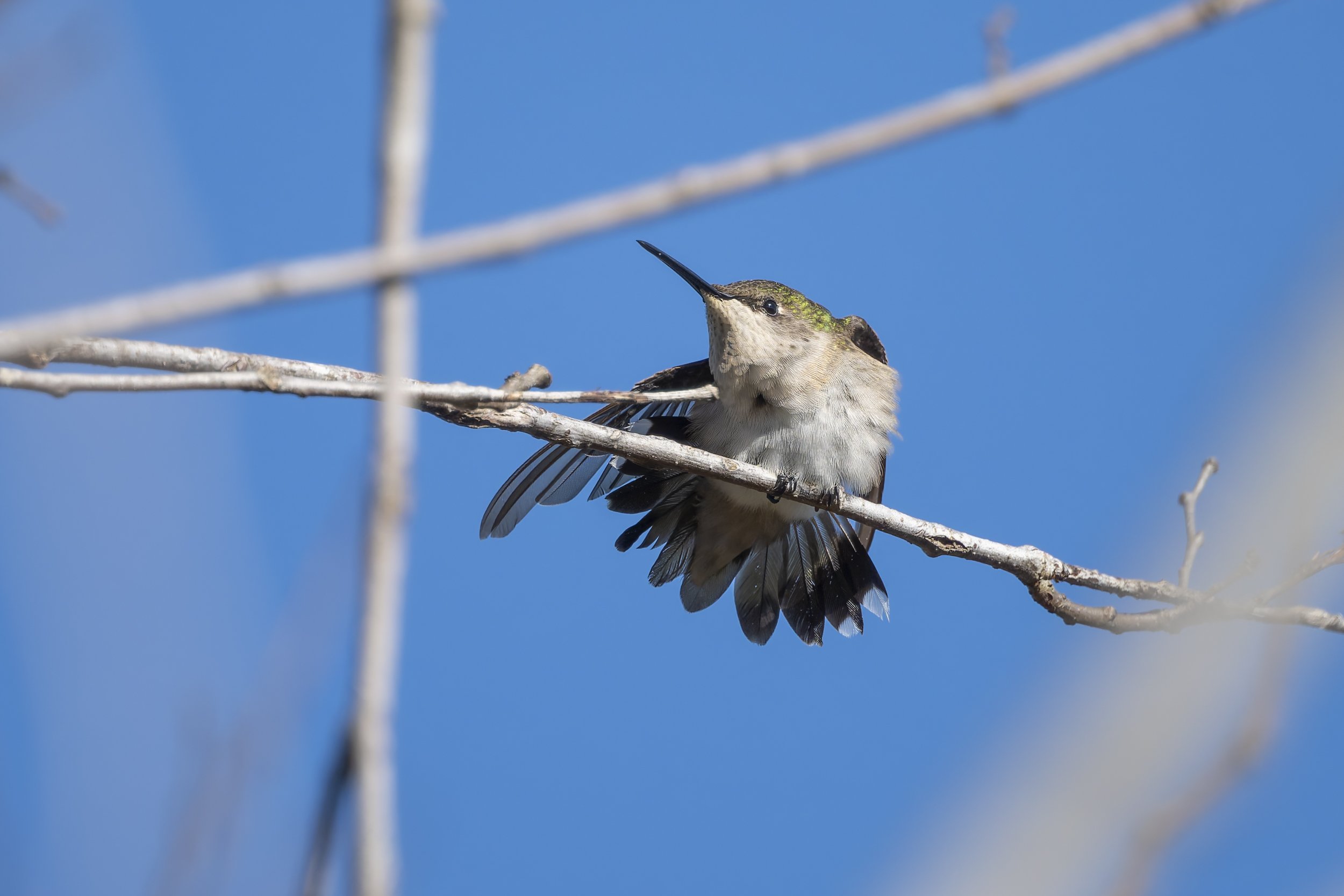
Ruby-throated Hummingbird. After feeding on the flower, she perched in a small tree in the garden. Nikon Z8 with Nikkor Z 800mm f/6.3 VR/S lens at 1/2500 sec, f/6.3, ISO 450.
While the group was on the hummingbird, I went back to check on the millet feeder at the gazebo. This time there was a male Painted Bunting in the feeder. I hurriedly got the group’s attention and we got back to the gazebo. This feeder has a cage surround to keep the larger birds off of it, but it also makes photography difficult. I snapped three safety shots, hoping that he would perch on a nearby branch whenever he finished feeding. After a few moments, he did exactly that, flying to the opposite side of a nearby tree giving us no shot. After about 15 seconds, he then took off to the jungle across the street. Well, that was that.
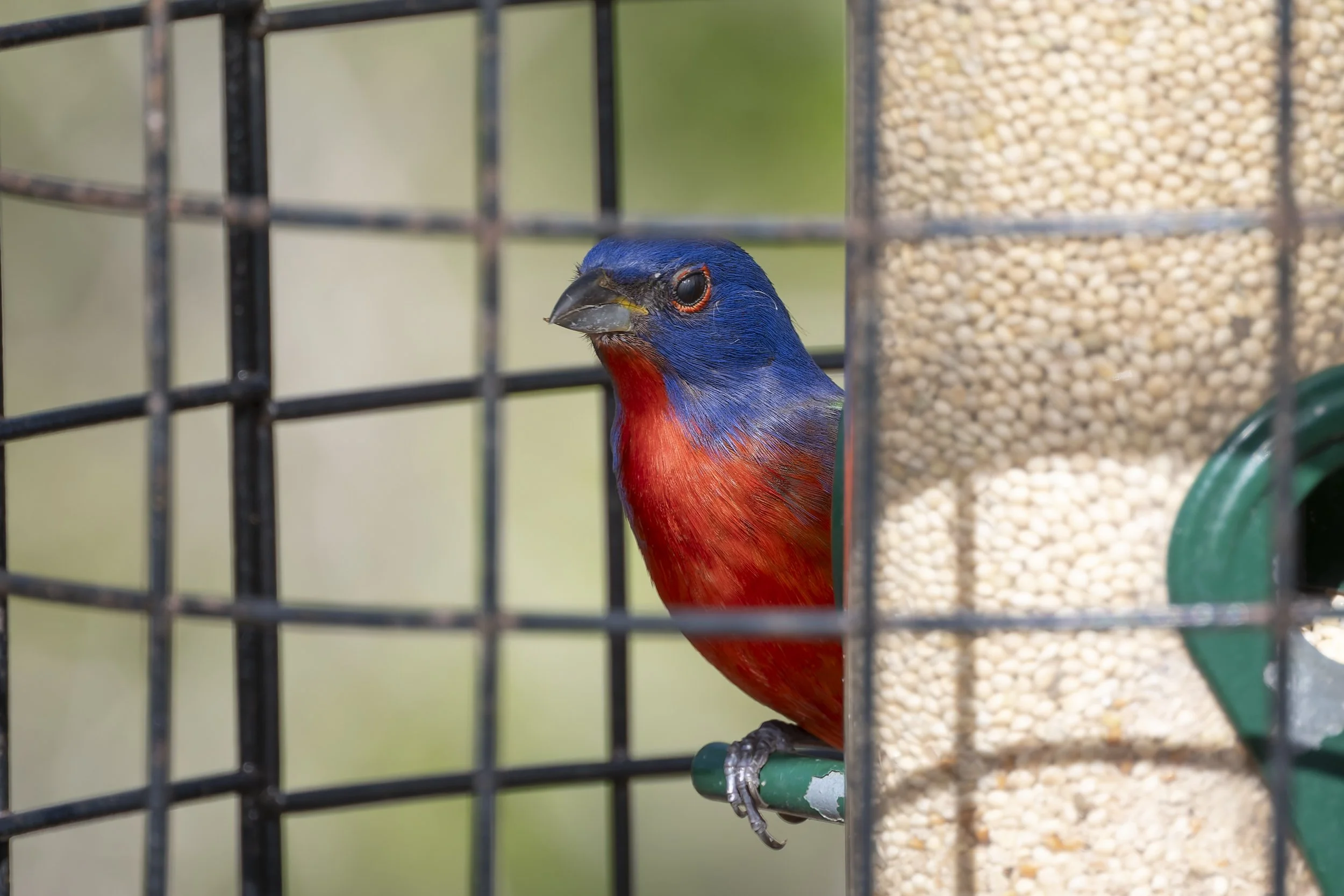
Painted Bunting. The “safety shot” of the Painted Bunting in the bird feeder. A beautiful bird does not always mean a beautiful photograph. Nikon Z8 with Nikkor Z 800mm f/6.3 VR/S lens at 1/2000 sec, f/6.3, ISO 560.
All in all, the day’s photography was challenging. We started with dense fog followed by harsh light. Birds were around, but most were positioned in such a way as to make photography difficult if not impossible. That’s how it goes sometimes. Still, the weather was absolutely beautiful, the trip participants were a joy to be around, and I think we all had a really nice time.
Our next trip will be to Fort DeSoto in February. Like many birds, the Reddish Egret will be coming into breeding plumage and that will be the target. It should be a lot of fun!
Happy birding!