Where are the Birds?
According to Cornell Lab’s BirdCast, peak Spring migration in Tampa (Hillsborough County) is forecasted from April 16 to May 10, 2026. So we’re in the middle of it. Yet, when I go birding and speak with other birders, we all say the same thing: “where are all the birds?” It seems that many of us are having a difficult time spotting migrating birds at a time of year when there should be tons of them flying around.
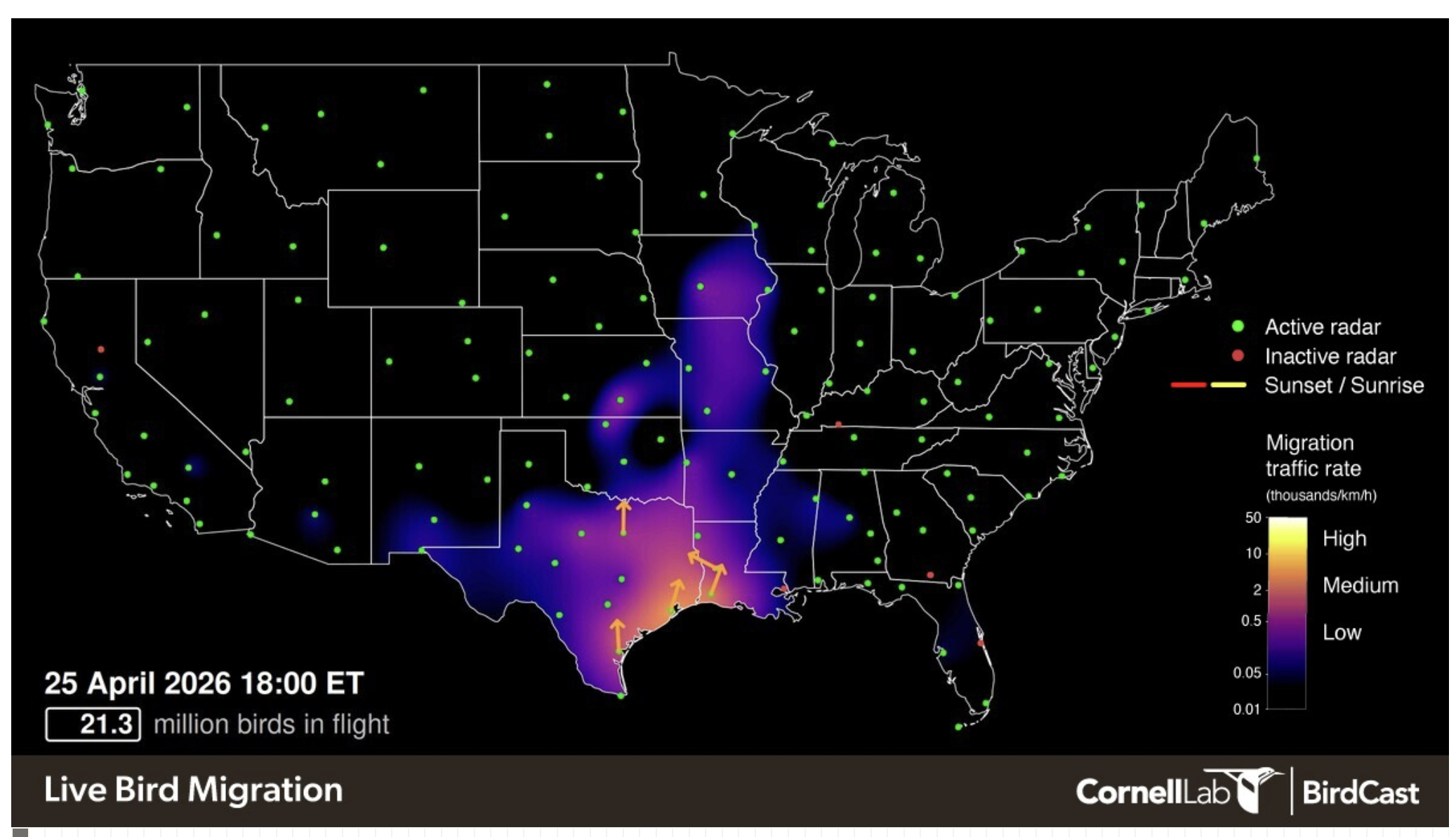
In my uneducated opinion I think it comes down to weather, specifically, wind. The same wind and weather pattern that is keeping Florida in a drought is likely keeping birds out of Florida and more concentrated in Texas and Louisiana. You can see these on Birdcast, where the maps clearly show lots of migration happening in that area and not much occurring in Florida.
So what to do? I think one of the best tools to use is the forecast map on Birdcast. Most migrating birds fly at night at very high altitudes. Radar can be used to track their progress. The forecast maps provide a 3-day forecast of birding in your area. Using these maps can help you strategically plan out your trips, so you can be birding when the forecast map is high, and setting expectations low when the forecast is low. I think that’s a good strategy.
Yesterday (Saturday, 25 April 2026) I went to Fort De Soto - despite the forecast showing hardly any migrating birds in Florida. That forecast turned out to be true. While I did see and photograph a few birds, overall the numbers were teensy tiny. All the birders at De Soto struggled yesterday.
I started at the East Beach picnic area. I saw a single Loggerhead Shrike and no migrating birds. Nothing in the oaks, and nothing in the sea grapes along the shoreline. Complete bust.
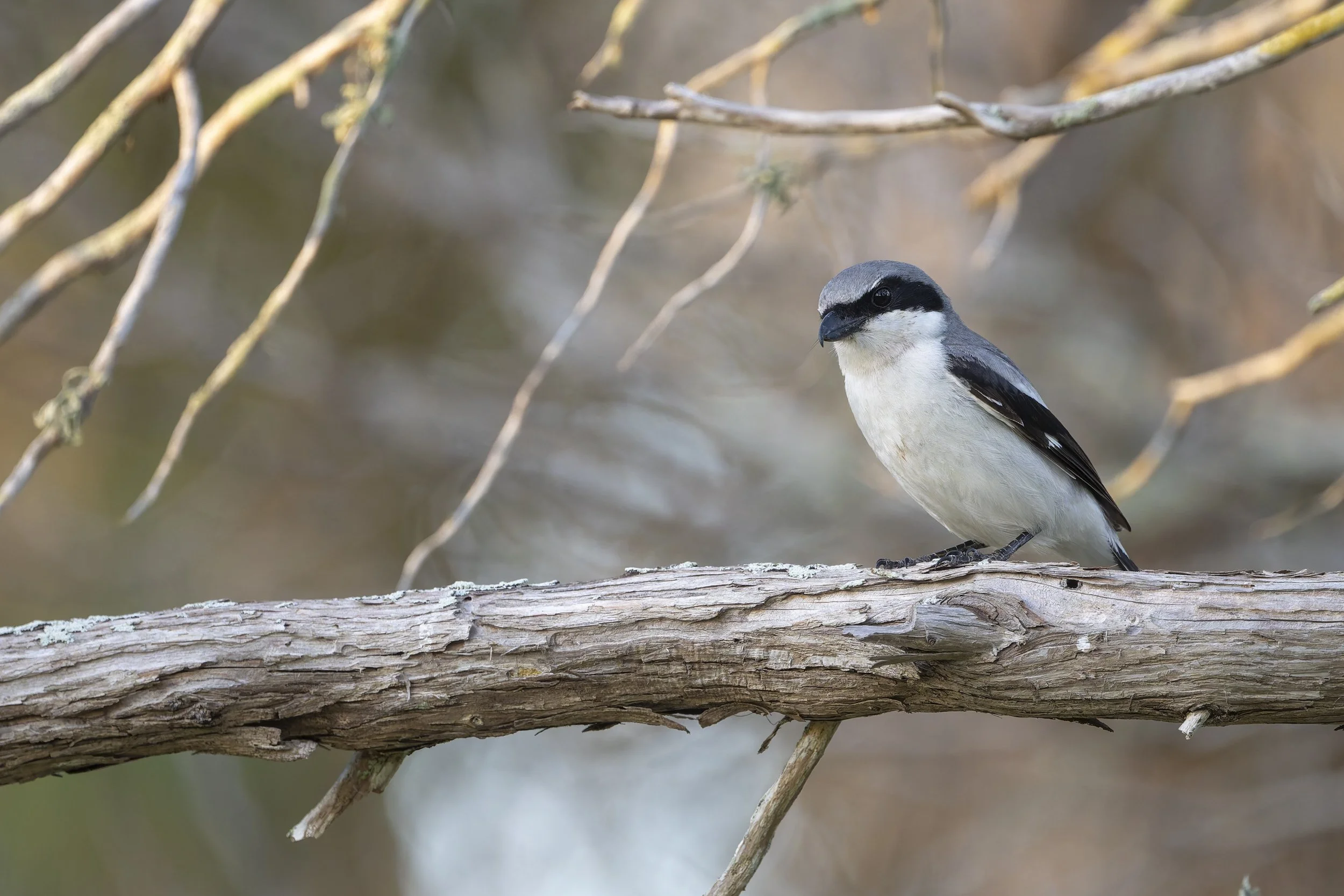
Loggerhead Shrike. Nikon Z8 with Nikkor Z 800mm VR f/6.3 lens at f/6.3, 1/1250 sec, ISO 280.
Next I went to the Barrier-Free Nature Trail which starts at the main flagpole. I saw lots of Prairie Warblers on this trail during my last visit. This time I saw absolutely nothing. After a quick walk, I went over to the Bay Pier and searched around the Ranger’s House.
Again, it was super quiet. A dozen or so birders were scouting the area and not really seeing much. A single American Redstart was keeping some of us busy as it stayed in the densest areas of the foliage, constantly moving in the shadows, making it very difficult to photograph. I didn’t get many clean shots, and this photo was against the light. I had to really lift the shadows and you can tell with a little halo around the edge of the head.
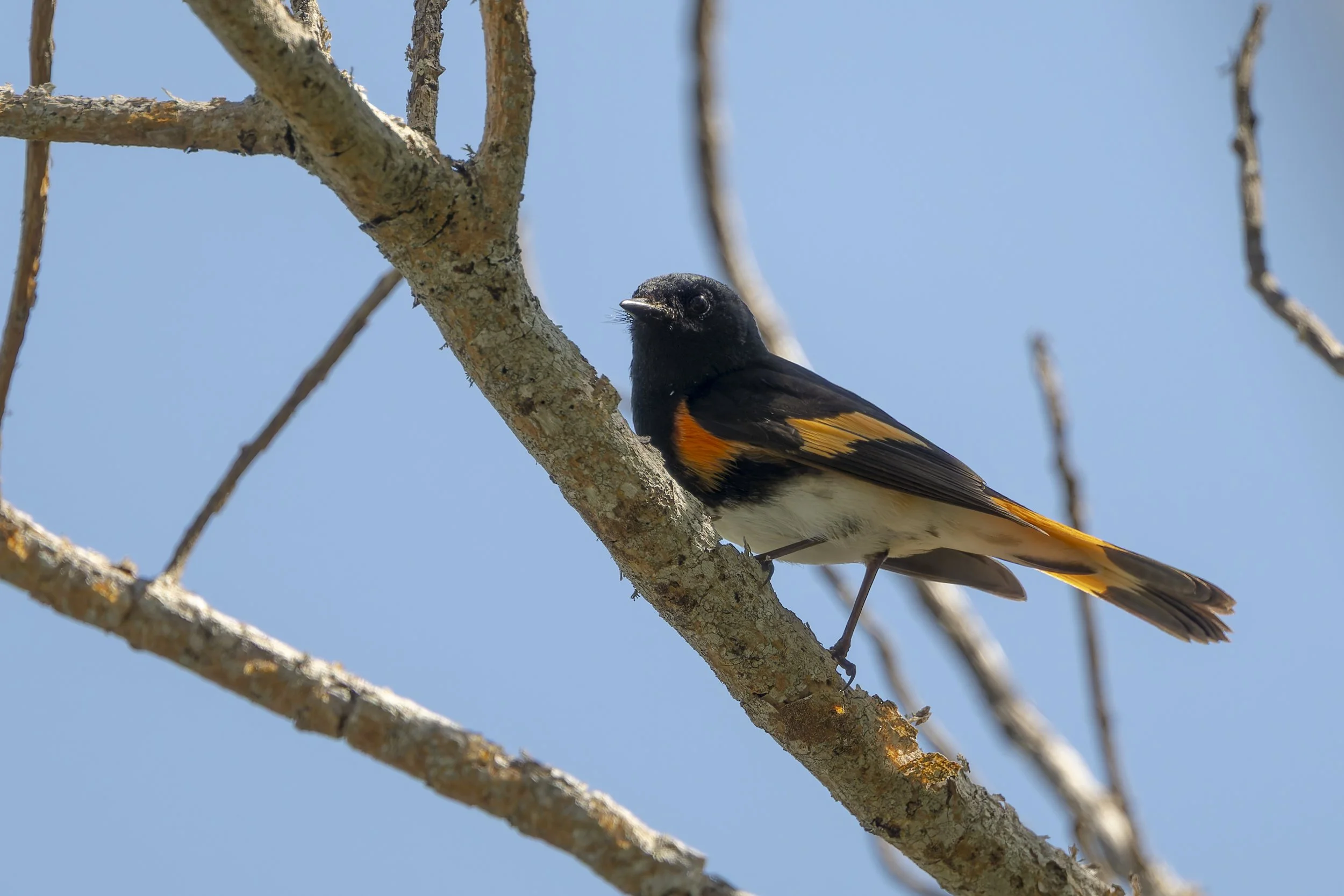
American Redstart. Nikon Z8 with Nikkor Z 800mm VR f/6.3 lens at f/6.3, 1/1250 sec, ISO 360.
One thing is clear - the birds like to stay in the sea grapes. There they find all sorts of insects and worms, great sources of fat and protein, replenishing what they’ve spent while flying all night. It was in the sea grapes that I spotted this Cape May Warbler. This bird hopped down to the ground and came up with a little worm out of the leaf litter,
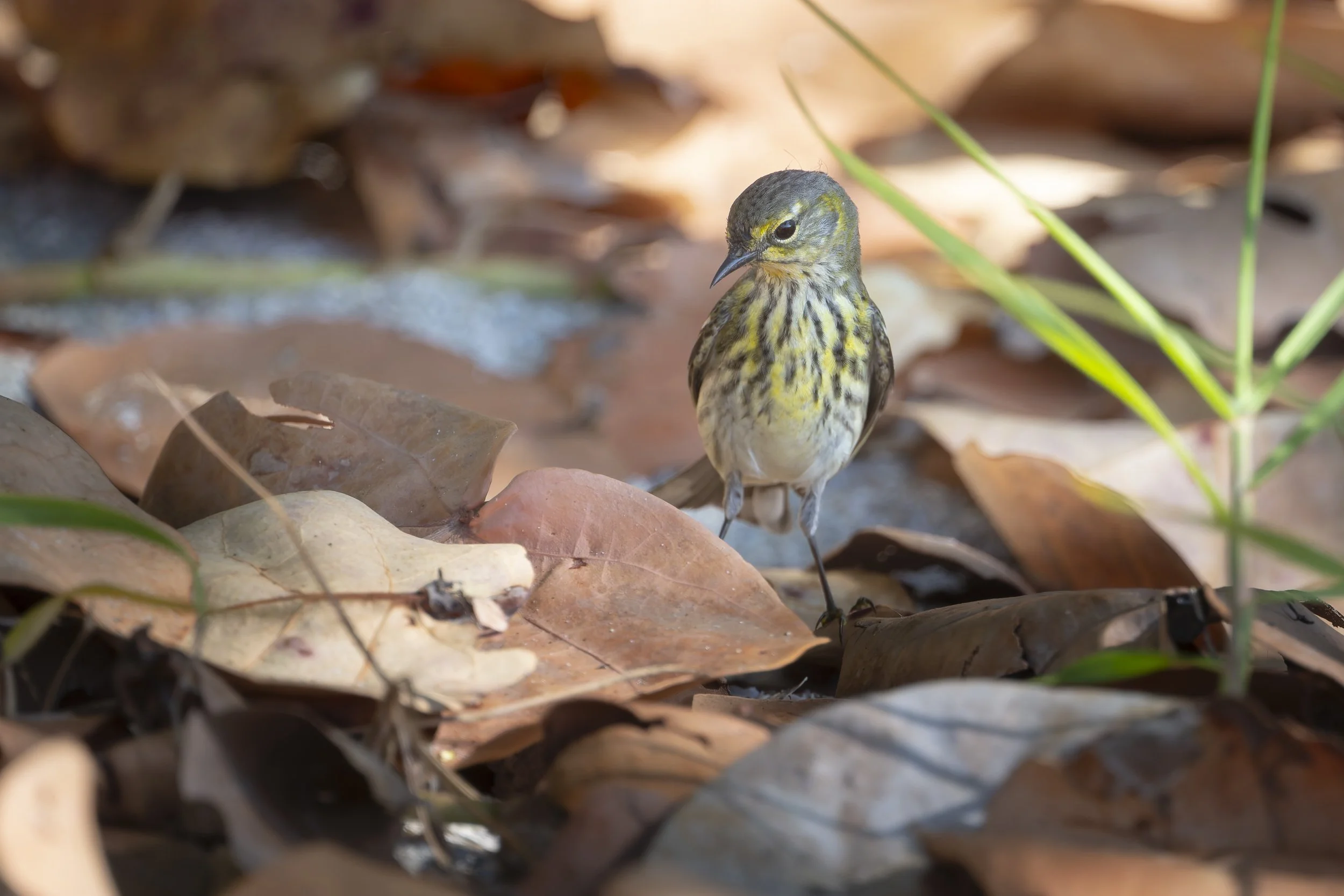
Cape May Warbler. Nikon Z8 with Nikkor Z 800mm VR f/6.3 lens at f/6.3, 1/1600 sec, ISO 640.
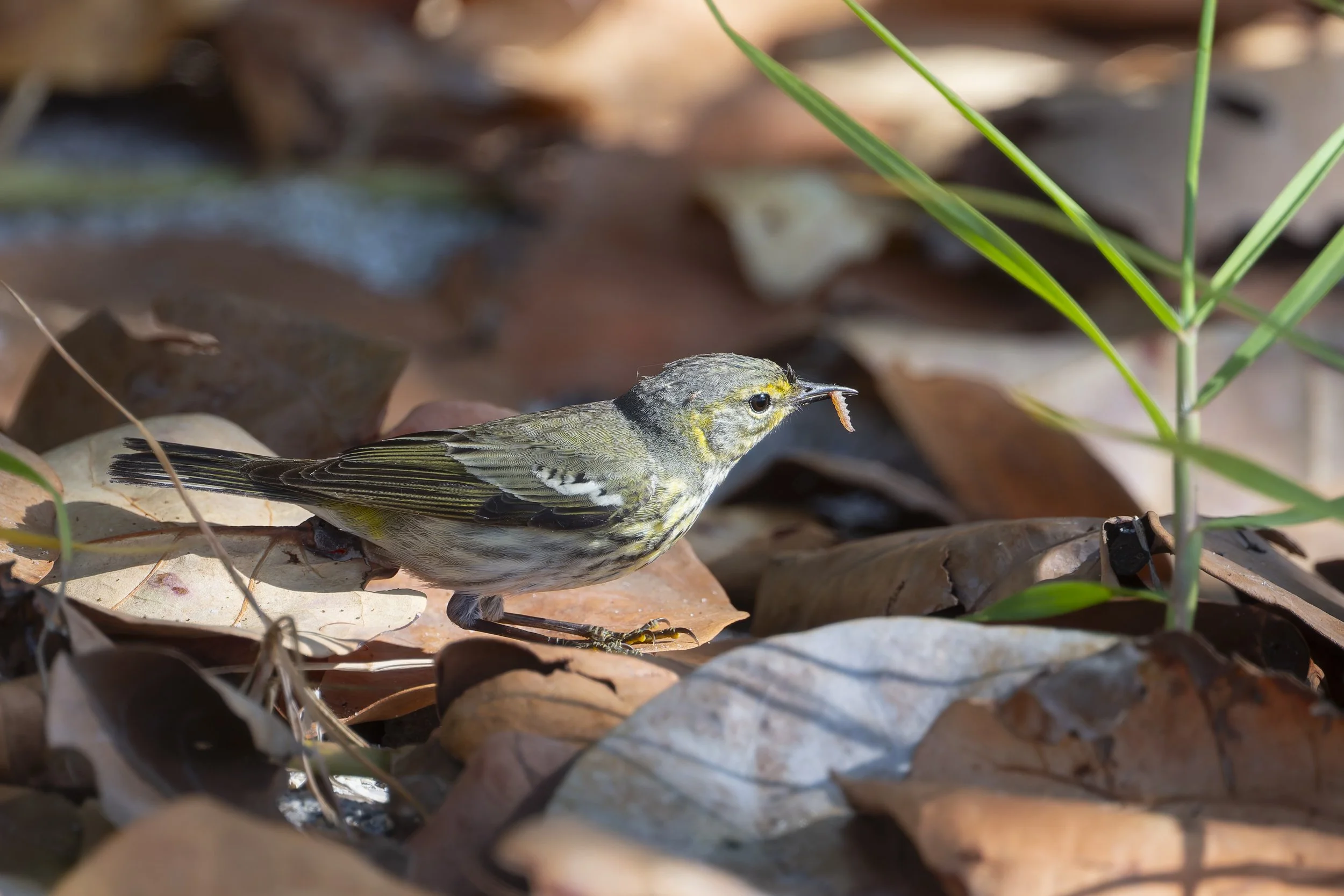
Cape May Warbler. Nikon Z8 with Nikkor Z 800mm VR f/6.3 lens at f/6.3, 1/1600 sec, ISO 720.
It’s always interesting how birds of different species tend to hang out together. In this same clump of sea grapes where I found this Cape May, there was also a Blackpoll Warbler and a Tennessee Warbler. They were all doing the same thing: going from branch to branch, turning over every leaf looking for a spider or worm.
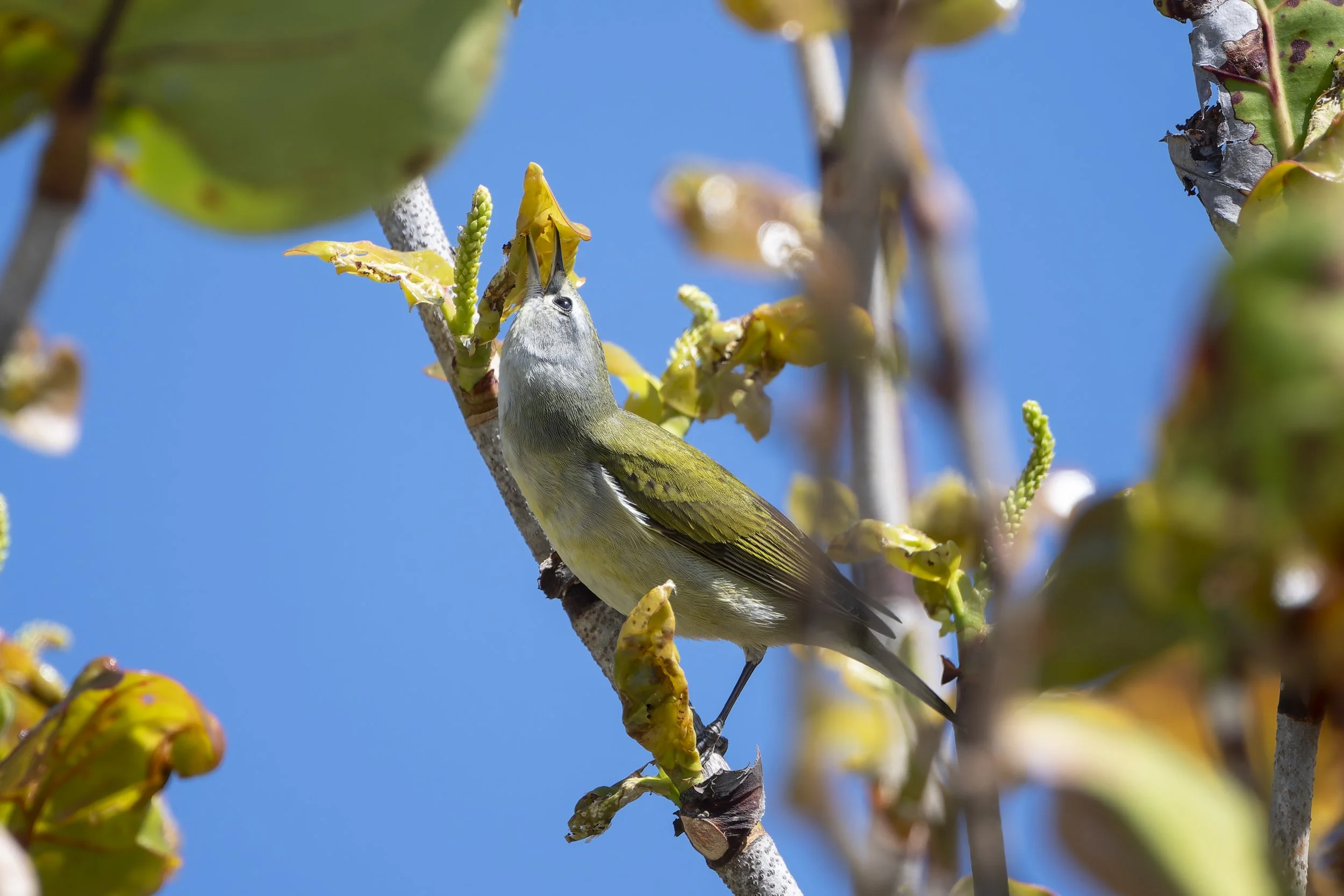
Tennessee Warbler. Nikon Z8 with Nikkor Z 800mm VR f/6.3 lens at f/6.3, 1/1250 sec, ISO 360.
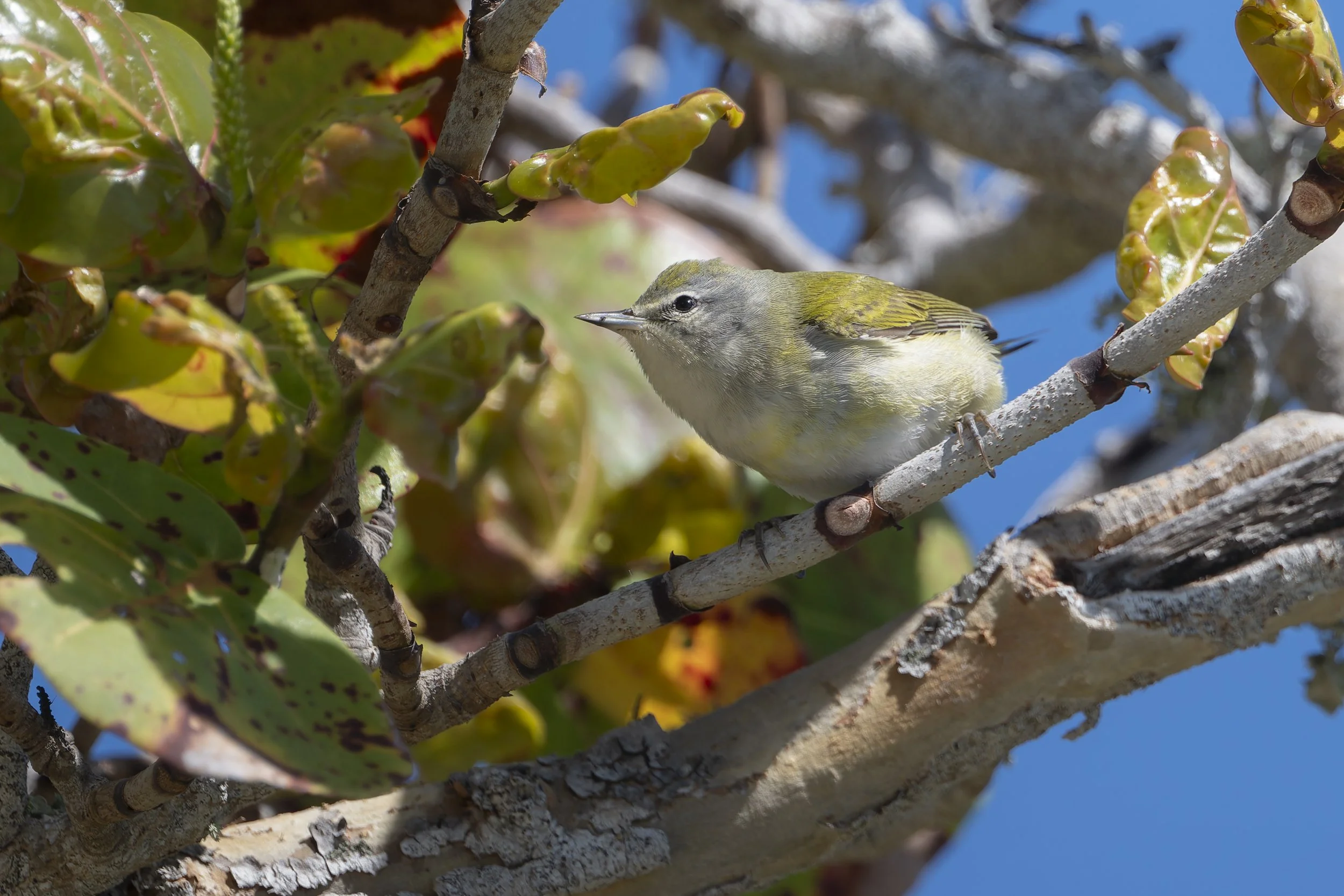
Tennessee Warbler. Nikon Z8 with Nikkor Z 800mm VR f/6.3 lens at f/6.3, 1/1250 sec, ISO 280.
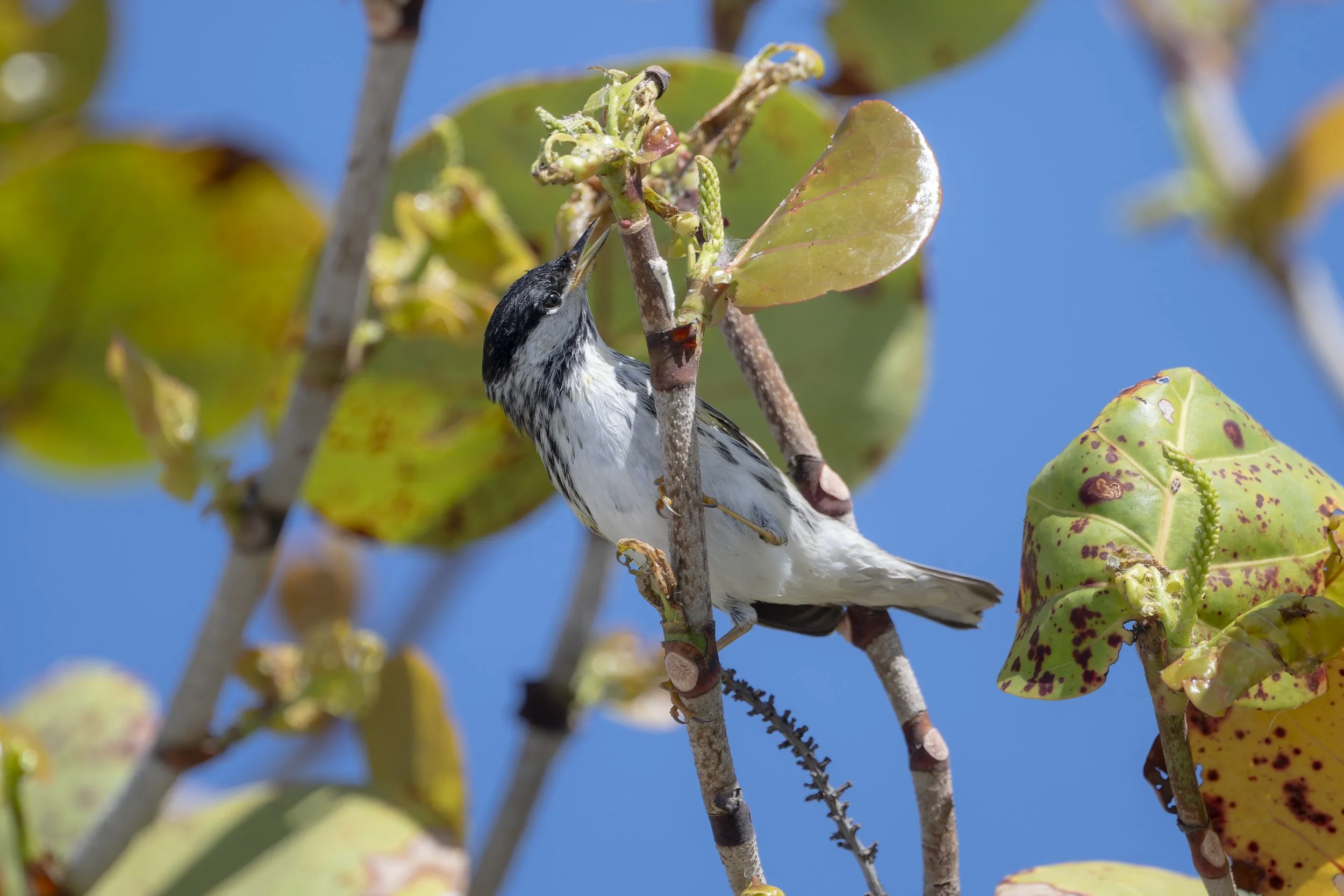
Blackpoll Warbler. Nikon Z8 with Nikkor Z 800mm VR f/6.3 lens at f/6.3, 1/1250 sec, ISO 360.
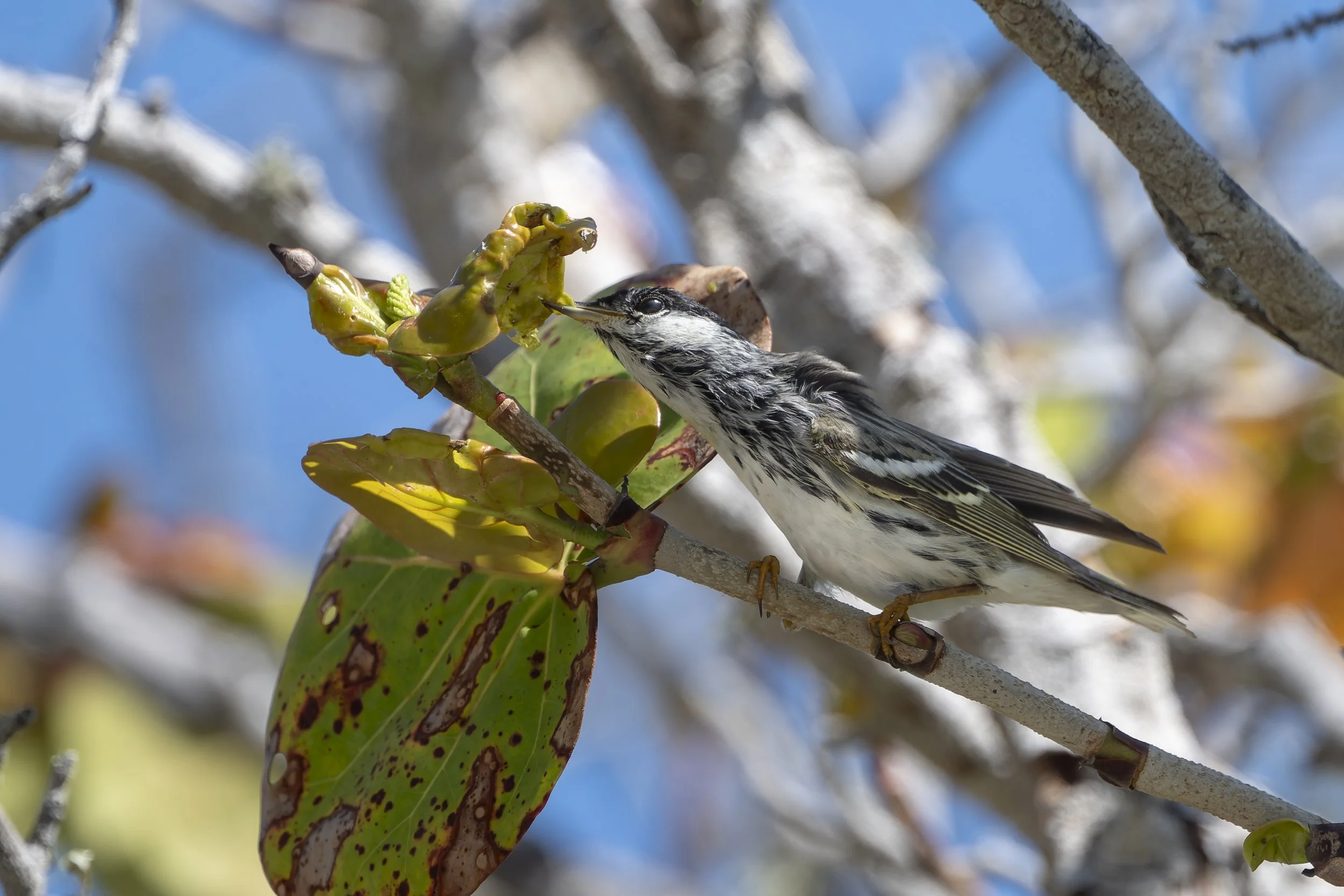
Blackpoll Warbler. Nikon Z8 with Nikkor Z 800mm VR f/6.3 lens at f/6.3, 1/1250 sec, ISO 360.
There were quite a few birders who were specifically looking for the Smooth-billed Ani and the Groove-billed Ani. Yes, they are still at De Soto. However, they can be difficult to spot. They seem to be hanging around the Ranger’s house and across the street at the kayak launch. I did not see them on yesterday’s trip. Early morning is your best time to look for them.
Some birders also reported seeing Cape May’s at North Beach. After birding around the Ranger’s house, I went to North Beach and didn’t see anything. But I got there around 10am and it was probably too late.
Finally, I’ll end with a Pileated Woodpecker. This immature bird was sticking his head out of the nesting cavity, chirping for a meal from its parent. Indeed, after a few minutes, mom flew in and gave junior a meal. Very cool to see.
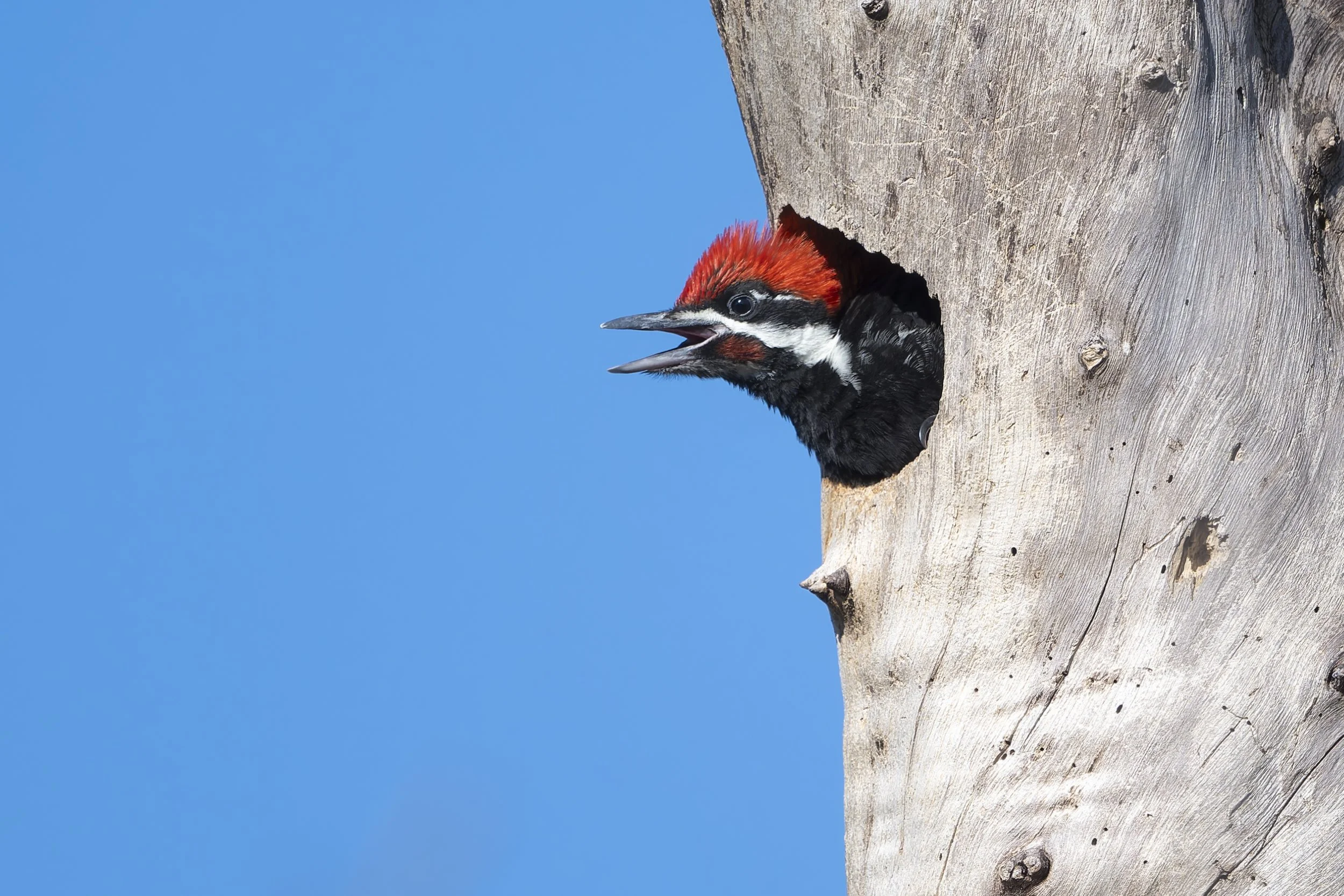
Pileated Woodpecker. Nikon Z8 with Nikkor Z 800mm VR f/6.3 lens at f/6.3, 1/1250 sec, ISO 180.
I stuck around De Soto until late afternoon, hoping for more birding that evening. Simply put, the birding that afternoon was dismal and I didn’t take any photos. This makes sense to me. They are probably asleep preparing for the night’s long flight. That’s my reasoning anyway.
After a difficult day of birding, I came away with a newfound appreciation for using BirdCast to improve birding opportunities. When the birding forecast is “low” I think I’ll stay local, putting minimal investment into time and energy. However, when the forecast is high, that’s when I’ll go all-in, make the early morning drives and put in the miles and time on the trail (what I call “birding hard”).
Good luck, and happy birding!